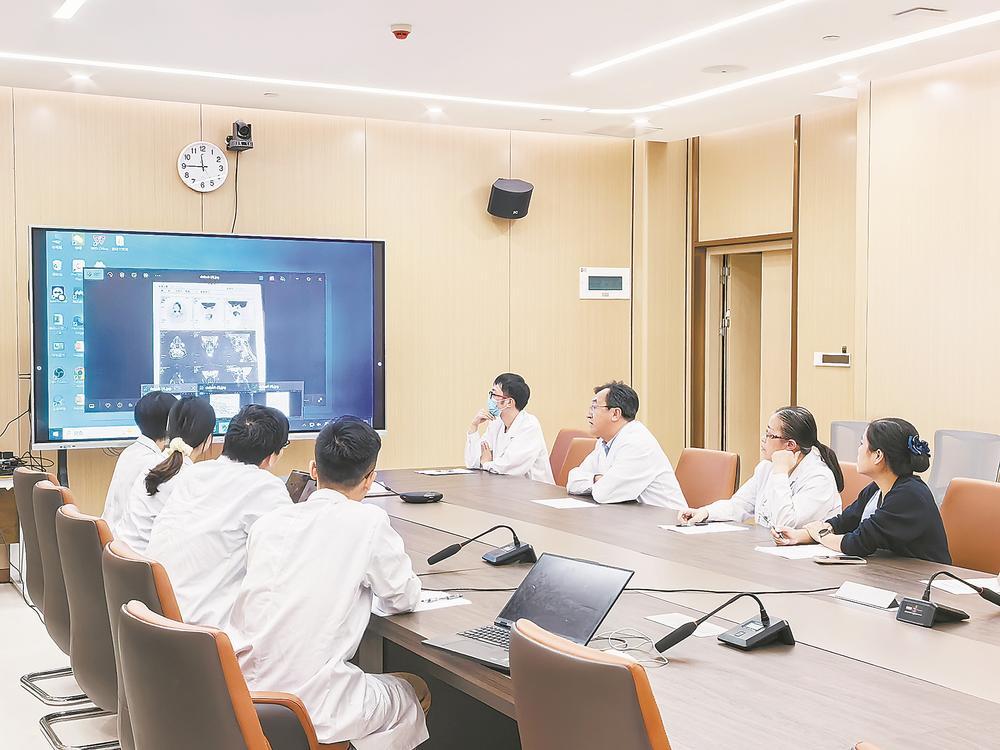
一站诊疗

Search documents
家门口就医 从“有”到“优”的福建实践
Xin Lang Cai Jing· 2025-12-22 23:27
Core Viewpoint - The article emphasizes the advancements in healthcare services in Fujian, particularly focusing on high-level hospitals and specialized medical centers, aiming to provide top-tier medical treatment locally and enhance patient satisfaction [5][9]. Group 1: Heavy Ion Therapy - The first heavy ion therapy device in Fujian is operational at the Fujian Medical University Affiliated Union Hospital, providing cutting-edge cancer treatment [6]. - Heavy ion therapy utilizes carbon ions accelerated to 40%-70% of the speed of light, creating a "Bragg peak" effect that allows for precise targeting of tumor cells while minimizing damage to surrounding healthy tissue [6][7]. - Patients report minimal discomfort during treatment, with some able to rest during the procedure, highlighting the efficiency and patient-friendly nature of this advanced therapy [6]. Group 2: Multidisciplinary Treatment Approach - The hospital is integrating various specialties to create a multidisciplinary treatment model, which is crucial for managing complex medical cases [9][11]. - A case study illustrates the successful collaboration among cardiology, neurology, and surgery teams to treat a patient with multiple severe conditions, showcasing the effectiveness of this approach [10][11]. - The hospital's heart center has restructured its teams into specialized groups to enhance patient care and streamline treatment processes [12]. Group 3: Remote Surgery Innovations - The first cross-province remote robotic surgery was successfully performed, demonstrating the potential of telemedicine to provide high-quality care regardless of location [13]. - This technology allows local doctors to assist in surgeries performed by experts from distant locations, enhancing their skills and improving patient outcomes [14]. - The integration of remote surgery aligns with national healthcare policies aimed at optimizing medical resources and improving access to care for patients in rural areas [16].