
重离子治疗

Search documents
家门口就医 从“有”到“优”的福建实践
Xin Lang Cai Jing· 2025-12-22 23:27
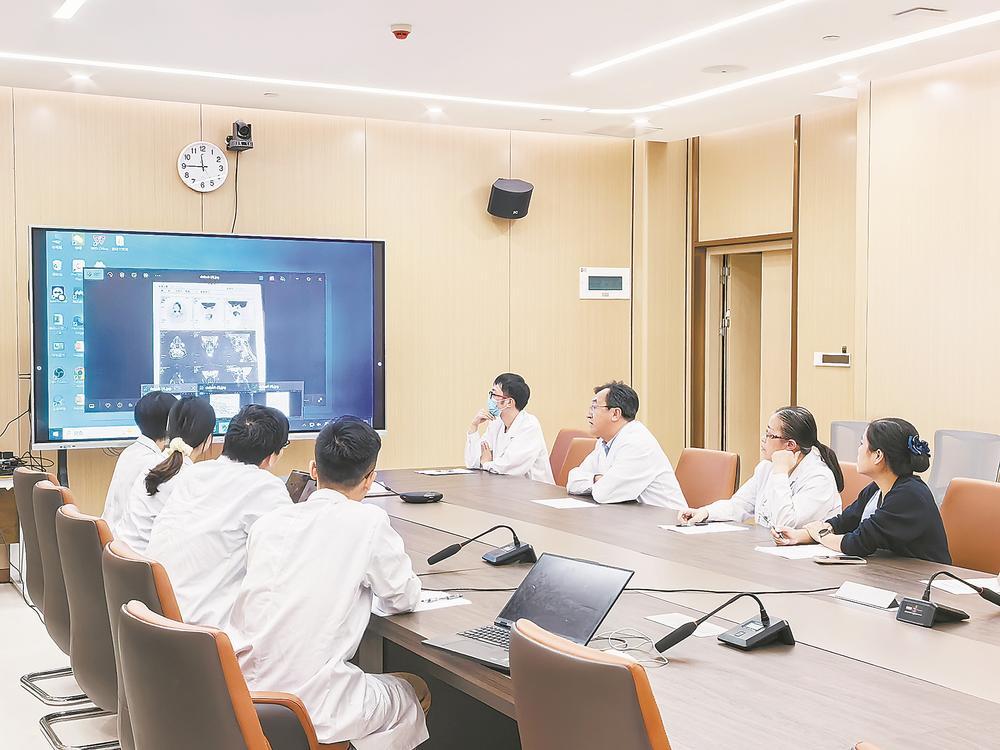
Core Viewpoint - The article emphasizes the advancements in healthcare services in Fujian, particularly focusing on high-level hospitals and specialized medical centers, aiming to provide top-tier medical treatment locally and enhance patient satisfaction [5][9]. Group 1: Heavy Ion Therapy - The first heavy ion therapy device in Fujian is operational at the Fujian Medical University Affiliated Union Hospital, providing cutting-edge cancer treatment [6]. - Heavy ion therapy utilizes carbon ions accelerated to 40%-70% of the speed of light, creating a "Bragg peak" effect that allows for precise targeting of tumor cells while minimizing damage to surrounding healthy tissue [6][7]. - Patients report minimal discomfort during treatment, with some able to rest during the procedure, highlighting the efficiency and patient-friendly nature of this advanced therapy [6]. Group 2: Multidisciplinary Treatment Approach - The hospital is integrating various specialties to create a multidisciplinary treatment model, which is crucial for managing complex medical cases [9][11]. - A case study illustrates the successful collaboration among cardiology, neurology, and surgery teams to treat a patient with multiple severe conditions, showcasing the effectiveness of this approach [10][11]. - The hospital's heart center has restructured its teams into specialized groups to enhance patient care and streamline treatment processes [12]. Group 3: Remote Surgery Innovations - The first cross-province remote robotic surgery was successfully performed, demonstrating the potential of telemedicine to provide high-quality care regardless of location [13]. - This technology allows local doctors to assist in surgeries performed by experts from distant locations, enhancing their skills and improving patient outcomes [14]. - The integration of remote surgery aligns with national healthcare policies aimed at optimizing medical resources and improving access to care for patients in rural areas [16].

美中嘉和20250611
2025-06-11 15:49
Summary of Proton and Heavy Ion Therapy Industry Conference Call Industry Overview - The National Health Commission has relaxed licensing for proton and heavy ion therapy, benefiting private hospitals [2][3] - Approximately 53 licenses for proton and heavy ion therapy have been issued in China, but the number of operational centers remains low compared to Europe and the US [3][7] - The latest policy allows non-public hospitals to apply for licenses, which is favorable for private hospitals [3] Key Company Insights - Guangzhou Taikang Cancer Hospital's proton center has been operational since late 2024, treating nearly 200 patients with a single treatment costing 295,000 RMB [2][4] - The hospital's outpatient volume is close to 1,000 visits, indicating strong initial performance [4] - Revenue from proton and heavy ion therapy is approximately 60 million RMB year-to-date, but actual financial income may vary due to settlement cycles with self-pay and commercial insurance patients [5][11] - Shanghai Taihe Cancer Hospital is expected to open in 2026, with its proton center operational by 2027-2028, involving a total investment of 3 billion RMB [8] Financial Performance - The overall revenue of Guangzhou Taikang Cancer Hospital is stable compared to the previous year, with further data on other services pending [6] - The hospital aims to treat 1,000 patients in 2025, which could significantly reduce losses, although net profit may still be challenging to achieve due to high initial investments [10] Market Dynamics - The treatment is not covered by health insurance, with commercial insurance accounting for about 10%-20% of payments, which is expected to increase in the future [11] - The competitive landscape in Shanghai is robust, with the first proton center operating at full capacity, treating around 1,000 patients annually [7] Technological Developments - The company has developed an AI model for proton therapy, currently deployed in Guangzhou, with plans to expand its application to other treatment areas [14][15] - The trend in radiation therapy is moving towards more precise methods, with proton and heavy ion therapies being among the most advanced [12] Future Outlook - The company is focused on optimizing operations in its three hospitals before exploring external growth opportunities [17] - The proportion of revenue from radiation therapy exceeds 50%, highlighting its significance in the company's overall business model [18] - Pricing for proton therapy is expected to remain stable in the short term due to limited competition, but may adjust in the long term as more centers open [19] Regulatory and Competitive Landscape - The company is monitoring the impact of national healthcare price reforms on future gross margins, particularly in the context of service price reductions [13] - Domestic manufacturers are gradually improving their technology, with potential for local production to reduce treatment costs [19]