重离子治疗

Search documents
8亿融资!国产重离子治疗系统
思宇MedTech· 2026-02-06 04:58
Core Viewpoint - Guoke Ion Medical Technology Co., Ltd. has completed its first round of equity financing, raising approximately 800 million RMB, which will be used for the continued research and development of heavy ion and light ion treatment equipment, industrialization promotion, and treatment center layout [1]. Group 1: Company Development - Guoke Ion and its wholly-owned subsidiary, Lanzhou Taiji Ion Technology Co., Ltd., have over 20 years of experience in the tumor treatment equipment industrialization field, relying on 50 years of research in heavy ion physics and medical accelerators from the Chinese Academy of Sciences [4]. - The company developed China's first fully independently owned carbon ion treatment system in 2019, which was put into clinical use in 2020, making China the fourth country globally to master the core technology of heavy ion cancer treatment [4][5]. Group 2: Technological Advancements - Guoke Ion has recently completed the installation and debugging of the world's first light ion combined treatment device, which aims to reduce costs and improve accessibility [6]. - The new device features three treatment rooms, occupies approximately 1,500 square meters, and is significantly lower in system integration, construction scale, and overall investment compared to traditional heavy ion treatment centers, thus lowering the entry barrier for particle therapy [8]. Group 3: Market Insights - The global particle therapy market is projected to reach approximately 1.7 to 1.8 billion USD by 2025, with heavy ion treatment currently representing a small market share but experiencing faster growth [10]. - China is becoming one of the fastest-growing regions for heavy ion treatment centers globally, with an expected increase in operational and under-construction centers leading to a concentrated operational phase around 2026 [12]. Group 4: Business Model - Guoke Ion aims to build an integrated industrial model that covers equipment manufacturing, center co-construction, operation maintenance, and technical services, moving beyond being a simple equipment supplier [14]. - The company proposes a "co-investment, co-construction, and co-sharing" approach to participate in the national layout of heavy ion treatment centers, indicating a shift towards an industrial platform model in a high-investment, high-technology barrier, and clinically dependent sector [15]. Group 5: Future Outlook - The core challenge for heavy ion treatment lies in transforming national-level research capabilities into replicable and deployable clinical systems. The recent 800 million RMB financing indicates that capital is focused on whether the industry model can be successfully executed in terms of cost, delivery, and center expansion [16]. - As domestic equipment continues to be deployed and new centers are gradually operational, heavy ion treatment is entering a critical window for scaling from demonstration to widespread application [16].

家门口就医 从“有”到“优”的福建实践
Xin Lang Cai Jing· 2025-12-22 23:27
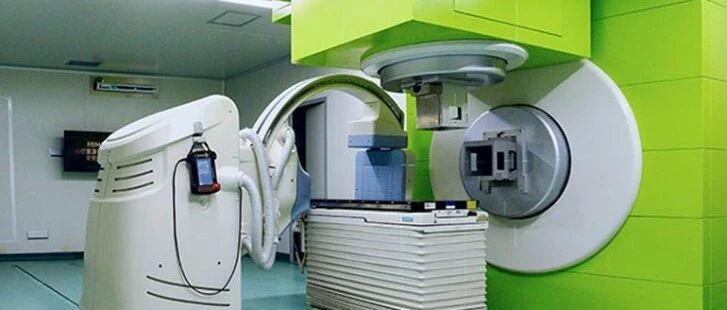
Core Viewpoint - The article emphasizes the advancements in healthcare services in Fujian, particularly focusing on high-level hospitals and specialized medical centers, aiming to provide top-tier medical treatment locally and enhance patient satisfaction [5][9]. Group 1: Heavy Ion Therapy - The first heavy ion therapy device in Fujian is operational at the Fujian Medical University Affiliated Union Hospital, providing cutting-edge cancer treatment [6]. - Heavy ion therapy utilizes carbon ions accelerated to 40%-70% of the speed of light, creating a "Bragg peak" effect that allows for precise targeting of tumor cells while minimizing damage to surrounding healthy tissue [6][7]. - Patients report minimal discomfort during treatment, with some able to rest during the procedure, highlighting the efficiency and patient-friendly nature of this advanced therapy [6]. Group 2: Multidisciplinary Treatment Approach - The hospital is integrating various specialties to create a multidisciplinary treatment model, which is crucial for managing complex medical cases [9][11]. - A case study illustrates the successful collaboration among cardiology, neurology, and surgery teams to treat a patient with multiple severe conditions, showcasing the effectiveness of this approach [10][11]. - The hospital's heart center has restructured its teams into specialized groups to enhance patient care and streamline treatment processes [12]. Group 3: Remote Surgery Innovations - The first cross-province remote robotic surgery was successfully performed, demonstrating the potential of telemedicine to provide high-quality care regardless of location [13]. - This technology allows local doctors to assist in surgeries performed by experts from distant locations, enhancing their skills and improving patient outcomes [14]. - The integration of remote surgery aligns with national healthcare policies aimed at optimizing medical resources and improving access to care for patients in rural areas [16].
该病发病率逐年上涨 重离子治疗或为患者带来治疗新希望
Mei Ri Shang Bao· 2025-05-19 22:18
Core Insights - The announcement of former President Biden's prostate cancer diagnosis has heightened public awareness of prostate cancer and its implications for health management [1][2] - Prostate cancer incidence is rapidly increasing in China, particularly among older populations, with significant implications for healthcare strategies and treatment options [2][3] Group 1: Prostate Cancer Trends - Prostate cancer has become the most common malignant tumor among men in Europe and the U.S., with a notable increase in cases in China [2] - In Zhejiang Province, the ranking of prostate cancer among male cancers has risen from fourth to third place in 2023 [2] - The incidence of prostate cancer is highly correlated with age, particularly in men over 70, and is influenced by genetic factors and lifestyle choices [2] Group 2: Early Detection and Diagnosis - Early-stage prostate cancer often presents no obvious symptoms, making PSA screening crucial for early detection [2] - The early diagnosis rate for prostate cancer in China was previously below 30%, but has improved significantly with increased PSA screening, reducing late-stage diagnosis rates from over 50% to around 30% [2] Group 3: Treatment Innovations - Heavy ion therapy offers a new treatment option for localized prostate cancer, providing precise targeting of tumors with minimal damage to surrounding tissues [3] - The five-year survival rate for low-risk patients treated with heavy ion therapy exceeds 90%, and for high-risk patients, tumor control rates improve by 15%-20% compared to photon therapy [3] - Nuclear medicine treatments are being researched to target bone metastases effectively, utilizing radioactive isotopes to minimize damage to normal tissues [4] Group 4: Future Directions - The integration of advanced technologies such as gene testing and AI imaging is expected to enhance screening and treatment efficacy for prostate cancer [4] - The establishment of comprehensive treatment centers for heavy ion therapy and accelerated nuclear drug development in Zhejiang Province is anticipated to significantly improve the five-year survival rates for prostate cancer patients [4] - A shift from passive treatment to proactive health management for men is essential for effective prostate cancer control and treatment [4]