
不扩散核武器条约

Search documents
伊朗:计划对通过霍尔木兹海峡船只实施准入和收费制度,未经授权的船只不再拥有自由通行权
中国能源报· 2026-03-30 07:34
Core Viewpoint - Iran is considering exiting the Treaty on the Non-Proliferation of Nuclear Weapons (NPT) and plans to implement stricter access and fee regulations for ships passing through the Strait of Hormuz due to current international security concerns and external threats [1][3]. Group 1: Nuclear Treaty and Security - Iranian officials are actively discussing the possibility of formally withdrawing from the NPT, citing that their legitimate security interests have not been effectively safeguarded while fulfilling their obligations under the treaty [1]. - The Iranian parliament is pushing forward related proposals to ensure national security in the face of external military threats and perceived injustices [1]. Group 2: Strait of Hormuz Management - Iran claims complete control over the Strait of Hormuz and plans to establish a new management system for the strait, similar to the management models used by Turkey for the Bosporus Strait and Egypt for the Suez Canal [3]. - Ships passing through the Strait of Hormuz will be required to obtain permission from Iran and pay corresponding passage and service fees, as part of the new regulatory framework [3]. - Iran has incurred significant costs over the decades to maintain the security of the Strait and aims to recover these expenses through institutionalized measures while enhancing oversight of this critical waterway [3].


俄罗斯谴责以军
中国能源报· 2026-03-29 04:35
Group 1 - The Russian Foreign Ministry condemned the Israeli military's airstrikes on Iranian nuclear facilities, stating that these actions violate the Treaty on the Non-Proliferation of Nuclear Weapons and the Nuclear Safety Convention [1] - The spokesperson emphasized that the international community should respond "unambiguously and resolutely" to Israel's attacks on civilian nuclear facilities in Iran [1] - The head of Russia's state atomic energy corporation indicated that the airstrikes pose a "direct threat" to nuclear safety, particularly mentioning the Bushehr nuclear power plant [1] Group 2 - On July 27, Israeli forces deployed over 50 aircraft to strike multiple nuclear facilities and weapon bases in Iran, including the heavy water reactor in Khondab and facilities in Arak and Yazd [1] - The International Atomic Energy Agency reported receiving notifications from Iran about the attacks on the Bushehr nuclear power plant [1]

伊朗考虑“退群”,“现在是离开的时候”
中国能源报· 2026-03-28 06:27
Core Viewpoint - Iran's officials are considering withdrawing from the Treaty on the Non-Proliferation of Nuclear Weapons (NPT), stating that remaining a member has become "meaningless" and has not provided any substantial benefits to Iran [3]. Group 1 - The spokesperson for Iran's Parliament's National Security and Foreign Policy Commission, Ibrahim Rezaei, expressed that the NPT has failed to protect Iran from attacks by nuclear powers and has led to multiple assaults on Iran's nuclear facilities [3]. - Rezaei highlighted that international documents and agreements have been completely disregarded, further questioning the value of Iran's continued participation in the NPT [3]. - He noted that the United States has withdrawn from over 60 international organizations and agreements, suggesting that if Iran chooses to exit the NPT, the West may react with surprise and opposition, but he believes "now is the time to leave" [3].
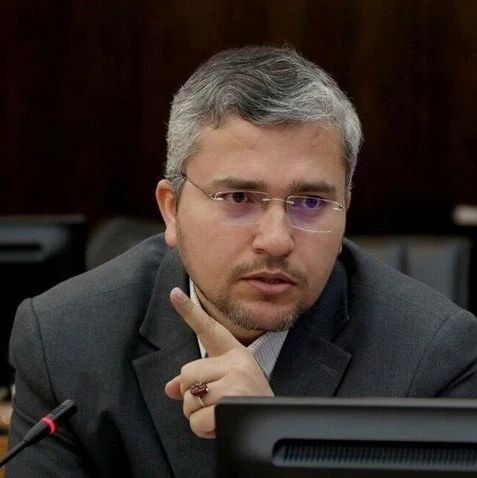
伊朗考虑“退群”
财联社· 2026-03-28 03:54
Core Viewpoint - Iran's continued membership in the Treaty on the Non-Proliferation of Nuclear Weapons (NPT) is deemed "meaningless" as it has not provided substantial benefits to the country [1] Group 1 - The NPT has failed to protect Iran from attacks by nuclear powers and has led to multiple assaults on its nuclear facilities [1] - International documents and agreements have been completely disregarded, according to Iran's National Security and Foreign Policy Committee spokesperson [1] - The U.S. has withdrawn from over 60 international organizations and agreements, suggesting that if Iran decides to exit the NPT, the West may express surprise and opposition, but it is considered "time to leave" [1]

伊朗考虑退出《不扩散核武器条约》
第一财经· 2026-03-28 03:51
Core Viewpoint - Iran's parliament spokesperson Ibrahim Rezaei stated that continuing as a signatory of the Non-Proliferation Treaty (NPT) is no longer beneficial for Iran, suggesting it is time to withdraw from the treaty [3]. Group 1: Iran's Position on the NPT - Rezaei emphasized that the NPT has failed to protect Iran's nuclear facilities from attacks and that relevant international documents and agreements have been completely disregarded [3]. - He reiterated that Iran has no intention of developing nuclear weapons, and this policy remains unchanged [3]. Group 2: International Oversight - The Director General of the International Atomic Energy Agency (IAEA), Rafael Grossi, stated on March 2 that there is no evidence of a systematic nuclear weapons manufacturing program in Iran [3]. - The attacks by the United States and Israel on Iran may be politically motivated [3].

美以空袭伊朗核设施,伊朗:将严厉报复!
第一财经· 2026-03-28 02:02
Core Viewpoint - The article discusses recent military actions by Israel against Iranian nuclear facilities, highlighting the potential escalation of tensions in the region and Iran's response to these attacks. Group 1: Military Actions - The Israel Defense Forces conducted airstrikes on Iran's Arak heavy water reactor, targeting infrastructure used for producing weapons-grade plutonium [1] - Despite the reactor's core being dismantled and filled with concrete as per the 2015 nuclear agreement, the Israeli military claims it can still serve as a source of neutrons necessary for nuclear weapons [3] - Attacks were also reported on Iran's "yellowcake" production facility in Yazd province, with no radioactive material leakage detected [3][4] Group 2: Iranian Response - Iran's parliamentary spokesperson indicated that the country is considering withdrawing from the Treaty on the Non-Proliferation of Nuclear Weapons, citing failures in protection against nuclear threats [6] - The Iranian Revolutionary Guard Corps commander described the attacks as provocative actions by the U.S. and Israel, warning of a broader response beyond mere retaliation [8] - Iran has identified six Israeli steel plants and related industrial facilities in five countries as potential targets for retaliation [8]
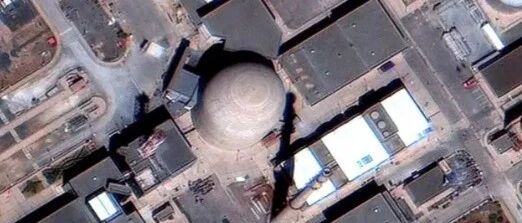
美以袭击伊朗纳坦兹核设施
第一财经· 2026-03-21 10:01
Core Viewpoint - The article discusses the attack on Iran's Natanz nuclear facility by the United States and Israel, highlighting the violation of international laws, including the Treaty on the Non-Proliferation of Nuclear Weapons [1] Group 1 - The attack occurred on the morning of the 21st local time, targeting the Natanz nuclear facility in Iran [1] - Iran claims that the attack violates international laws and regulations [1] - Following the attack, Iran's nuclear safety system center conducted research on the potential leakage of radioactive materials [1] Group 2 - The research results indicated that there was no leakage of radioactive materials from the facility [1] - Surrounding residents were reported to be under no threat from the incident [1]
俄外长:要求伊朗彻底放弃铀浓缩权利“不恰当”
Xin Hua She· 2026-02-19 07:46
Core Viewpoint - The Russian Foreign Minister Lavrov criticized the demand for Iran to completely abandon its uranium enrichment rights as "inappropriate" during the Geneva negotiations [1] Group 1: Iran's Nuclear Rights - Lavrov emphasized that Iran has the right to conduct uranium enrichment for peaceful purposes [1] - He argued that the demands to significantly reduce Iran's missile program and cease its influence on regional political forces undermine Iran's legitimate rights under the Treaty on the Non-Proliferation of Nuclear Weapons and other international agreements [1] Group 2: Diplomatic Context - The second round of indirect negotiations between the US and Iran took place on the 17th in Geneva, with officials indicating progress compared to the previous round despite ongoing differences [1] - Both parties agreed to continue their discussions, signaling a willingness to seek a resolution [1]
伊朗:希望尽快与美国达成核协议
Xin Lang Cai Jing· 2026-02-10 13:52
Core Viewpoint - Iran is eager to reach an agreement with the United States regarding the nuclear issue in a timely manner, emphasizing that time is crucial for Iran [1] Group 1: Negotiation Status - Iran's Foreign Ministry spokesperson Baghaei stated that achieving an agreement with the U.S. as soon as possible is vital for Iran [1] - Indirect negotiations between the U.S. and Iran took place in Muscat, Oman, on February 6, with both sides signaling a willingness to continue discussions despite no substantial agreement being reached [1] - U.S. President Trump confirmed plans for continued negotiations but did not disclose specific locations for future talks [1] Group 2: Iran's Position - Iranian Foreign Minister Amir-Abdollahian asserted that Iran will not accept the "zero enrichment" demand, even under the threat of war [1] - Iranian President Raisi described the negotiations with the U.S. as a "step forward," expressing hope that Iran's legitimate rights under the Non-Proliferation Treaty will be respected [1]
美伊谈判继续 伊称浓缩铀运出不在谈判议程内
Yang Shi Xin Wen Ke Hu Duan· 2026-02-09 23:27
Core Viewpoint - The Iranian President stated that indirect negotiations with the United States regarding nuclear issues present a good opportunity to reach a fair nuclear agreement [1] Group 1: Iranian Government's Position - The Iranian President emphasized that Iran's current stability is due to increased political maturity and collective will for reform and development [1] - Iran's foreign policy is based on mutual respect, common interests, and dialogue, with negotiations only accepted under international law and principles of mutual benefit [1] - The Iranian Foreign Minister expressed that Iran is serious about negotiations and seeks genuine results, contingent on the U.S. demonstrating a serious attitude [2][6] Group 2: Negotiation Dynamics - The Iranian Foreign Minister highlighted a significant "wall of distrust" between Iran and the U.S. due to past U.S. actions, and emphasized the need to build trust for effective negotiations [2][6] - The Iranian military spokesperson stated that Iran will not yield to U.S. pressure during negotiations and warned against any aggressive actions from the U.S. and Israel [2] - The Iranian Atomic Energy Organization Chairman clarified that the issue of exporting enriched uranium is not on the negotiation agenda, despite external pressures [4] Group 3: Recent Developments - Indirect negotiations between Iran and the U.S. took place in Muscat, Oman, marking the first talks since the U.S. airstrike on Iranian nuclear facilities in June 2025 [9] - The Turkish Foreign Minister noted that both Iran and the U.S. show willingness to continue negotiations, although he acknowledged elements of both sincere negotiation and time-wasting [8] - The Iranian Foreign Minister indicated that discussions regarding the dilution of 60% enriched uranium depend on the complete lifting of sanctions against Iran [5]