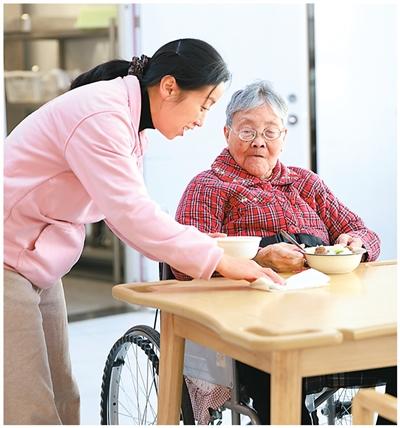
专业照护

Search documents
陕西首批27名长期照护师持证上岗
Shan Xi Ri Bao· 2025-12-26 00:37
Group 1 - The first batch of 27 long-term care workers in Shaanxi officially received their certification, marking a transition from experience-based care to professional and standardized services for the disabled population [1][2] - The certification process included both theoretical knowledge and practical skills assessments, covering essential care tasks and emergency response techniques, thus aligning with professional care standards [1] - Shaanxi province has implemented a series of supportive policies, including training and evaluation subsidies, to enhance the long-term care service system in response to the challenges of an aging population [2] Group 2 - The long-term care worker is a newly certified profession in China, reflecting an upgrade in vocational skills and a commitment to improving public welfare [2] - Shaanxi plans to continuously improve the training system for long-term care workers and regularly conduct skill certification exams to promote service quality in the industry [2]
多方共举,求解照护之困(健康驿站·关注健康老龄化②)
Ren Min Ri Bao Hai Wai Ban· 2025-11-11 23:07
Core Viewpoint - The aging population in China is increasing, with expectations to enter a severe aging society by 2035, prompting the need for innovative solutions in elder care, including the integration of technology such as AI and robotics [2][8]. Group 1: Elder Care Models - Guizhou Province's Guiyang City is exploring a "institution + community + home" model for elder care, involving professional service organizations to enhance the quality of life for seniors through various services [2]. - The current family caregivers face triple pressures of career, elder care, and child-rearing, leading to significant physical and psychological stress [3][4]. Group 2: Professional Caregiver Development - There is a growing need for skilled professional caregivers, as many families struggle to provide adequate care despite their efforts, leading to issues like malnutrition and bedsores in the elderly [4][5]. - Professional teams are being established in some quality elder care communities, focusing on comprehensive assessments and integrated care for elderly patients [6][7]. Group 3: Technological Innovations - AI is being explored in four main areas: language, vision, physical applications, and biological advancements, with potential benefits for elder care and health [8][9]. - The development of AI in drug discovery, particularly for Alzheimer's disease, is seen as a significant opportunity to improve treatment options for cognitive disorders [9][10]. Group 4: Challenges in Caregiving - The reliance on technology for elder care should not overshadow the importance of human involvement, as traditional values and personal care remain crucial during critical life stages [12][13]. - A multi-faceted elder care system is necessary, integrating family, community, and social resources to address the increasing pressures on families, especially smaller households [12][13]. Group 5: Future Directions - The need for a robust support system for caregivers is emphasized, including the recruitment of more individuals into caregiving roles, particularly men, to alleviate the burden on families [13][14]. - The integration of advanced technology in caregiving, such as mechanical aids, is expected to reduce the physical strain on caregivers and improve the quality of care for the elderly [11][12].