东亚早期国家起源

Search documents
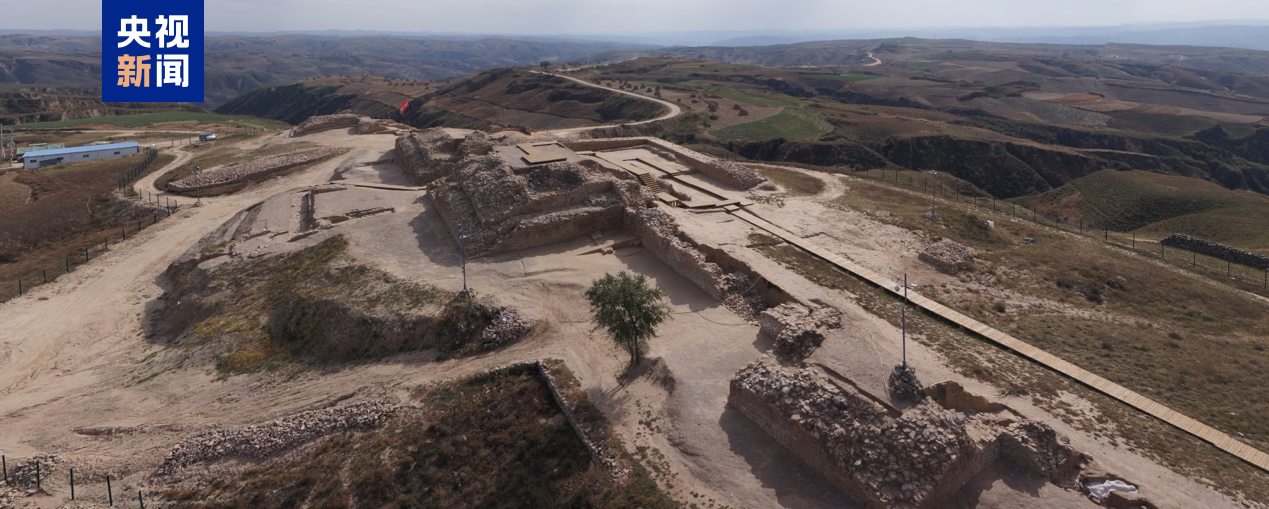
【中国新闻网】石峁遗址人群来源哪里社会结构如何?古DNA研究破解谜题
Zhong Guo Xin Wen Wang· 2025-11-28 06:10
Core Insights - The archaeological site of Shimao, recognized as the largest known prehistoric city in China, showcases early state characteristics and social complexity through its intricate defensive layout, diverse ritual remains, and high-grade cultural relics [1][2] Group 1: Research Breakthrough - The recent research represents the first global effort to study the social systems and organizational structures of a large-scale, complex prehistoric urban site from a genetic perspective [2] - The findings were published in the prestigious journal "Nature," highlighting the genetic evidence that clarifies the origins, social structure, and relationships of the Shimao site population [2] Group 2: Genetic Findings - The research confirms that the main population of the Shimao culture originated from the late Yangshao culture in northern Shaanxi, establishing continuity in cultural and population development [2] - It reveals close connections between the Shimao culture and surrounding groups, including the Taosi culture, northern steppe cultures, and southern rice-farming populations, indicating a history of extensive interaction among prehistoric agricultural and pastoral communities [2] Group 3: Social Structure Insights - The study reconstructs the family lineage across four generations within the Shimao city, providing insights into a patrilineal social hierarchy that underpins the societal structure [2] - This research offers a unique model for understanding the formation and development of early states in China, providing direct genetic evidence for the power succession patterns and social class composition in early East Asian states [2]
石峁遗址人群来源是哪?古DNA研究破解谜题
Yang Shi Xin Wen· 2025-11-26 16:55
Core Insights - The research confirms that the main population of the Shijia culture originated from the late Yangshao period in northern Shaanxi, establishing continuity in cultural and population development [1] - The study reveals close genetic connections between the Shijia culture population and surrounding groups, showcasing extensive interactions among prehistoric agricultural and pastoral communities [1][8] - The research reconstructs a family lineage spanning four generations within the Shijia ancient city, providing unprecedented insights into the social hierarchy based on patrilineal kinship, which is crucial for understanding the formation of early states in China [1][7] Research Methodology - The research team conducted a large-scale, high-resolution genomic study on 169 ancient human samples from various archaeological sites, including Shijia and its surrounding areas [1][5] - The study utilized ancient DNA to reconstruct the complex social organization and hierarchical structure of the largest known prehistoric city in China, which exhibits early state characteristics [5][7] Significance of Findings - The research provides solid genetic evidence for the continuous evolution of Chinese civilization from local Yangshao residents [7][8] - It highlights the genetic relationships between the Shijia culture and neighboring cultures, indicating a rich tapestry of cultural interactions during prehistoric times [8] - The findings offer a new framework for understanding the power inheritance models and social structures of early East Asian states, significantly enhancing the understanding of the origins and early development of civilization in northern China [7][8]