个人信息安全

Search documents
“女博士丢应届生身份”引关注,网友炸锅
Xin Lang Cai Jing· 2026-02-12 16:30
Core Viewpoint - The case of identity theft involving a doctoral graduate highlights significant vulnerabilities in personal information management, social security verification processes, and industry qualification regulations in China [12] Group 1: Incident Overview - A doctoral graduate, Ms. Dong, discovered that her identity had been misused when she found social security payment records linked to six construction companies in Zhejiang, where she had never worked [3] - This misuse of her identity led to the loss of her eligibility for public service exams and talent subsidies, prompting her to sue one of the construction companies [3] Group 2: Investigation Findings - The investigation revealed that small construction companies often purchase personal information through intermediaries to meet project qualification requirements, temporarily paying social security for individuals who have not actually worked for them [5] - A middleman named Sun was found to have purchased personal information of 37 individuals for over 9,000 yuan to help a construction company enhance its qualifications [7] Group 3: Legal Consequences - The court sentenced Sun to three years and two months in prison for multiple offenses, including the sale of identification documents and infringement of personal information rights, along with a fine of 60,000 yuan [10] - Another individual, Kou, who collected lost identification cards and sold them, received a sentence of one year and six months, along with a fine of 20,000 yuan [10] Group 4: Resolution and Systemic Issues - The prosecution has initiated civil support procedures to help Ms. Dong claim compensation of approximately 30,000 to 40,000 yuan from the involved construction companies, while also clearing her erroneous social security records [11] - The incident raises concerns about the broader implications of identity theft and the need for systemic reforms in personal information management and social security oversight to prevent similar occurrences in the future [12]


违法违规收集使用个人信息,国泰君安掌上期货、五矿期货等72款APP被通报
Xin Lang Cai Jing· 2026-02-10 04:14
Core Viewpoint - The National Cybersecurity Notification Center reported that 72 mobile applications are found to illegally collect and use personal information, with Guotai Junan Mobile Futures and Wumart Futures being highlighted for not clearly stating the purposes, methods, and scope of personal information collection [1][12]. Group 1: Violations in User Consent and Information Collection - 17 applications failed to provide clear prompts for users to read privacy policies upon first use, using default consent methods instead [2][13]. - 34 applications did not specify the purposes, methods, and scope of personal information collection in their privacy policies [3][14]. - 17 applications did not inform users about the recipients of their personal information, nor did they obtain separate consent for sharing [4][15]. Group 2: User Rights and Data Management - 5 applications began collecting personal information without user consent or continued to collect data despite user refusal [5][16]. - 9 applications did not provide effective means for users to correct, delete personal information, or cancel their accounts [6][17]. - 3 applications failed to process complaints and requests within promised timeframes [6][17]. Group 3: Withdrawal of Consent and Marketing Practices - 22 applications did not offer users a convenient way to withdraw consent for personal information collection [6][18]. - 2 applications used automated decision-making for marketing without providing options for users to refuse or opt-out [7][18]. - 4 applications processed sensitive personal information without obtaining separate consent from users [8][19]. Group 4: Security Measures and Compliance - 25 applications did not implement adequate security measures such as encryption or anonymization [9][19]. - 1 application continued to display ads after closing a page, disrupting user experience [10][20]. - 4 applications lacked a privacy policy altogether [11][21].


多款金融类App被通报
Nan Fang Du Shi Bao· 2026-02-05 23:13
Core Viewpoint - The National Cybersecurity Incident Response Center has identified 72 mobile applications that illegally collect and use personal information, including several financial apps, highlighting significant compliance issues in the industry [1][2]. Group 1: Overview of Violations - A total of 72 mobile applications were flagged for illegal collection and use of personal information between December 26, 2025, and January 20, 2026 [1]. - Among the flagged apps, several financial applications were noted, including Zhongshan Securities, Dazhihui, Guotai Junan Futures, and Wukuang Futures [1]. Group 2: Specific Violations in Financial Apps - Dazhihui was found to have the most violations, totaling six, including failure to clearly inform users about privacy policies and collection practices [2]. - Specific violations included not providing clear consent mechanisms, not listing the purposes and methods of data collection, and failing to inform users about third-party data sharing [2][3]. - Other issues included inadequate options for users to correct or delete their personal information and lack of mechanisms for withdrawing consent for data collection [3].
典型案例曝光!“代理退保”等金融“黑灰产”再被通报
Guo Ji Jin Rong Bao· 2026-01-26 13:00
Core Viewpoint - The article highlights the ongoing issue of "agent policy cancellation" as a significant manifestation of "black and gray industry" in the financial sector, with recent cases being exposed by regulatory authorities [1] Group 1: Case Summaries - The recent report includes five cases, three related to the banking industry and two to the insurance industry, specifically concerning "agent policy cancellation" [1] - One case involved a scheme where an individual, Song, operated an insurance brokerage and recruited others to sell insurance policies under false pretenses, leading to a total investment of over 17.63 million yuan and a loss of approximately 5.84 million yuan for the insurance company [3] - Another case involved the illegal purchase of personal information of insurance policyholders, where an individual named Wang profited 68,749 yuan by providing this information for policy cancellation purposes [6] Group 2: Regulatory Response - The financial regulatory authority emphasizes the need for strict legal action against such fraudulent activities, highlighting the importance of cross-departmental cooperation to combat "black and gray industry" crimes [4] - The regulatory body plans to enhance consumer education and risk management practices within insurance companies to prevent such fraudulent schemes from occurring [4][7] - A long-term prevention mechanism is being established, focusing on collaboration between industry stakeholders, law enforcement, and public awareness to effectively combat the illegal acquisition of personal information and related fraudulent activities [7]
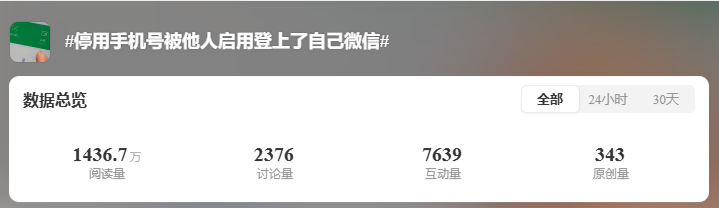
手机号停用未解绑,微信里10万元差点没了!换号必做→
Xin Lang Cai Jing· 2026-01-25 00:44
Core Viewpoint - The article highlights the risks associated with not unlinking old phone numbers from accounts, which can lead to unauthorized access and potential financial loss when the number is reassigned to someone else [1][4]. Group 1: Incident Overview - A case was reported where an individual lost access to their WeChat account containing 100,000 yuan due to their old phone number being reassigned after not being unlinked [1][2]. - The police were able to recover the account and funds after identifying the new user [2]. Group 2: Regulations and Risks - According to national telecommunications regulations, phone numbers can be reassigned 90 days after cancellation, referred to as "secondary numbers" [2][4]. - The practice of reassigning numbers is a common method to optimize communication resources but poses privacy and security risks if the original owner has not unlinked their accounts [4]. Group 3: User Guidance - Users can check if a new number is a "secondary number" through a service provided by major telecom operators and internet platforms, which allows for easy unbinding of previous account associations [6][10]. - It is recommended to prioritize unlinking important accounts, such as payment and social media, before canceling the old number [12]. Group 4: Security Measures - After unlinking and canceling a number, it is advised to physically destroy the SIM card to prevent unauthorized use [13]. - Old electronic devices should also be properly cleaned to avoid leaking personal information, including financial and work-related data [13]. Group 5: Final Recommendations - The article emphasizes a three-step process for changing phone numbers: query, unlink, and destroy, to safeguard personal information [15].
“提供身份”就能日结高薪?
Xin Lang Cai Jing· 2026-01-10 22:40
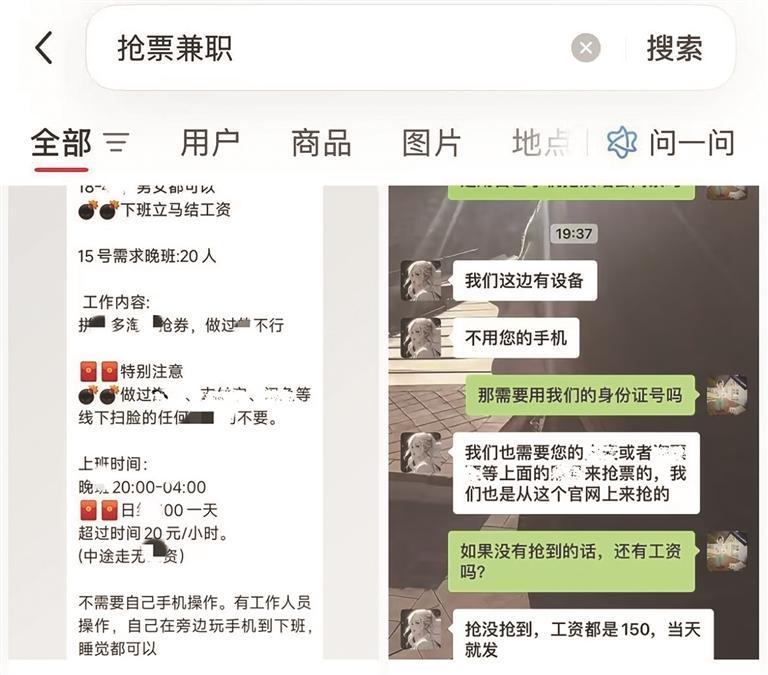
Core Viewpoint - The article investigates the rise of high-paying "part-time" job advertisements on social media, particularly those related to ticket purchasing, revealing potential risks associated with personal information and legal implications [4][11]. Group 1: Job Advertisements and Operations - Numerous high-paying part-time job postings have emerged on social media, promising easy operations and daily payments [4]. - A specific job advertisement offers a salary of 300 yuan per day for ticket purchasing, with additional pay for overtime, and claims that workers do not need to operate their own phones [5][9]. - Job seekers are required to submit personal information, including ID and bank card numbers, and must register multiple accounts on specified platforms [9][10]. Group 2: Risks and Concerns - Many job seekers express concerns about the legality and safety of these jobs, particularly regarding the use of their personal information [11]. - Legal experts warn that participating in such jobs could lead individuals to become unwitting accomplices in criminal activities, facing significant legal risks [12]. - The sharing of sensitive personal information, such as biometric data, poses severe security threats, as it can be exploited for fraudulent activities [12][13].
蛋仔派对违规收集个人信息被通报 网易称是渠道商问题
Zhong Guo Jing Ji Wang· 2026-01-08 23:08
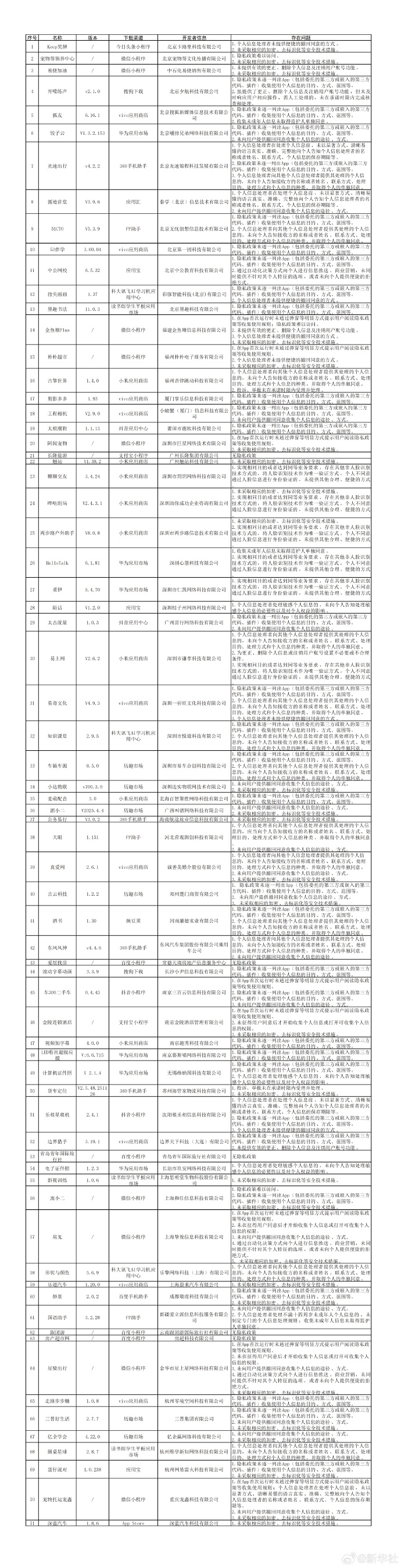
Group 1 - The National Computer Virus Emergency Response Center detected 71 mobile applications that illegally collect and use personal information, including the game "Egg Party" [1] - "Egg Party" (version 1.0.238) was found to have issues such as not clearly listing the purposes, methods, and scope of personal information collection in its privacy policy, and lacking appropriate security measures like encryption and de-identification [1] - The operator of "Egg Party" is Hangzhou NetEase Leihuo Technology Co., Ltd., which was established in 2009 and is primarily engaged in software and information technology services [2] Group 2 - NetEase Games stated that the reported issues pertain to the application version on the app distribution platform and are not the responsibility of the game itself, indicating they are awaiting further communication from third parties [2]

朴朴超市、Keep奖牌、蛋仔派对、深蓝汽车等71款应用违法违规收集使用个人信息
Xin Hua She· 2026-01-06 15:10
Core Viewpoint - The National Computer Virus Emergency Response Center has released a list of 71 mobile applications that illegally collect and use personal information, urging users to exercise caution when downloading and using these apps [1]. Group 1: Application Violations - The applications listed have various violations, including failure to provide a convenient way to withdraw consent for personal information collection [1]. - Many apps did not implement necessary security measures such as encryption and de-identification [1]. - Privacy policies of several apps were difficult to access or did not clearly outline the purposes, methods, and scope of personal information collection [1]. Group 2: User Consent and Rights - Some applications failed to provide effective options for correcting, deleting personal information, or canceling user accounts [1]. - There were instances where apps collected information from minors without obtaining separate consent from guardians [1]. - Users were not adequately informed about the processing of their personal information, including the identity of the data processors and the retention period of their data [1]. Group 3: Specific Applications - Notable applications mentioned include "Keep奖网," "无极带领养中心," and "厨建加油," each with specific violations related to user consent and privacy policy accessibility [1]. - The list includes various applications across different platforms, such as WeChat Mini Programs and Vivo App Store, indicating a widespread issue in the mobile application ecosystem [1].
指尖微店不是个人信息“黑市”
Xin Lang Cai Jing· 2025-12-26 04:40
Core Viewpoint - The illegal trade of WeChat store accounts containing personal information poses a systemic risk to personal data security, highlighting the need for enhanced protective measures in the digital economy [4][6]. Group 1: Incident Overview - A recent case in Yantai, Shandong, involved the illegal sale of WeChat store accounts containing personal information, leading to the arrest of a suspect for violating personal information protection laws [5]. - Over 300 accounts were traded, resulting in illegal profits exceeding 40,000 yuan [4]. Group 2: Legal Context - In the first three quarters of 2025, over 2,100 cases involving personal information violations were prosecuted, affecting around 4,400 individuals [6]. - According to Chinese law, providing personal information to others without consent and with illegal gains exceeding 5,000 yuan constitutes a crime [6]. Group 3: Recommendations for Improvement - Platforms should implement "account anomaly warning" models to monitor rapid changes in account information and ensure consistency between real-name authentication and account operators [7]. - Law enforcement should enhance "clean internet" initiatives using big data technology to combat the entire chain of illegal activities related to account acquisition and information misuse [7]. - Public awareness campaigns should be strengthened to educate individuals about personal information protection and the legal implications of trading personal data [7].

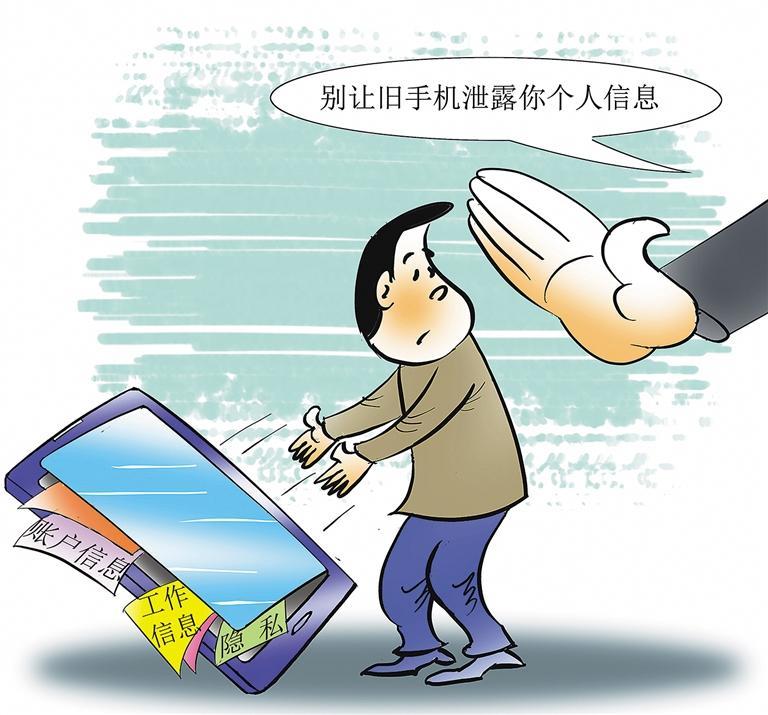
废旧手机处置藏隐患
Xin Lang Cai Jing· 2025-12-24 06:29
Core Viewpoint - The article highlights the importance of properly disposing of old mobile phones due to the potential security risks associated with residual personal data that can be recovered, leading to privacy breaches and legal consequences [3]. Group 1: Security Risks - Many users only perform basic data deletion or factory resets when replacing their phones, unaware that residual data can still be recovered, posing significant security risks [3]. - Potential consequences of improper disposal include theft of account information, loss of private data, and leakage of work-related information, which can result in severe financial losses and legal liabilities for individuals [3]. Group 2: Recommended Practices - Users are advised to enhance their data privacy awareness by thoroughly cleaning their devices before disposal, such as removing SIM and storage cards for personal safekeeping or destruction [3]. - It is recommended to utilize official trade-in services from mobile brands or authorized recycling platforms to ensure secure disposal, rather than discarding old phones carelessly or selling them to unverified vendors [3].