个人智能体(Personal Agent)

Search documents
马斯克和OpenClaw之父的预言会否成真?80%APP消失后将是什么场景
Di Yi Cai Jing· 2026-02-15 03:14
Core Viewpoint - The future of applications is predicted to see a significant decline, with 80% of apps expected to disappear as personal agents take over data management and decision-making tasks more effectively than traditional apps [1][3] Group 1: Future of Applications - Peter Steinberg, founder of OpenClaw, asserts that personal agents can manage data more efficiently than most apps, adjusting fitness plans and controlling smart home devices based on user data [1] - Elon Musk suggests that within five to six years, operating systems and applications may become obsolete, with devices merely serving as interfaces for AI-generated content [1] - Industry experts agree that the predictions made by Steinberg and Musk are not far-fetched, as the transition is already underway [1] Group 2: Transformation of User Interaction - The era of intelligent agents will redefine user interaction, shifting the focus from user interfaces to intent and execution, as agents do not require traditional browsing or clicking [3][4] - Developers will need to prioritize backend API responsiveness, data quality, and compatibility with large models, moving away from traditional metrics like daily active users [4] Group 3: Potential Survivors in the App Landscape - Three types of applications are likely to survive: social software that can handle complex human intentions, services requiring offline fulfillment like ride-hailing and food delivery, and creative tools that serve as extensions of human intent [5] - The importance of smart hardware is emphasized, as devices that collect real-time data through sensors may remain relevant in the app ecosystem [5] Group 4: Hardware and AI Integration - Future hardware will actively perceive and interact with the environment, providing real-time suggestions based on user behavior, such as meal recommendations based on fridge contents [6] - The shift from apps to APIs will disrupt traditional internet revenue models, with competition moving towards AI-driven recommendations and service commissions rather than advertising [6] Group 5: Security and Risks - The transition to a "no-app" era raises significant security concerns, as personal agents could become single points of failure for user data and privacy [7] - The potential for hackers to exploit vulnerabilities in personal agents poses a risk of data breaches and manipulation of user assets and relationships [7] - The competition among tech giants will center around creating trusted AI services that can effectively understand and respond to user needs [7]


AI和互联网的旷世冲突
3 6 Ke· 2025-08-17 23:41
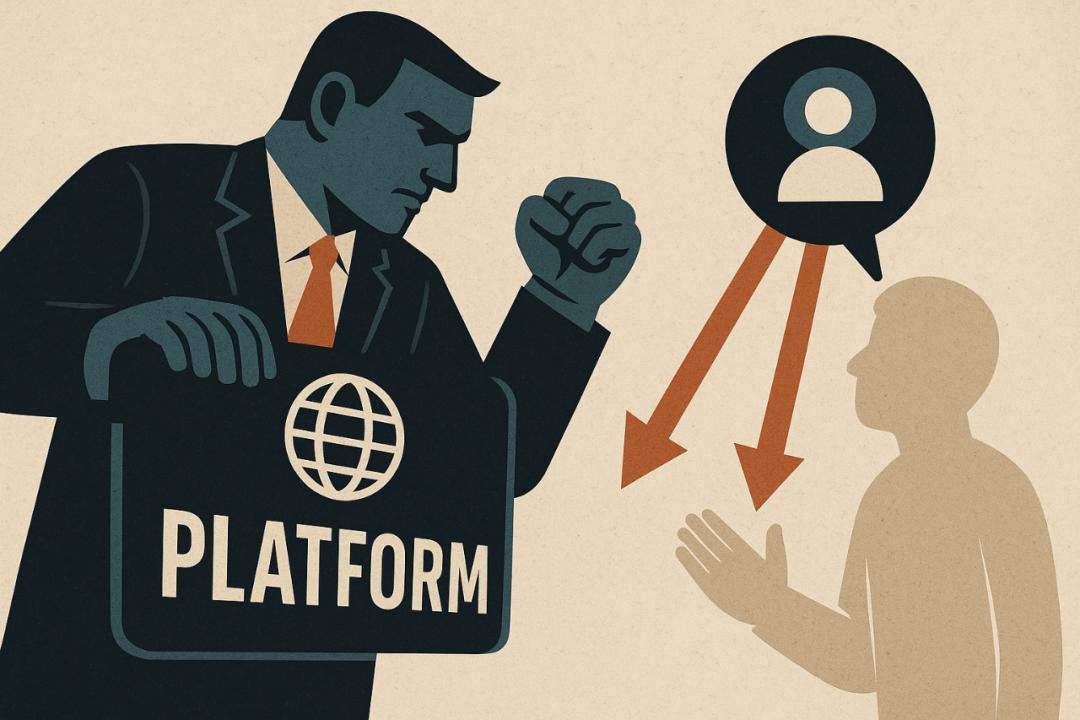
Core Viewpoint - The emergence of AI personal agents represents a fundamental shift in the power dynamics of the internet, challenging the existing platform-centric advertising model and redistributing market dominance [1][3][15]. Group 1: Old Order Under Platform Dominance - The past two decades have established a power structure where platforms monopolize attention, converting user engagement into a commodity for advertising [4][5]. - Users have limited control over what content they see, as platform algorithms prioritize maximizing user engagement for advertising revenue [5][6]. - The existing system treats users as passive subjects, with their attention being the actual product sold by platforms [7]. Group 2: New Paradigm with Personal Agents - Personal agents will act as individual representatives for users, prioritizing their interests and reclaiming rights previously held by platforms [8][10]. - The advertising model will collapse as personal agents filter out unwanted marketing unless sufficient value is provided by advertisers [10][11]. - A shift from asymmetric to symmetric power dynamics will occur, where platforms must negotiate with user agents for access to attention [11][13]. Group 3: New Challenges and Business Rules - The competition will transition from user interfaces to interactions between agents in a virtual space, necessitating a new approach to business strategy [13][15]. - Companies must simulate interactions with numerous personal agents to test their value propositions before reaching real users [13][14]. - Significant computational resources will be required to predict and adapt to the behavior of personal agent clusters, replacing traditional advertising expenditures [14][15]. Conclusion - The transition to AI-driven personal agents signifies a monumental shift from passive internet users to active participants defining their experiences, fundamentally challenging the platform-centric digital economy established over the last twenty years [15].