意图经济

Search documents
“马斯克的预言并非危言耸听”
Xin Lang Cai Jing· 2026-02-15 05:13
Core Insights - The assertion that "80% of apps will disappear" is made by Peter Steinberg, founder of OpenClaw, who believes personal agents can manage data more effectively than traditional apps [2][13] - Elon Musk predicts that operating systems or applications will completely vanish within five to six years, suggesting that devices will only display pixels and sounds while AI will generate content in real-time [2][13] - Industry experts agree that the predictions of Steinberg and Musk are not alarmist but reflect an ongoing reality [2][13] Transition to Intent Economy - Users are beginning to experience a world with fewer apps, as AI can perform tasks like ordering food with simple commands, eliminating the need for multiple app downloads [4][15] - In the agent era, AI is expected to become the sole "super entry point," with apps evolving into service plugins (APIs) that only fulfill requests [5][15] - The shift in human-machine interaction will disrupt UI-centric development, as agents do not require traditional browsing or clicking [5][15] Impact on Developers and Product Managers - The transformation will be disruptive for developers, who will need to focus on backend API response speed, data quality, and compatibility with large models [6][16] - Product managers will shift their focus from metrics like daily active users (DAU) to task success rates (TSR) and dialogue logic [6][16] Potential Winners and Losers in the Agent Era - If most apps disappear, the remaining 20% are likely to include social software, services requiring offline fulfillment (like ride-hailing and food delivery), and creative tools that do not preset specific intents [7][17] - Steinberg envisions a model where agents are compensated for solving problems, potentially leading to new service opportunities [7][17] Importance of Smart Hardware - The significance of smart hardware is increasingly recognized, as future apps may rely on sensors for real-time data collection [8][18] - Wearable devices can gather real-time user data, enhancing intent understanding and interaction capabilities [8][18] Evolution of Internet Business Models - As apps transition to APIs, traditional internet advertising and traffic models will be disrupted, with competition shifting towards AI-driven recommendation systems and service commissions [10][19] - The focus will move from selling ad space to prioritizing AI recommendations based on user intent [10][19]


“马斯克的预言并非危言耸听”
第一财经· 2026-02-15 04:37
Core Viewpoint - The article discusses the potential disappearance of 80% of apps due to the rise of personal agents that can manage data more effectively than traditional applications, as predicted by industry experts like Peter Steinberg and Elon Musk [3][5][9]. Group 1: The Shift to Personal Agents - Personal agents are expected to take over the functions of apps by managing data and making decisions based on user information, such as sleep and stress levels [3][5]. - The transition from apps to personal agents signifies a shift from user interface (UI) centered development to intent and execution focused development [6][7]. - Developers will need to prioritize backend API responsiveness and data quality, moving away from traditional metrics like daily active users (DAU) to task completion rates (TSR) [8]. Group 2: Potential Survivors in the App Market - The article identifies three types of applications likely to survive: social software that can handle complex human intentions, services requiring offline fulfillment like ride-hailing and food delivery, and creative tools that serve as extensions of human intent [10][11]. - The importance of smart hardware is emphasized, as it can collect real-time data that traditional apps cannot, aiding in understanding user intent [12]. Group 3: New Business Models and Revenue Streams - As apps evolve into APIs, traditional internet advertising and traffic models will be disrupted, shifting towards AI-driven recommendation systems and service commissions [13]. - The competition will focus on intent distribution and matching rather than merely selling ad space, with potential revenue streams emerging from AI task execution [13]. Group 4: Security Risks in a No-App Era - The article highlights significant security risks associated with personal agents, including the potential for a single point of failure where a compromised agent could lead to extensive data breaches and asset manipulation [15]. - The transition to AI-driven interactions raises concerns about privacy and the potential for creating information silos, emphasizing the need for secure and trustworthy service providers [15].

马斯克和OpenClaw之父的预言会否成真?80%APP消失后将是什么场景
Di Yi Cai Jing· 2026-02-15 03:14
Core Viewpoint - The future of applications is predicted to see a significant decline, with 80% of apps expected to disappear as personal agents take over data management and decision-making tasks more effectively than traditional apps [1][3] Group 1: Future of Applications - Peter Steinberg, founder of OpenClaw, asserts that personal agents can manage data more efficiently than most apps, adjusting fitness plans and controlling smart home devices based on user data [1] - Elon Musk suggests that within five to six years, operating systems and applications may become obsolete, with devices merely serving as interfaces for AI-generated content [1] - Industry experts agree that the predictions made by Steinberg and Musk are not far-fetched, as the transition is already underway [1] Group 2: Transformation of User Interaction - The era of intelligent agents will redefine user interaction, shifting the focus from user interfaces to intent and execution, as agents do not require traditional browsing or clicking [3][4] - Developers will need to prioritize backend API responsiveness, data quality, and compatibility with large models, moving away from traditional metrics like daily active users [4] Group 3: Potential Survivors in the App Landscape - Three types of applications are likely to survive: social software that can handle complex human intentions, services requiring offline fulfillment like ride-hailing and food delivery, and creative tools that serve as extensions of human intent [5] - The importance of smart hardware is emphasized, as devices that collect real-time data through sensors may remain relevant in the app ecosystem [5] Group 4: Hardware and AI Integration - Future hardware will actively perceive and interact with the environment, providing real-time suggestions based on user behavior, such as meal recommendations based on fridge contents [6] - The shift from apps to APIs will disrupt traditional internet revenue models, with competition moving towards AI-driven recommendations and service commissions rather than advertising [6] Group 5: Security and Risks - The transition to a "no-app" era raises significant security concerns, as personal agents could become single points of failure for user data and privacy [7] - The potential for hackers to exploit vulnerabilities in personal agents poses a risk of data breaches and manipulation of user assets and relationships [7] - The competition among tech giants will center around creating trusted AI services that can effectively understand and respond to user needs [7]

AI入口激战正酣,腾讯、阿里、字节影子股曝光
Xin Lang Cai Jing· 2026-02-07 23:38
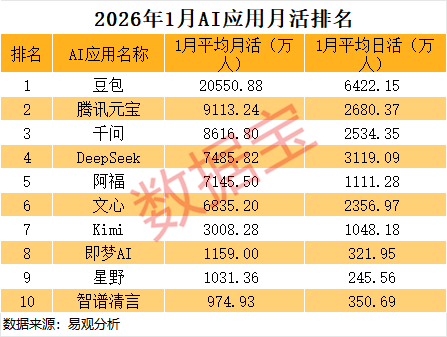
Core Viewpoint - The competition among major internet giants like Tencent, Baidu, and Alibaba for the "AI super entrance" is intensifying, with significant investments aimed at shaping the future internet ecosystem over the next decade [1][10]. Group 1: Differentiated Strategic Layouts - Alibaba is focusing on a "infrastructure + service" strategy, integrating its commercial ecosystem into the Tongyi Qianwen app, which has expanded beyond traditional chatbot functions to offer diverse services [2][11]. - ByteDance is leveraging its global traffic pool from Douyin, with its AI product Doubao achieving over 100 million monthly active users, positioning itself as a content distribution hub [3][12]. - Tencent is adopting a "social penetration + latecomer" strategy, investing 1 billion yuan in cash subsidies to enhance the WeChat ecosystem and embed AI deeply into social interactions [3][12]. Group 2: AI Application Rankings - As of January 2026, Doubao leads the AI application rankings with over 20.55 million average monthly active users, followed by Tencent's Yuanbao with approximately 9.11 million, and Alibaba's Qianwen with about 8.62 million [4][13]. Group 3: Investment Perspectives - The essence of the competition is the "intention economy," where the winner will be the player with the most complete ecosystem capable of converting dialogue into service delivery [4][12]. - Investors are advised to focus on AI e-commerce, vertical applications, and foundational infrastructure, particularly companies with equity ties to the three giants [5][14]. Group 4: A-Share Market Holdings - In the A-share market, 11 companies have "Tencent" as a keyword among their top ten shareholders, with notable companies like China Unicom and Century Huatong exceeding a market value of 100 billion yuan [6][17]. - Similarly, 11 companies have "Alibaba" or "Taobao" in their top ten shareholders, indicating significant investments in the A-share market [6][17]. - ByteDance holds shares in Zhangyue Technology through Beijing Quantum Leap Technology Co., while Baidu holds shares in Yuxin Technology [6][17]. Group 5: Potential Beneficiary Stocks - The competition for the AI entrance among Tencent, Baidu, Alibaba, and ByteDance is expected to benefit various companies, particularly those involved in AI applications and computing power resources [5][18]. - A total of 25 stocks related to the "East Data West Computing" concept have received institutional ratings, with a focus on areas like CPO, liquid cooling, AI computing power, and servers [8][19].


第一批对 ChatGPT 广告的吐槽来了,竟然来自死对头
3 6 Ke· 2026-02-05 04:11
Core Insights - Anthropic launched a series of advertisements during the Super Bowl, directly targeting OpenAI's ChatGPT, indicating a competitive stance in the AI market [1][3] - OpenAI is transitioning from a subscription model to an ad-supported model, driven by high operational costs and the need for sustainable revenue [5][7] Financial Overview - OpenAI raised $40 billion at a valuation of $260 billion, with annual recurring revenue (ARR) expected to reach $200 billion by the end of 2025, while facing operational costs between $8 billion to $12 billion annually [5] - The appointment of Fidji Simo as CEO of Applications signals a strategic shift towards monetization through advertising [7] Advertising Models - The article contrasts three advertising models: Meta's attention economy, Google's intent economy, and OpenAI's emerging action economy [8][10][13] - OpenAI aims to create an "action economy" where advertisements are integrated into user interactions, allowing for direct transactions rather than simple ad clicks [13][15] Competitive Landscape - OpenAI's model seeks to monetize user decision-making, contrasting with Meta's focus on attention and Google's focus on intent [16] - The potential for OpenAI to achieve an average revenue per user (ARPU) of $50 by 2029 could challenge Google's dominance in the advertising space [15][21] User Engagement - OpenAI's strategy involves creating a closed-loop economic system where users can complete purchases directly through AI interactions, enhancing user engagement and monetization [17] - The integration of advertisements into AI responses may lead to subtle and less noticeable advertising, potentially bypassing traditional user defenses against ads [19][21]

为什么这次散户的共识,会形成的如此之快
虎嗅APP· 2026-02-02 10:49
Core Viewpoint - The article discusses the rapid rotation of sectors in the Chinese capital market, highlighting the shift from traditional commodities to chemical and agricultural sectors, and explores the underlying forces that enable retail investors to quickly form consensus on investment opportunities [4][10]. Group 1: Market Dynamics - The recent sector rotation in the Chinese market has been unprecedented in speed, with traditional commodities like gold and silver giving way to chemicals and agriculture [4]. - This rapid rotation is attributed to a global market thirst for commodities and a compressed investment cycle [4]. Group 2: Attention Economy vs. Intent Economy - The past two decades have been characterized by an attention economy, where the focus is on capturing user attention to generate value [5]. - The emergence of AI marks a shift to an intent economy, where the goal is to understand and fulfill user intentions rather than merely capturing attention [5][6]. Group 3: Information Dynamics - In the intent economy, information access has become democratized, allowing retail investors to obtain insights previously available only to institutional investors, leading to "information equality" [6]. - However, this information equality results in an overwhelming amount of similar information, diluting its unique value and predictive power [6][7]. Group 4: Market Behavior and Investor Psychology - The compression of information processing time leads to a phenomenon where investors feel they possess all necessary information but struggle to ascertain its true value, creating a state of "omniscient anxiety" [7]. - The article introduces the concept of "information appearing as lagging," where rapid dissemination of information can lead to misjudgments about market opportunities [7][8]. Group 5: Consensus Formation - The speed of consensus formation among retail investors has accelerated dramatically, with significant shifts occurring in mere days, contrasting with the months or years required in the past [9]. - New influencers in the market leverage simplified narratives to rapidly implant ideas in the minds of retail investors, creating a self-reinforcing cycle of consensus [9][10].

2026年,品牌该认真对待AI GEO了
Tai Mei Ti A P P· 2026-01-08 10:32
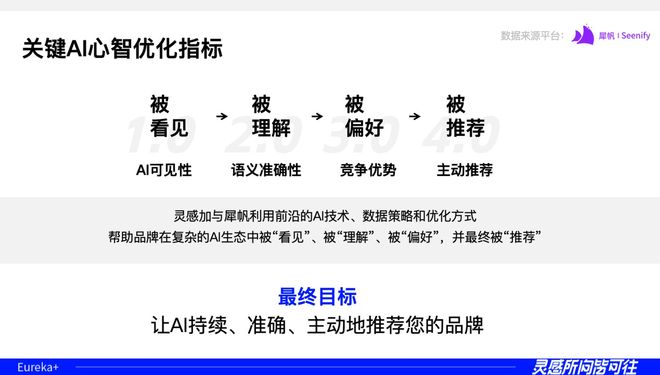
Core Insights - The article discusses the transformative impact of AI chat assistants on consumer behavior and brand marketing strategies, emphasizing a shift from passive information search to active dialogue with AI [2][3][4]. Group 1: AI's Role in Consumer Decision-Making - AI chatbots are becoming the primary advisors for consumers, with over 60% of young consumers consulting AI before making significant purchasing decisions [6][10]. - This shift indicates a fundamental change in how brands communicate their value, as AI now mediates the relationship between brands and consumers [7][18]. - The "reduction" capability of AI simplifies the decision-making process for consumers, allowing them to receive tailored recommendations quickly [14][16]. Group 2: Brand Strategy in the AI Era - Brands must redefine their value propositions to ensure they are visible, recognized, and chosen by consumers who primarily interact with AI [3][4][33]. - The concept of "intent economy" replaces the traditional "attention economy," focusing on understanding consumer needs rather than competing for attention [28][30]. - Brands need to provide specific, verifiable information that AI can easily process and relay to consumers, moving away from vague marketing language [22][23][64]. Group 3: Marketing Methodology Transformation - The marketing focus is shifting from capturing attention to understanding consumer intent, requiring brands to adapt their strategies accordingly [35][65]. - Brands must establish a clear mapping of scenarios, problems, and solutions to effectively respond to consumer inquiries through AI [61]. - The ability to compress information into impactful, context-specific messages is crucial for brands to succeed in the AI-driven marketplace [39][40]. Group 4: The Three Levels of AI Engagement - Brands must achieve three levels of engagement with AI: being seen, being recognized, and being recommended [41][46][52]. - The first level involves ensuring that brand information is indexed and understood by AI, which is essential for visibility [41][42]. - The second level requires brands to provide credible, relevant, and valuable information that AI can trust and relay to consumers [44][45]. - The final level is about being prioritized in AI recommendations, necessitating a deep understanding of specific consumer scenarios [47][48]. Group 5: Future Outlook and Strategic Preparedness - The article concludes that 2026 will mark a significant turning point for brands that adapt to these changes, emphasizing the need for ongoing dialogue with consumers and AI [66][67]. - Companies that can effectively navigate this new landscape will likely outperform those relying on traditional marketing methods [68][69].