中介服务费率合理性

Search documents
500万元房产交易收15万元中介费?二手房中介费高过税费引争议
Xin Hua Cai Jing· 2025-05-16 11:01
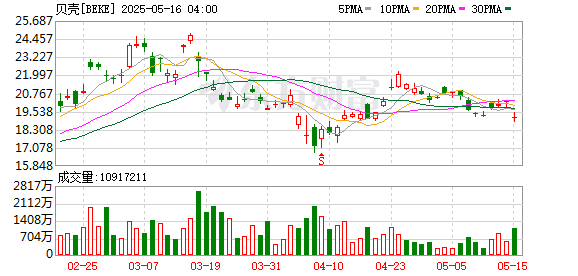
Core Viewpoint - Beike, China's largest real estate transaction and service platform, reported its Q1 2025 financial results, showing a significant increase in transaction volume but a decline in gross margin, leading to a 5.29% drop in its stock price on the day of the announcement [2][3]. Financial Performance - In Q1 2025, Beike achieved a total transaction volume (GTV) of 843.7 billion yuan, a year-on-year increase of 34.0%, with net revenue of 23.3 billion yuan, up 42.4%, and a net profit of 855 million yuan [3]. - The existing home business maintained steady growth, with transaction volume reaching 580.3 billion yuan, a 28.1% year-on-year increase, contributing 6.9 billion yuan to net revenue, a 20.0% increase [3]. - As of the end of Q1, Beike had 55,200 active stores and 490,900 active agents, representing year-on-year growth of 29.6% and 23.0%, respectively [3]. Market Position - Beike's GTV for the entire year of 2024 was 3.35 trillion yuan, while the combined transaction volume of second-hand homes in the four first-tier cities (Beijing, Shanghai, Guangzhou, Shenzhen) was approximately 2.73 trillion yuan, highlighting Beike's significant market presence [3]. Cost Structure and Pricing Issues - The cost structure of second-hand home transactions includes taxes, agency fees, and other minor fees, with agency fees becoming a significant expense as tax reforms have reduced other costs [7][8]. - In Shanghai, Beike's subsidiary, Lianjia, maintains the highest commission rate of 3%, while other agencies typically charge around 2%, leading to public scrutiny regarding the value provided by such high fees [8][10]. Shift in Service Value - The core value of real estate agency services is shifting from merely providing information to facilitating transactions and offering value-added services, as buyers and sellers seek more comprehensive support in navigating complex processes [11][12]. - Experts suggest that the commission structure should evolve to reflect the quality of services provided, with potential for tiered pricing models that align fees with the level of service [11][12]. Industry Evolution - The market is pushing agencies to transition from a "transaction-oriented" approach to a "service-oriented" model, emphasizing standardized basic services and market-driven pricing for value-added services [12]. - The traditional model of relying on information asymmetry is being challenged by digital platforms that enhance transparency and reduce the need for intermediaries [10][12].