中华优秀传统文化创新传播

Search documents
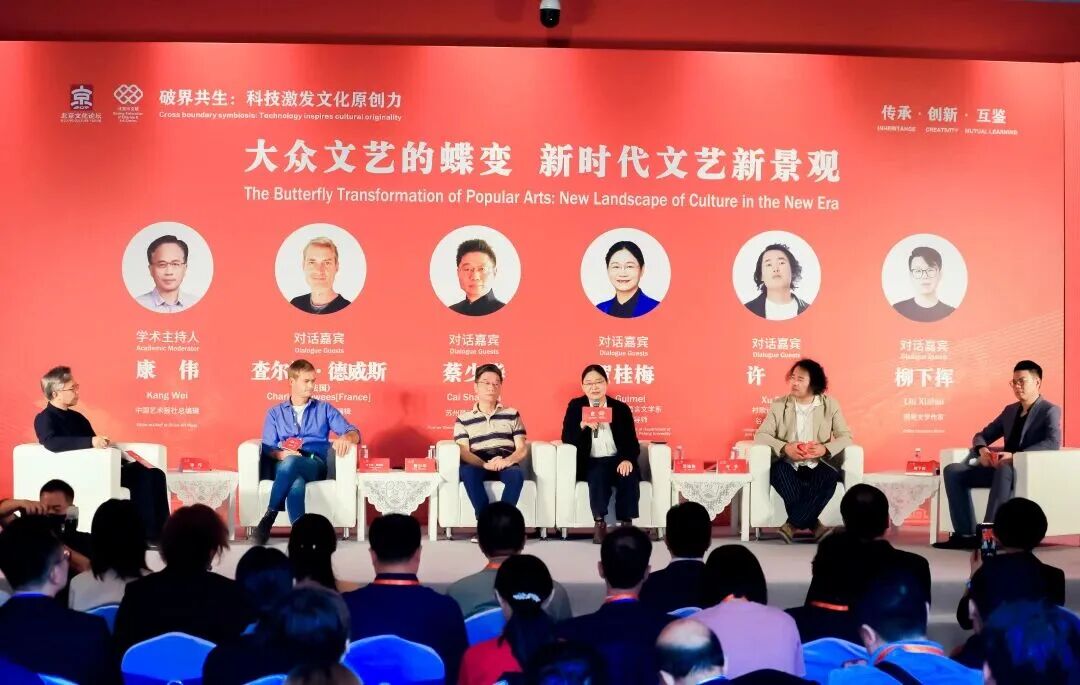
2025北京文化论坛专业沙龙在劳动人民文化宫举办
Bei Jing Wan Bao· 2025-09-25 10:31
Core Viewpoint - The event "The Transformation of Popular Art: New Landscape of Art in the New Era" reflects on the evolution of popular art and discusses the changes in the digital age, emphasizing the importance of integrating technology with traditional art forms [1][4]. Group 1: Event Overview - The salon took place on September 24 as part of the 2025 Beijing Cultural Forum series, marking the 75th anniversary of the first Literary and Art Authors' Representative Conference held at the same venue [1]. - The event gathered diverse guests from various fields, including academic research, traditional opera, online literature, folk music, and international communication [3]. Group 2: Key Insights from Experts - Experts noted a shift in the cultural landscape from print-dominated media to a focus on network and electronic culture, highlighting new interactive features [3]. - The former director of Suzhou Kunqu Opera, Cai Shaohua, emphasized that technology should aid the revival of traditional arts while maintaining a human-centered artistic essence [3]. - Online literature has become a source of cultural IP, with increasing diversity in themes, as pointed out by online writer Liu Xiaohui [3]. - The lead singer of the Gu仓 band shared experiences of grassroots creativity through digital platforms, contributing to rural revitalization [3]. - Charles Devis, editor of France's Energetic Reading, analyzed new models for the overseas dissemination of Chinese online literature [3]. Group 3: Future Directions - Experts agreed that digital technology is reshaping the "popularity" of art, and the development of art in the new era should focus on people, enhance quality content creation, and leverage new technologies for innovative dissemination of traditional Chinese culture [4]. - The salon served as a meaningful reconnection to the historical context of popular art and its future direction, injecting vitality into the construction of Beijing as a cultural center [6]. - The Beijing Labor People's Cultural Palace, as a significant cultural venue for workers, provides a reflective space for the development of art in the new era, witnessing and promoting the flourishing of socialist art [6].