
中华优秀语言文化传承

Search documents
篆书传承的时代命题与美学深耕——从全国第四届篆书作品展览谈起
Xin Lang Cai Jing· 2026-01-31 19:29
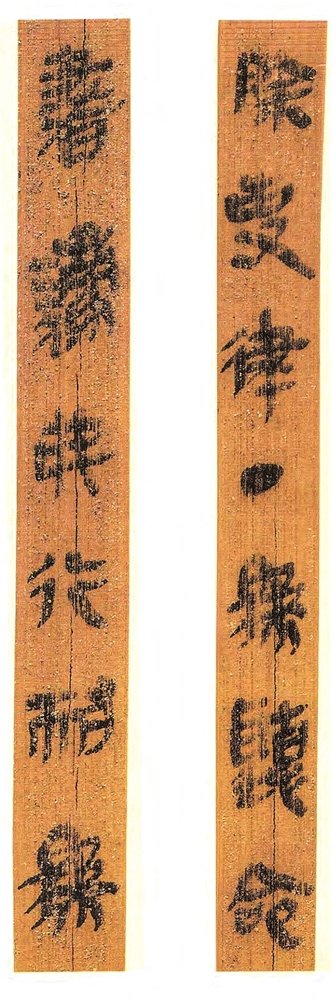
Core Viewpoint - The fourth national seal script exhibition will commence on February 4 in Yunmeng, Hubei, symbolizing a new beginning for the China Calligraphers Association and the revival of seal script in the contemporary context [1][4]. Group 1: Cultural Significance - The exhibition aims to create a dialogue across approximately 2,300 years, connecting ancient Qin dynasty artifacts with contemporary seal script works, emphasizing the continuity of civilization [4]. - A recent directive from the Ministry of Education and six other departments highlights the importance of language and script as carriers of civilization, particularly focusing on the understanding and transmission of ancient scripts like oracle bone inscriptions [4][5]. Group 2: Artistic Characteristics - The exhibition features 195 selected works that showcase significant trends in contemporary seal script creation, including a notable increase in works inspired by ancient sources such as bronze inscriptions and Qin-Han stone carvings [6]. - There is a shift from mere decorative aspects to a focus on the writing process, with artists striving to convey the essence of ancient inscriptions through the fluidity of brushwork on softer materials like paper [6][7]. - A growing awareness of the importance of strict adherence to traditional forms and the integration of literary content into seal script works is evident, reflecting a desire for unity between form and meaning [7]. Group 3: Dialogue and Education - The exhibition serves as a platform for dialogue between ancient theories of calligraphy and contemporary artistic practices, encouraging creators to interpret and transform ancient wisdom into modern methodologies [9]. - It aims to bridge the gap between "rare studies" and public education, making ancient scripts accessible and engaging to the public through artistic and experiential means [9]. - Discussions among judges regarding the balance between artistic individuality and traditional standards contribute to a deeper understanding of contemporary calligraphy development [9]. Group 4: Future Directions - The future of seal script art requires a balance between academic depth and artistic innovation, encouraging exploration of ancient materials while integrating contemporary aesthetics and cross-disciplinary approaches [10].

七部门:加强古文字学拔尖创新人才培养,确保冷门“绝学”有人做
Xin Lang Cai Jing· 2026-01-19 08:57
Core Viewpoint - The Ministry of Education and six other departments released an opinion aimed at promoting the transmission and development of excellent Chinese language culture, emphasizing the importance of language education and talent cultivation in enhancing national cultural literacy [1]. Group 1: Language Talent Development - The opinion highlights the need to build a sufficient, well-structured, and high-quality language culture talent team, focusing on the cultivation and reserve of research-oriented, application-oriented, and composite language culture talents [2]. - It proposes to enhance incentives for language talents and establish a chief expert system for major national language culture projects to cultivate leading figures in the field [2]. - The plan includes the implementation of a national language culture inheritor program to nurture "language resource guardians," "language technology engineers," and "language culture ambassadors" [2]. Group 2: Educational Integration - The opinion calls for innovative language culture education models in schools, integrating excellent Chinese language culture education into the moral, intellectual, physical, aesthetic, and labor education systems [3]. - It emphasizes the importance of incorporating language culture education into the ideological and political curriculum at all educational levels, promoting a collaborative education model involving families and communities [3]. - Schools are encouraged to utilize historical artifacts and resources to teach about the evolution of ancient scripts and to enhance students' language skills through various educational activities [3].
以学科交叉提升基础教育发展模式
Xin Hua Ri Bao· 2025-10-15 23:04
Core Viewpoint - The article emphasizes the importance of integrating technology and cultural heritage in basic education, particularly through interdisciplinary approaches to enhance students' technological literacy and promote the inheritance of Chinese traditional culture [1][4][6]. Group 1: Importance of Basic Education - Basic education is foundational for individual growth and national development, shaping personal abilities, promoting social equity, and passing on civilization [1]. - The core task of basic education is to inspire and enhance students' thinking, laying a solid foundation for their future learning and overall development [2]. Group 2: Interdisciplinary Approach - Utilizing interdisciplinary methods in teaching can enhance students' understanding by integrating theories, methods, and technologies from different subjects, fostering logical connections and collaborative learning [2][3]. - The teaching of Pinyin can incorporate knowledge from physics, mathematics, and literature to illustrate the structural and analytical relationships within language, thereby stimulating students' curiosity and cognitive development [3][5]. Group 3: Technological Integration in Education - The current educational approach to Pinyin, established since 1958, has relied on visual associations, which may not fully leverage modern technological advancements [4]. - Voice technology plays a crucial role in human-computer interaction and is foundational for Chinese language AI, making Pinyin essential for overcoming technical challenges associated with non-phonetic Chinese characters [4][5]. Group 4: Cultural Heritage and Innovation - Pinyin, while derived from the Roman alphabet, represents a significant cultural achievement rooted in Chinese traditional wisdom and has evolved over 1800 years [7]. - The teaching of Pinyin should transcend basic literacy and actively incorporate interdisciplinary methods to foster innovative transmission and development of traditional culture [7][8].