
金文

Search documents
坚定文化自信 建设文化强国丨千年汉字贯古今
Zhong Yang Ji Wei Guo Jia Jian Wei Wang Zhan· 2026-01-30 00:45
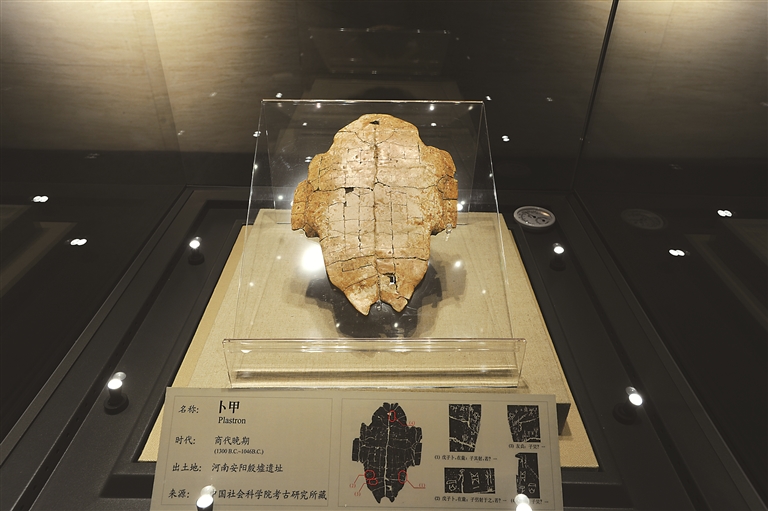
Core Viewpoint - The exhibition at the China Character Museum showcases the evolution of Chinese characters, emphasizing their historical significance and continuity over 3,000 years, which is seen as a vital part of Chinese cultural heritage [7][10][16]. Group 1: Historical Significance of Oracle Bone Script - Oracle bone script is recognized as the earliest systematic form of Chinese characters, dating back to the Shang Dynasty, and serves as a crucial link to understanding early Chinese civilization [8][9][10]. - The discovery of oracle bone inscriptions has provided substantial evidence for the social, religious, and agricultural practices of the Shang Dynasty, reflecting the cultural roots of the Chinese nation [9][10]. Group 2: Evolution of Chinese Characters - The development of Chinese characters has progressed from oracle bone script to bronze inscriptions, small seal script, and eventually to clerical and regular scripts, showcasing a continuous evolution that aligns with practical writing needs [13][14][16]. - The transition from small seal script to clerical script during the Han Dynasty marked a significant shift towards more practical and efficient writing styles, which facilitated the spread of literacy and culture [13][14]. Group 3: Cultural Transmission and Identity - Chinese characters serve as a powerful medium for cultural transmission, linking generations and reinforcing national identity through their historical continuity [16]. - The ongoing evolution of Chinese characters reflects the dynamic nature of Chinese civilization, which has adapted while maintaining its core identity over millennia [16].

七部门:加强古文字学拔尖创新人才培养,确保冷门“绝学”有人做
Xin Lang Cai Jing· 2026-01-19 08:57
Core Viewpoint - The Ministry of Education and six other departments released an opinion aimed at promoting the transmission and development of excellent Chinese language culture, emphasizing the importance of language education and talent cultivation in enhancing national cultural literacy [1]. Group 1: Language Talent Development - The opinion highlights the need to build a sufficient, well-structured, and high-quality language culture talent team, focusing on the cultivation and reserve of research-oriented, application-oriented, and composite language culture talents [2]. - It proposes to enhance incentives for language talents and establish a chief expert system for major national language culture projects to cultivate leading figures in the field [2]. - The plan includes the implementation of a national language culture inheritor program to nurture "language resource guardians," "language technology engineers," and "language culture ambassadors" [2]. Group 2: Educational Integration - The opinion calls for innovative language culture education models in schools, integrating excellent Chinese language culture education into the moral, intellectual, physical, aesthetic, and labor education systems [3]. - It emphasizes the importance of incorporating language culture education into the ideological and political curriculum at all educational levels, promoting a collaborative education model involving families and communities [3]. - Schools are encouraged to utilize historical artifacts and resources to teach about the evolution of ancient scripts and to enhance students' language skills through various educational activities [3].
大兴区拟新增两家“类博物馆”
Xin Jing Bao· 2025-11-19 01:56
Core Insights - The article discusses the recent approval of two "quasi-museum" institutions in Daxing District, Beijing, which are now recognized as important cultural dissemination platforms [1] Group 1: Quasi-Museum Developments - The Beijing Municipal Bureau of Cultural Heritage has conducted a centralized acceptance inspection for various district applications, resulting in the approval of the Beijing Hongwen Boya Thangka Museum and the Beijing Zhongyuan Hanzi Cultural Museum after necessary improvements [1] - Currently, there are a total of seven "quasi-museums" in Daxing District, contributing significantly to local cultural communication [1] Group 2: Beijing Hongwen Boya Thangka Museum - Located in Weishanzhuang Town, the museum focuses on the intangible cultural heritage of Thangka art, showcasing its creation process, thematic evolution, and cultural integration [1] - The museum houses a significant collection of Thangka artworks, ranking among the top in Beijing, and serves as a vital resource for studying Tibetan culture and the exchange between Tibetan and Han cultures [1] - The museum enhances national identity through the introduction of cultural and creative products and various experiential activities [1] Group 3: Beijing Zhongyuan Hanzi Cultural Museum - Situated within the China Calligraphy Institute, this museum specializes in Hanzi culture and calligraphy, featuring over a hundred exhibits [1] - The museum presents the evolution of Chinese characters through seven styles, including oracle bone script and regular script, arranged chronologically to illustrate the development of Hanzi culture [1] - It aims to preserve and promote the profound heritage of Chinese character culture through its exhibits [1]