中华文明包容性

Search documents
东西问丨李思敏:苏巴什佛寺何以成解码新疆多元文化荟萃的钥匙?
Xin Lang Cai Jing· 2026-01-27 13:43
Core Viewpoint - The Su Ba Shi Buddhist Temple site serves as a key to understanding the rich tapestry of multiculturalism in Xinjiang, reflecting the historical interactions and exchanges between different civilizations along the Silk Road [3][12]. Group 1: Significance of Su Ba Shi Temple - The Su Ba Shi Temple site is the largest and best-preserved Buddhist architectural complex in Xinjiang, recognized as a UNESCO World Heritage site in 2014 [5]. - Its geographical location in ancient Kucha, a crucial node on the Silk Road, provides a natural foundation for cultural convergence [3]. - The site, established in the 3rd century AD, documents the spread and decline of Buddhism in the region, alongside the governance of central authorities over Xinjiang [3][12]. Group 2: Architectural and Cultural Features - The architectural design of Su Ba Shi Temple reflects a blend of various cultural influences, including traditional Chinese axial symmetry and Gandhara Buddhist art [5]. - Recent archaeological findings, such as seals depicting figures related to Western classical mythology, illustrate the cultural exchange between East and West [5]. - Artifacts like the Sumeru Zhe relic box, adorned with local dance figures, highlight the integration of Buddhist culture into the daily lives of the local population [5][6]. Group 3: Evidence of Multicultural Exchange - The discovery of various coins from different dynasties, alongside artifacts from the Sasanian Empire, indicates the region's role as a significant trade route between East and West [6]. - Other archaeological sites in Xinjiang, such as the murals in the Tuyuq Valley and the ancient city of Jimi, further exemplify the region's multicultural heritage [8][9]. - The presence of over 15,000 fragments of documents in multiple languages from the Tuyuq Valley caves underscores the coexistence of diverse cultures and religions in Xinjiang [9]. Group 4: Historical Context and Influences - The formation of Xinjiang's multicultural landscape is attributed to its geographical position, historical developments, and the interactions among various ethnic groups [12]. - Central governance from the Han Dynasty onward has played a crucial role in maintaining social stability and promoting cultural integration in the region [12][14]. - The inclusive nature of Chinese civilization has facilitated the harmonious coexistence of multiple cultures and religions, enriching the cultural expressions in Xinjiang [14].


从云冈纹饰细节看文明传承(新书问答)
Ren Min Ri Bao Hai Wai Ban· 2025-08-06 22:47
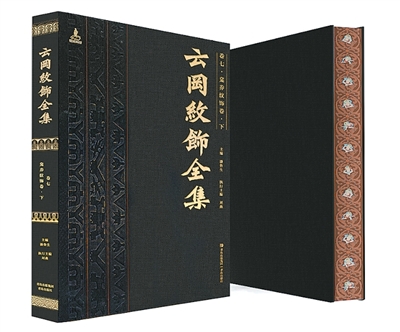
Core Insights - The article discusses the significance of the newly published "Yungang Ornamentation Complete Works," which represents a milestone in the study of Yungang Grottoes and highlights the unique charm of Yungang ornamentation [4][5][6] Summary by Sections Historical Context - The "Yungang Ornamentation Complete Works" builds upon previous research, notably the archaeological reports by Japanese scholars in the 1950s and the "Yungang Grottoes Complete Works" published in 2019, marking a progression in the study of Yungang Grottoes [4][5] Innovations and Contributions - This new work fills the gap in systematic exploration of ornamentation that was absent in earlier studies, utilizing scientific methods and modern technology to recreate the artistic foundations of Yungang Grottoes [5][6] - It emphasizes a shift from macro to micro perspectives in research, revealing the evolution of artistic styles through detailed studies of ornamentation [6][10] Artistic and Cultural Significance - The ornamentation reflects the integration of diverse cultural influences, showcasing styles from Gandhara, Indian, and Persian Sasanian elements, and highlights the evolution from simple to complex designs over time [8][9] - The book categorizes ornamentation into various themes, illustrating a rich artistic world that serves as a key to understanding ancient artistic thoughts and cultural exchanges [9][10] Structure and Accessibility - The "Complete Works" consists of 18 volumes covering over 98% of visible ornamentation, organized into ten categories with detailed subcategories, ensuring a comprehensive research framework [10][11] - Plans for a simplified version and interactive digital products aim to make the content accessible to a broader audience, enhancing public engagement with Yungang ornamentation [11]