
中华民族共同体

Search documents
(新春走基层)春到边疆歌飞扬 云南耿马“村晚”唱响多民族欢歌
Xin Lang Cai Jing· 2026-02-17 11:11
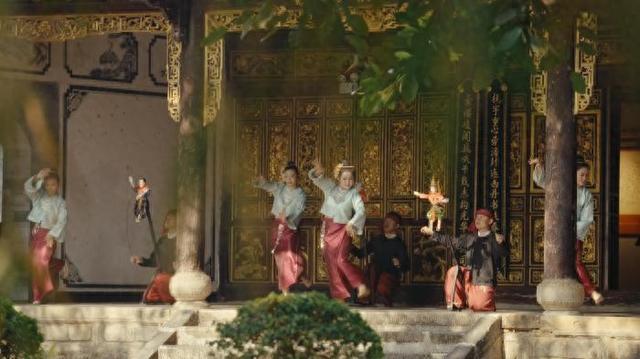
Core Viewpoint - The "Village Spring Festival, Every Place is Good" special program showcases the cultural richness and harmonious coexistence of various ethnic groups in the border town of Gengma, Yunnan, during the Chinese New Year celebrations [1][2]. Group 1: Program Overview - The program is designed under the concept of "art from the people, for the people, belonging to the people," aiming to connect the happiness of border communities with their deep cultural heritage [2]. - It features a blend of traditional and modern elements, using "fire" and "horse" as core themes, and incorporates a mix of micro-reality shows and dance performances [2]. - The program is presented through a documentary-style observation and reality show format, with cultural experience officers guiding the audience through local customs and performances [2]. Group 2: Cultural Significance - The program highlights the diverse cultural expressions of the ethnic groups in Gengma, including traditional performances like the Dai puppet show and contemporary dance [3][4]. - It emphasizes the unity and shared joy among different ethnic communities during the Spring Festival, showcasing their unique celebrations and traditions [4][7]. - The program aims to promote understanding of Chinese culture and the development of border areas to a global audience, encouraging viewers to appreciate the beauty of Gengma [4][6]. Group 3: Audience Engagement - The program has successfully attracted interest from viewers, with many expressing a desire to visit Yunnan and experience Gengma firsthand [7]. - It serves as a platform for cultural exchange, allowing international audiences to gain insights into the rich tapestry of Chinese traditions and the vibrant life of border communities [6][7]. - The production team hopes to convey that the Spring Festival is not just a grand narrative on stage but also a celebration of everyday life and community spirit [6].

欢欢喜喜过大年|北大红楼、蒙藏学校旧址邀您共度红火中国年
Xin Lang Cai Jing· 2026-02-15 14:49
Core Viewpoint - The article highlights a series of cultural and educational activities organized at the Peking University Red Building and the Mongolian and Tibetan School site during the Spring Festival, aiming to blend revolutionary history with traditional culture and engage the public in meaningful experiences [2]. Group 1: Spring Festival Activities - "Welcoming the New Year and Sending Blessings" event will provide visitors with 福 (Fu) characters, allowing them to create cultural memories in a revolutionary historical atmosphere [4]. - "New Year Remembers the Original Intention, Youth is Just Right" volunteer explanations will be conducted by excellent guides and young volunteers, focusing on themes like "Revolutionary Original Intention" and "Chinese National Community" [6]. - "Spiritual Source Journey" will offer immersive experiences for youth through guided tours, scenario simulations, and group discussions to instill values and historical understanding [8]. Group 2: Specific Event Details - The events will take place from February 17 to February 19, with specific times for each activity at the Peking University Red Building and the Mongolian and Tibetan School site [8]. - "I am a Little Guide" experience activity will recruit youth to learn basic explanation skills and present segments of the exhibition, aimed at enhancing their public speaking and historical awareness [10]. - "New Year Lantern Riddles" will invite visitors to participate in traditional cultural experiences, with limited commemorative gifts available for those who solve the riddles [12][13]. Group 3: Cultural Experience Projects - Special cultural experience projects will include performances of Liao Nan shadow puppetry, Ulan Muqi artistic programs, and Anhui folk songs, allowing audience interaction and engagement [14]. - These performances will take place at the Mongolian and Tibetan School site from February 20 to February 24, with specific times for each show [14][16].
边疆治理的考古见证(考古中国)
Ren Min Ri Bao· 2026-02-07 00:42
Core Insights - The archaeological discoveries at the Badamu East Cemetery in Turpan provide significant evidence of the governance of the frontier regions by the central government during the Han and Tang dynasties, showcasing the evolution of administrative practices over time [2] - The findings also illustrate the process of the formation of the Chinese nation, highlighting the interactions and cultural exchanges among diverse groups under the unified rule of the Tang dynasty [3] Group 1: Historical Significance - The Badamu East Cemetery serves as a testament to the governance strategies employed by the Han and Tang dynasties in the western regions, reflecting the transition from military to civil administration [2] - The graves of officials who were naturalized into the Tang dynasty indicate the integration of local populations into the imperial system, contributing to the stability and prosperity of the region [2] Group 2: Cultural Exchange - Artifacts from the cemetery demonstrate the multicultural interactions along the Silk Road, with evidence of influences from various regions, including the presence of foreign coins and artifacts [3] - The discovery of unique burial practices and items, such as the彩棺 (colorful coffin) and high-value political gifts, underscores the rich cultural tapestry and the continuity of Chinese civilization [3]
西南民族大学西昌市共同现代化研究院召开建设及运行工作推进会
Xin Lang Cai Jing· 2026-01-29 08:27
Core Insights - The Southwest Minzu University has initiated a meeting to advance the construction and operation of the Xichang Modernization Research Institute, focusing on resource integration and collaborative efforts for high-quality development [1][2] Group 1: Meeting Objectives - The meeting aimed to summarize previous achievements and systematically plan the next phase of key tasks for the research institute [1] - It emphasized the importance of consensus building and resource optimization to enhance collaboration between the university and local government [1] Group 2: Reports and Presentations - Reports were presented by various leaders, including the Dean of the Economic College and the Vice Dean of the Research Institute, detailing the progress in construction and operation [1] - Specific research teams discussed their work related to modernization governance, language promotion, agricultural technology innovation, and social development in the Liangshan area [1] Group 3: Future Goals - The research institute aims to become a significant platform for supporting the modernization of Southwest China, establishing a new model for university-local government cooperation [2]
蒙藏学校旧址亮出非遗文化盛宴
Xin Lang Cai Jing· 2026-01-19 04:46
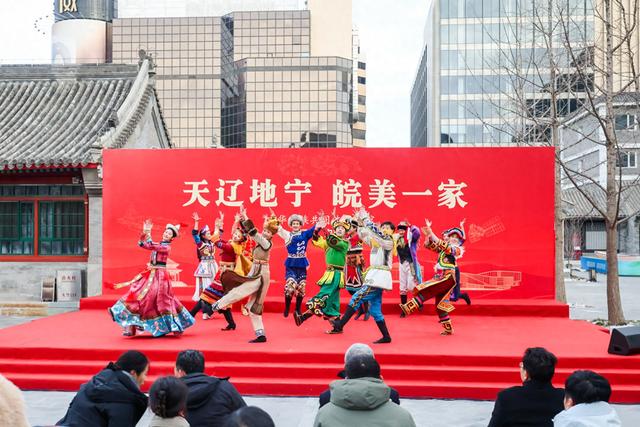
Group 1 - The first phase of the "Chinese National Community Cultural Experience Project" was launched on January 19, 2026, featuring intangible cultural heritage from Liaoning and Anhui provinces under the theme "Heavenly Liaoning, Peaceful Anhui, Beautiful Together" [2] - The Anhui experience area showcased gourd pyrography, where staff demonstrated the technique and explained the challenges involved in creating art on hard surfaces [2] - The Liaoning experience area was divided into six sections, highlighting the vibrant practices of building the "Chinese National Community" on the black soil [4] Group 2 - A Huizhou "study" displayed traditional writing tools, allowing visitors to experience virtual calligraphy and copy classic texts like "Lantingji Xu" [4] - The Liaoning section featured demonstrations of traditional tools used in local crafts, emphasizing the region's historical contributions to China's industrial development and its reputation as the "cradle of New China's industry" [6] - The exhibition will last for three months, with free admission and special activities planned during the Spring Festival to enhance the festive atmosphere [8]
王延中:深刻认识中华民族共同体的形成和发展是历史必然
Bei Jing Ri Bao Ke Hu Duan· 2026-01-14 03:07
Core Viewpoint - The speech by General Secretary Xi Jinping at the National Ethnic Unity and Progress Commendation Conference emphasizes the historical and cultural significance of the Chinese nation and the importance of building a unified multi-ethnic state, highlighting the inevitability of the formation and development of the Chinese national community [1][10]. Group 1: Conceptual Understanding - The terms "Chinese nation" and "Chinese national community" represent new concepts that reflect a multi-dimensional understanding of ethnicity, differing from Western views that see ethnicity as a stable, singular cultural group [2][3]. - The understanding of "Chinese nation" and "Chinese national community" encompasses all ethnic groups and individuals within China, recognizing the dynamic nature of ethnic identity and cultural characteristics [2][3]. Group 2: Historical Development - The Chinese nation has historically embraced the idea of unity, with the concept of "one family under heaven" becoming widely accepted since the pre-Qin period, leading to the establishment of a unified multi-ethnic state [3][4]. - The historical trajectory of the Chinese nation includes significant interactions and integrations among various ethnic groups, fostering a sense of shared identity and cultural exchange [4][5]. Group 3: Modern Context and Party's Role - The Communist Party of China has prioritized ethnic work, promoting unity and cooperation among all ethnic groups, which has led to unprecedented progress in the socio-economic development of ethnic minority regions [6][7]. - Since the 18th National Congress, Xi Jinping has emphasized the importance of the Chinese national community, integrating historical, political, and cultural dimensions into the party's ethnic policies [7][8]. Group 4: Future Directions - The ongoing development of the Chinese national community is seen as a process that requires continuous interaction and integration among ethnic groups, which is essential for national unity and the realization of the great rejuvenation of the Chinese nation [12][13]. - The promotion of a harmonious ethnic relationship is crucial for maintaining social cohesion and addressing both domestic and international challenges related to ethnic issues [13][14].
如何正确理解中国历史上的民族融合
Xin Lang Cai Jing· 2025-12-23 06:41
Core Viewpoint - The article critiques the "1644 historical perspective" and similar narratives that misinterpret Chinese history by attributing the decline of civilization to the transition from the Ming to Qing dynasties, arguing that this view neglects the significant contributions of the Yuan and Qing dynasties to the development of the Chinese nation [1][5]. Group 1: Historical Context - The concept of "nation" in the Chinese context corresponds to the English term "nation," which emerged in Western Europe in the 17th century and was introduced to China during the late Qing period [2]. - The central region of the Yellow and Yangtze River basins has historically been the core area of a political, economic, and cultural community bound by Chinese traditional culture [2]. - The historical interactions among various groups in East Asia have led to a "you within me, I within you" relationship, contrasting with the Western notion of distinct cultural boundaries [3][4]. Group 2: Misinterpretations and Theories - The article highlights that the term "people" is often used by Western scholars when discussing historical groups in China, which should not be directly translated to "nation" in modern terms, as this can lead to misunderstandings of historical ethnic relations [3]. - The "multi-ethnic unity" theory proposed by Fei Xiaotong emphasizes that various groups in East Asia have gradually formed a cohesive community through continuous interaction, trade, and cultural exchange since the Qin dynasty [3][4]. - The Qing dynasty's integration of Han culture and governance practices demonstrates that the notion of "Manchu as an external regime" is fundamentally flawed, as the Qing actively adopted and expanded upon Chinese political culture [5]. Group 3: Contemporary Relevance - The article warns against the resurgence of divisive narratives that seek to undermine the unity of the Chinese nation, which have historical roots in external influences aiming to create internal discord [6]. - Xi Jinping's emphasis on the "multi-ethnic unity" theory reinforces the idea that the history of the Chinese nation is a collective narrative shaped by various ethnic groups working together [6][7]. - Understanding the historical processes of integration and coexistence among different ethnic groups is crucial for fostering national unity and countering separatist ideologies [7].
“历史铸就共同体——西藏地方与祖国关系史专题展”在京开幕
Xin Lang Cai Jing· 2025-12-22 11:05
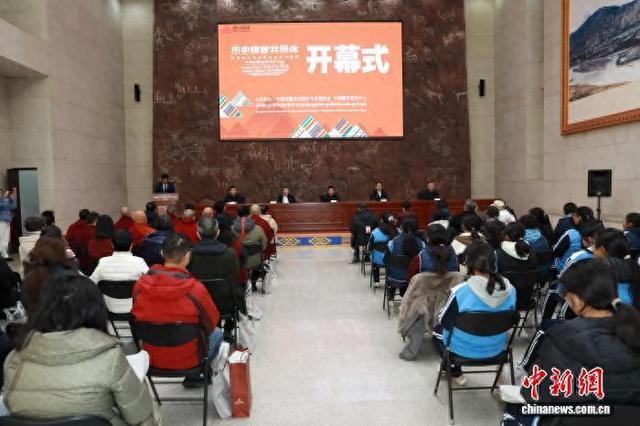
Core Viewpoint - The exhibition titled "History Builds a Community - A Special Exhibition on the Historical Relationship between Tibet and the Motherland" emphasizes the historical connection between Tibet and China, asserting that Tibet has always been an inseparable part of China, supported by a wealth of historical evidence [3][4]. Group 1 - The exhibition was inaugurated on December 22 at the Tibet Culture Museum of the China Tibetology Research Center, attended by various representatives including officials and students [2][3]. - Zheng Dui, the General Secretary of the China Tibetology Research Center, highlighted that the historical evidence, including relics, documents, and archives, confirms the deep-rooted connection between Tibet and the Chinese nation, reinforcing the idea of a unified Chinese community [3]. - The exhibition features 467 physical items, 171 images, 14 multimedia presentations, 4 models, and 5 scene systems, illustrating the historical development of the relationship between Tibet and the motherland [4]. Group 2 - The exhibition serves as a tribute to the achievements of the Tibet Autonomous Region over the past 60 years and emphasizes the long-standing bond between the Tibetan plateau and the rest of the country [4]. - Zheng Dui stated that the fate of Tibet has always been closely linked to the broader Chinese community, reflecting a shared belief in the indivisibility of the nation and the continuity of civilization [3].
石榴花开处,烟火照人间
Ren Min Ri Bao· 2025-11-17 23:06
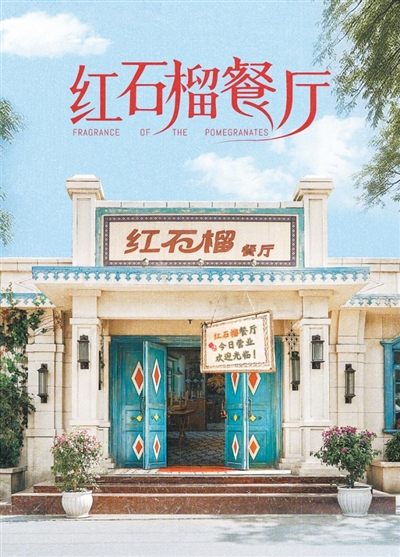
Core Viewpoint - The drama "Pomegranate Restaurant" intricately weaves individual dreams, emotional ties, and the spirit of the times against the backdrop of Xinjiang, presenting a vibrant picture of contemporary life in the region [2]. Group 1: Narrative and Themes - The main storyline of "restaurant crisis" connects various themes such as rural revitalization, intangible cultural heritage, and family life, maintaining a light narrative pace while reflecting the harmonious and prosperous era of Xinjiang [3]. - The character Mingliang's transformation from an art student to a restaurant operator symbolizes a redefinition of personal ideals, emphasizing that true art is rooted in everyday life [3]. - The love story between Mingliang and wildlife doctor Gulinar transcends typical romantic entanglements, representing two life paths illuminated by a shared love for the land [3]. Group 2: Visual and Artistic Expression - The series employs high-saturation colors to create a bright and rich visual representation of Xinjiang, capturing its beautiful landscapes and vibrant life [4]. - The production team constructed a two-story restaurant in Urumqi's old town, ensuring it blends seamlessly with the surrounding environment, while the costumes resonate with contemporary aesthetics [4]. - The use of authentic details evokes sensory experiences, allowing viewers to feel the essence of Xinjiang's culture and community [4]. Group 3: Societal Impact and Representation - The broadcast of "Pomegranate Restaurant" carries significant meaning, portraying the real face of contemporary Xinjiang through relatable characters and warm life details [4]. - The narrative illustrates the deep bonds among multi-ethnic members of the "Pomegranate family," highlighting understanding and tolerance despite misunderstandings and conflicts [4]. - The show emphasizes that profound strength often lies in the ordinary, with grand themes being articulated through the lives of specific individuals, enhancing the understanding of the Chinese national community [4].
习言道|各族人民都有一个共同名字,就是中国人
Zhong Guo Xin Wen Wang· 2025-11-12 08:25
Group 1 - The core viewpoint emphasizes the unity of the Chinese nation as a large family, consisting of fifty-six ethnic groups [1] - The importance of ethnic work and the promotion of the Chinese national community has been a significant focus for General Secretary Xi Jinping, who has dedicated considerable effort to this cause [1]