
中原文化

Search documents
踏春寻马记
He Nan Ri Bao· 2026-02-15 23:20
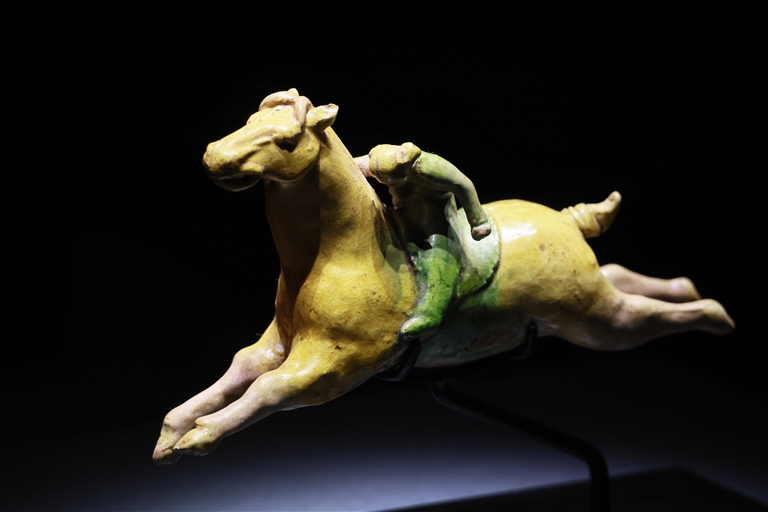
Core Insights - The article emphasizes the cultural significance of horses in Chinese history, symbolizing strength and resilience, particularly in the context of the upcoming Year of the Horse [1] Group 1: Cultural Significance of Horses - Horses are depicted as important partners to humans and are symbols of vigor and perseverance in Chinese culture [1] - The article invites readers to explore the historical and cultural narratives surrounding horses through artifacts, intangible heritage, and place names [1] Group 2: Historical Artifacts - The article mentions various historical artifacts related to horses, such as the Tang Dynasty tri-colored pottery horse, which showcases the typical features of horses from that era [9] - The jade horse from the tomb of Fu Hao is noted as the earliest known representation of a horse in China, highlighting its intricate design and craftsmanship [12] - A bronze mirror from the Tang Dynasty features hunting scenes with horse riders, illustrating the significance of horses in noble activities [15] Group 3: Regional Cultural Expressions - The article discusses the prevalence of place names containing "horse" in Henan, reflecting the historical and cultural ties between the region and horses [48] - Specific locations like Zhuzhou and Yima are highlighted for their historical connections to horse culture, including their roles as ancient relay stations and their associations with notable historical figures [49][50] - The narrative of Ma Village District connects the historical significance of horses with modern cultural practices, showcasing the continuity of horse-related traditions [51] Group 4: Artistic Representations - The article mentions various artistic representations of horses in traditional crafts, such as woodblock prints and paper-cutting, which convey auspicious meanings associated with horses [36][44] - The integration of horse motifs in contemporary cultural products, like the "Horse Snow King" and "Horse Prosperity" ceramics, reflects the ongoing relevance of horse symbolism in modern consumer culture [32]

游开封,感受中原文化
Bei Jing Ri Bao Ke Hu Duan· 2026-02-03 03:00
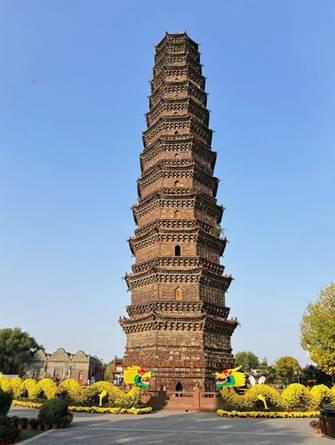
Core Viewpoint - Kaifeng has transformed into a popular tourist destination, known for its rich cultural heritage and historical significance, attracting visitors with its ancient charm and modern developments [1][11]. Group 1: Historical Significance - Kaifeng, with over 2,700 years of history, has served as the capital for seven dynasties, earning the title "Seven Dynasties Capital" [1][3]. - The city is renowned for its cultural contributions, including the famous painting "Along the River During the Qingming Festival," which depicts the prosperity of Kaifeng during the Northern Song Dynasty [3][5]. - Historical figures from Kaifeng include notable scholars and poets, contributing to its rich cultural legacy [9][11]. Group 2: Cultural Attractions - The "Qingming Riverside Landscape Garden" has been constructed to replicate the scenes from the famous painting, allowing visitors to experience the historical lifestyle of the Song Dynasty [5][7]. - Various cultural sites, such as the Iron Pagoda, Dragon Pavilion, and Xiangguo Temple, showcase the architectural and artistic heritage of the region [15][17]. - Kaifeng has been designated as a key tourist city by the Ministry of Culture and Tourism, highlighting its cultural and historical significance [15]. Group 3: Modern Developments - The city has undergone significant transformation, with modern infrastructure and urban development surpassing the historical prosperity depicted in the "Qingming Riverside Landscape" [11][13]. - Local agricultural practices have evolved, utilizing the nutrient-rich silt from the Yellow River to enhance crop production, leading to economic growth [13]. - The tourism industry in Kaifeng is supported by its well-connected transportation network, making it an attractive destination for both domestic and international tourists [15].
看见·活力河南丨郑州中式茶饮品牌续写丝路新故事 荆芥茶饮香飘东南亚
He Nan Ri Bao· 2025-08-25 23:30
Group 1 - The core idea of the news is the expansion of the Chinese tea brand "Jian Tea Zhen Xuan" into the Southeast Asian market, starting with its first overseas store in Malaysia, featuring a lemon tea infused with the local herb, Jingjie [1][2] - The founder, Hui Haifeng, has focused on building an overseas supply chain and selecting store locations, while also continuing domestic expansion with new themed stores in China [1] - The brand aims to create a cultural experience for customers, blending traditional Chinese elements with modern tea culture, appealing particularly to younger consumers [1][2] Group 2 - In addition to tea, the brand has developed new retail products such as Jingjie-flavored soft candies and unique snacks, emphasizing the use of local ingredients [2] - The company plans to focus on expanding into Malaysia and Thailand over the next two years, aiming to promote the cultural heritage of Henan province [2]