中国书法

Search documents
爱上墨香二十载 斯洛伐克青年因书法扎根中国
Xin Lang Cai Jing· 2026-01-02 06:07
Core Viewpoint - The article highlights the journey of a Slovak youth, Omar, who has developed a deep passion for Chinese calligraphy over the past two decades, showcasing the cultural exchange and appreciation between Slovakia and China [1][2]. Group 1: Background and Motivation - Omar's interest in Chinese calligraphy began in childhood, influenced by his uncle's fascination with Chinese culture and the tools he brought back, such as brushes and ink [1]. - A pivotal moment for Omar was watching the Chinese film "Hero" in 2005, which sparked his curiosity about the beauty and power of Chinese characters, leading him to self-study calligraphy [1]. Group 2: Education and Artistic Philosophy - After graduating in 2013, Omar moved to China to study at the China Academy of Art, where he has spent over ten years deepening his understanding of Chinese language and calligraphy [2]. - He notes a significant difference between Chinese calligraphy and Western art, particularly in the acceptance of "beauty in imperfection," which has influenced his artistic approach [2]. - Omar incorporates his background in artifact restoration into his calligraphy, using metal plates and reagents to create art that evolves over time, reflecting the natural changes seen in ancient artifacts [2]. Group 3: Current Status and Future Aspirations - Currently pursuing a doctoral degree at the China Academy of Art, Omar is one of the few foreign students in his class, acknowledging the high barriers to mastering calligraphy, which requires understanding of Chinese characters and culture [3]. - He expresses a desire to live in the moment without setting specific future goals, indicating a likelihood of remaining in China and continuing his journey with calligraphy, which he views as a vast ocean requiring decades of dedication [3].
“洋学生”中国说|丹青送祝福!多国留学生学习体验中国书法:“我爱你中国”
Huan Qiu Wang· 2025-10-01 08:49
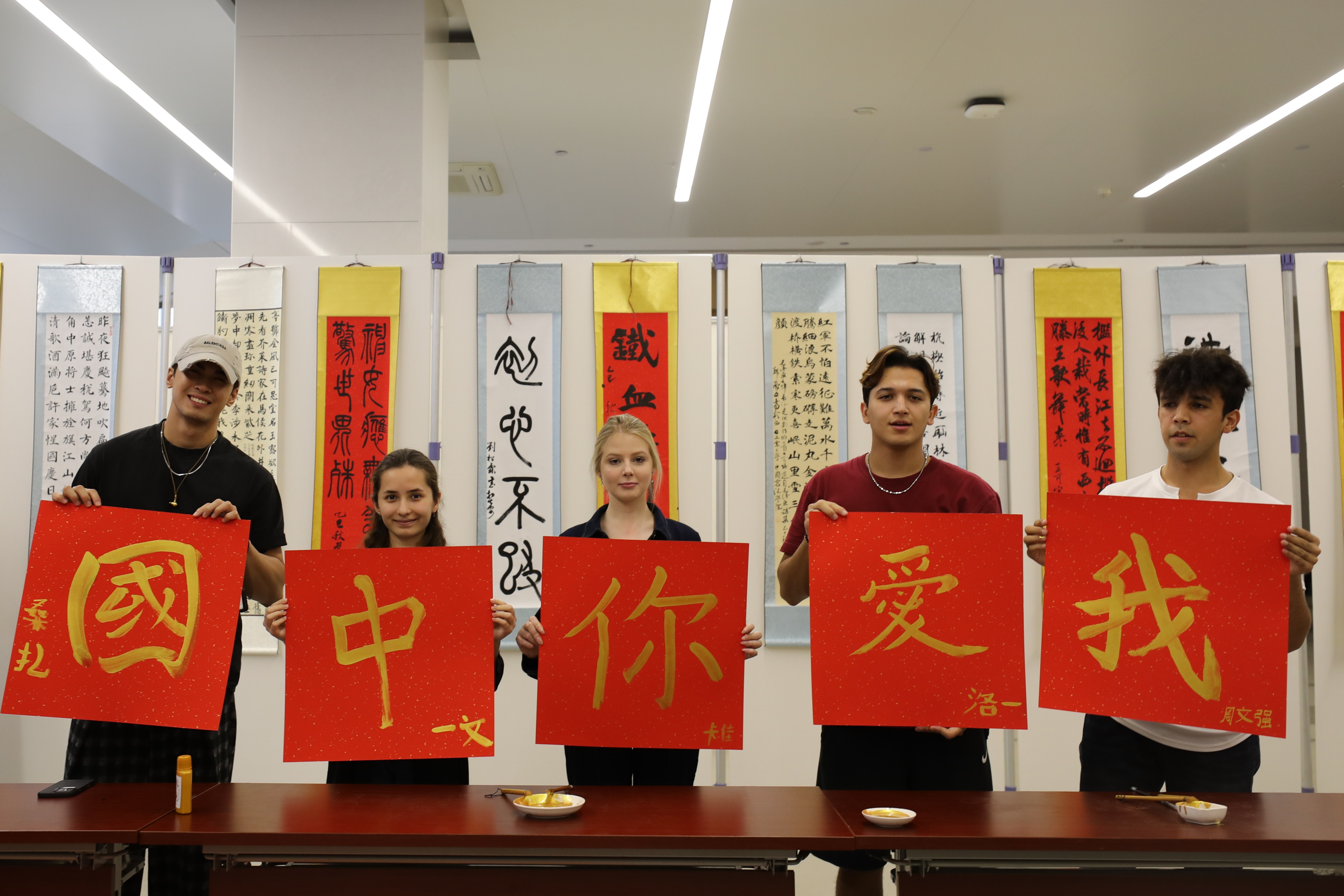
Core Points - The article highlights the growing interest and appreciation for Chinese calligraphy among international students, particularly during the National Day and Mid-Autumn Festival celebrations [1][6] - Chinese calligraphy is recognized as an important part of traditional Chinese culture and was included in UNESCO's list of Intangible Cultural Heritage in 2009, reflecting its global significance [4] - The practice of calligraphy serves as a bridge for cultural exchange, enhancing international understanding and cooperation [8] Group 1 - International students at Xi'an University of Technology are engaging in hands-on experiences with Chinese calligraphy, expressing their love for China through their art [1][6] - A student from Kyrgyzstan expressed her admiration for Chinese culture and the significance of each brushstroke in calligraphy, indicating a personal connection to the art form [6] - The article emphasizes the role of cultural exchange in fostering friendships among nations and promoting social progress [8] Group 2 - The development of Chinese calligraphy is intertwined with the evolution of Chinese characters, showcasing its historical depth and cultural richness [4] - The increasing global influence of China and its commitment to cultural exchange are contributing to the international appreciation of Chinese calligraphy [4][8] - The future of cultural exchange is seen as a means to enhance global stability and cooperation, with Chinese initiatives playing a crucial role [8]

中华文化美“出圈”,惊艳老外!网友:这种美,只有中国有
凤凰网财经· 2025-09-23 15:23
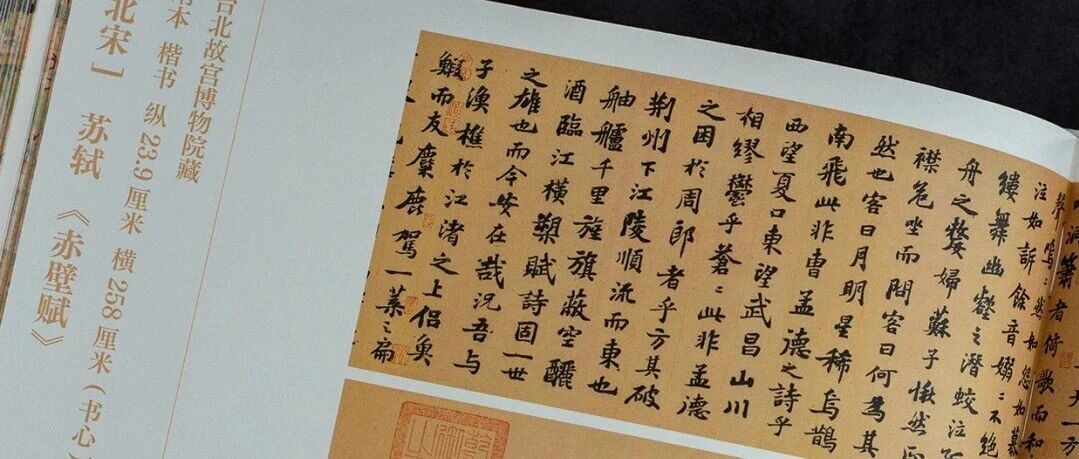
Core Viewpoint - The article emphasizes the profound cultural significance and aesthetic value of Chinese calligraphy, highlighting its historical depth and the emotional resonance it carries for both practitioners and admirers [1][21][49]. Cultural Significance - For cultural enthusiasts, different dynasties have distinct styles: Jin people valued "rhythm," Tang people emphasized "law," and Song people focused on "meaning" [3][4]. - Calligraphy reflects the essence of Chinese civilization, embodying the spirit and wisdom of 5,000 years of cultural heritage [1][21]. Artistic Appreciation - Chinese calligraphy is described as a visual feast that embraces natural simplicity amidst myriad changes [6]. - The beauty of cursive script is noted for its fluidity and variety [7]. Historical Context - Each calligraphic piece is tied to significant historical events and personal narratives, such as the emotional weight of "The Memorial to My Nephew" during the An Lushan Rebellion [10][11]. - Notable works like "Lantingji Xu" capture the elegance of the Wei-Jin period, while "Hanshi Tie" reflects Su Shi's solitude after political turmoil [13][15]. Accessibility and Engagement - Many individuals mistakenly believe they cannot engage with calligraphy due to a lack of practice, overlooking the importance of understanding and appreciating the art form [17][18]. - The article encourages readers to explore the wisdom and aesthetic values embedded in calligraphy, suggesting that it can enrich one's life [21]. Book Promotion - The article promotes a comprehensive book titled "The Great Chinese Calligraphy," featuring 50 masters and 123 masterpieces that span 3,000 years of calligraphic history [23][34]. - The book has seen significant sales success, with 50 million in sales within 24 hours and complete sell-out in 72 hours [25]. Educational Value - The book serves as both an artistic collection and an educational resource, providing insights into the history, techniques, and emotional contexts of various calligraphic works [49][50]. - It includes detailed explanations of the techniques and backgrounds of famous pieces, making it accessible for beginners [88][90]. Quality and Craftsmanship - The book is noted for its high-quality production, featuring luxurious paper and a large format that enhances the visual experience of the calligraphy [36][56]. - It includes rare long pull-out pages that showcase the true essence of the calligraphic masterpieces [39][108]. Cultural Journey - The book is positioned as a journey through 3,600 years of calligraphy, allowing readers to appreciate the evolution of this art form [34][51]. - It is described as a visual and cultural feast that enriches traditional knowledge and enhances personal cultivation [102][117].