中国冰雪运动发展

Search documents
冬奥奖牌新突破 中国冰雪新起点
Xin Lang Cai Jing· 2026-02-23 21:43
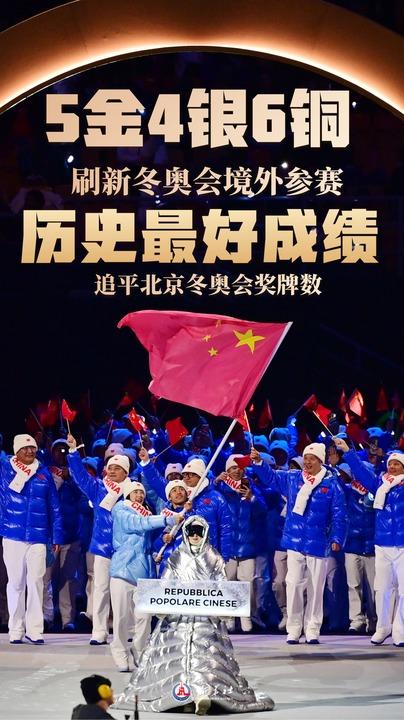
Core Insights - The Chinese delegation achieved a record-breaking performance at the Milan Winter Olympics, securing 5 gold, 4 silver, and 6 bronze medals, surpassing their previous best at the 2010 Vancouver Olympics [2] - The success of Chinese athletes, including notable achievements by Gu Ailing and Xu Mengtao, reflects the continuous development and growing popularity of winter sports in China, driven by the Beijing Winter Olympics [3] - Despite the successes, there are still significant gaps in traditional strong events like short track speed skating and curling, indicating areas for improvement in the future [4] Group 1 - The Chinese athletes' performance at the Milan Winter Olympics marked a historic achievement, with Gu Ailing and Li Fanghui winning gold and silver in women's freestyle skiing [2] - Xu Mengtao became the first athlete to defend her title in women's aerials since the event's introduction in 1994, while Ning Zhongyan broke the Olympic record in men's 1500m speed skating [3] - The growth of winter sports in China is evidenced by the increase in participation, with 55 out of 79 indoor ski resorts located in southern provinces, showcasing the sport's expansion beyond traditional regions [3] Group 2 - The Chinese team faced challenges in traditional events, with short track speed skating failing to secure a gold medal for the first time since 2002, highlighting the need for continued development [4] - The value of sports extends beyond medals, promoting healthy lifestyles and economic growth, which can further inspire youth participation in winter sports [4] - The conclusion of the Milan Winter Olympics marks both an end and a new beginning for Chinese winter sports, with aspirations for continued excellence on the global stage [5]

中国冰雪运动“追赶者”角色未变
Xin Lang Cai Jing· 2026-02-23 17:36
Core Insights - The Chinese sports delegation achieved a record performance at the Milan-Cortina Winter Olympics, winning a total of 15 medals, including 5 golds, 4 silvers, and 6 bronzes, matching the medal count from the Beijing Winter Olympics [1][5] Group 1: Performance Characteristics - The performance of the Chinese delegation exhibited four main characteristics: consolidation of medal-winning events, overall strength improvement, enhanced talent pool, and emergence of new athletes [2][3] - The consolidation of medal-winning events was evident as China secured medals in 7 disciplines, maintaining a balanced development between ice and snow sports [2] - Overall strength improved with 49 top-eight finishes, a 32.4% increase from the 37 achieved at the Beijing Olympics, indicating a shift from participation to competition in more events [2] - The talent pool has strengthened, with multiple athletes competing in previously underrepresented events, showcasing a transition from individual efforts to group development [3] Group 2: Notable Achievements - The Chinese aerials team defended its reputation, with significant contributions from athletes like Wang Xindi and Xu Mengtao, who won gold in their respective events [5] - In speed skating, Ning Zhongyan broke the long-standing dominance of European and American athletes by winning gold in the men's 1500 meters and earning multiple medals [6][7] - The overall performance in snow sports was strong, with notable achievements in freestyle skiing and other disciplines, indicating a solid talent pipeline [5] Group 3: Challenges and Future Outlook - Despite the successes, challenges remain as the Chinese delegation still plays a "catch-up" role in winter sports, particularly in short track speed skating and curling, where performances were below expectations [8][9] - The delegation's ranking in the medal table was lower than anticipated, highlighting the need for continued improvement and preparation to compete with established winter sports powers [8][9] - The conclusion of the Milan Winter Olympics marks both an end and a new beginning for Chinese winter sports, with aspirations set for the upcoming 2026 Winter Olympics in France [9]
未来可期!米兰冬奥折射中国冰雪运动良好的发展趋势
Xin Lang Cai Jing· 2026-02-23 03:12
Summary of Key Points Group 1: Overall Performance of Chinese Team - The Chinese delegation achieved a total of 15 medals (5 gold, 4 silver, 6 bronze) at the Milan Winter Olympics, surpassing previous records from the 2006 Turin and 2010 Vancouver Olympics, and matching the total medal count from the Beijing Winter Olympics [1] - The medals were distributed across various events including snowboarding, freestyle skiing, speed skating, and short track speed skating, showcasing a diverse range of achievements [1] Group 2: Notable Athletes and Achievements - Gu Ailing became the first athlete in Winter Olympic history to defend her gold medal in women's freestyle skiing U-shaped field, bringing the total number of her Olympic medals to 6, tying her with Wang Meng as the most decorated Chinese Winter Olympian [5][7] - Su Yiming, at just 22 years old, won gold in men's slope style, achieving a complete set of Olympic medals across two Games, marking a significant milestone for his career [5][7] - Xu Mengtao, a veteran athlete, also defended her title in women's freestyle skiing aerials, becoming the first to do so in this event [7] Group 3: Historical Context and Trends - The Chinese speed skating team made history with Ning Zhongyan winning gold in the men's 1500 meters, breaking a 102-year dominance of European athletes in this event [14] - The overall performance of the Chinese team indicates a shift in the landscape of winter sports in China, with snow sports gaining prominence alongside traditional ice sports [18][22] Group 4: Development of Ice and Snow Sports in China - The participation in ice and snow sports in China has surged, with over 400 million participants expected by 2024, reflecting a compound annual growth rate of over 15% [20] - The infrastructure for ice and snow sports is rapidly expanding, with the number of ski resorts projected to exceed 3,000 by 2024, indicating a robust growth in the sector [20] - The Chinese government is actively promoting ice and snow sports through policies that integrate these activities into school curriculums and support the establishment of high-level sports teams [21]
冬奥会 | 体育时评:中国冰雪新起点
Xin Lang Cai Jing· 2026-02-22 23:05
Core Viewpoint - The 2026 Milan Winter Olympics marked a significant achievement for China's ice and snow sports, with the Chinese delegation winning a total of 15 medals: 5 gold, 4 silver, and 6 bronze, surpassing their previous best performance at the 2010 Vancouver Winter Olympics [1][4]. Group 1: Achievements and Highlights - Athletes such as Gu Ailing and Li Fanghui excelled in freestyle skiing, securing gold and silver in the women's U-shaped venue, contributing to the overall medal count [1]. - Xu Mengtao successfully defended her title in women's aerials, becoming the first athlete to achieve this since the event was introduced in 1994 [3]. - Ning Zhongyan broke the Olympic record in men's 1500m speed skating, ending a century-long dominance by European and American athletes [3]. - Wang Xindi improved from 14th place in previous Olympics to winning gold, showcasing the progress of Chinese athletes [3]. Group 2: Development of Ice and Snow Sports - The progress in China's ice and snow sports is attributed to the continuous efforts of generations of athletes and the overall enhancement of national strength [6]. - The Beijing Winter Olympics acted as a catalyst for the development of ice and snow sports in China, with a goal to engage 300 million people in these activities [6]. - The establishment of a robust competition system and optimized talent selection mechanisms have allowed more young talents to emerge [6]. Group 3: Challenges and Future Directions - Despite the successes, there are still significant gaps in traditional strong events like short track speed skating and curling, with the Chinese team finishing 12th in the medal standings, a drop from 7th in Vancouver [8]. - The need for China to transition from a "follower" to a "competitor" in more events is emphasized as a critical challenge for the future of ice and snow sports [8]. - The value of sports extends beyond medals, promoting healthy lifestyles and economic growth, which can further stimulate youth participation in ice and snow sports [10].
从“单兵”到“集群”的历史突破背后
Xin Lang Cai Jing· 2026-02-19 07:38
Core Viewpoint - The Chinese winter sports team is demonstrating significant progress and competitiveness on the global stage, moving from individual achievements to collective success, as evidenced by their performance at the Milan-Cortina Winter Olympics [1][2][3]. Group 1: Performance Highlights - Chinese athletes have achieved historical bests in various events, including winning medals in team pursuit speed skating and advancing to finals in mixed team ski jumping [1]. - The women's freestyle skiing team has shown remarkable improvement, with three athletes reaching the finals, indicating a shift to a stronger competitive position [1]. Group 2: Athlete Development - The journey of athletes like Zhao Dan illustrates the rigorous training and dedication required to excel, with her weight training and performance improvements highlighting the challenges faced [2]. - The training regimen has evolved, with increased on-snow training time from 2-3 months to 4-5 months, allowing athletes to enhance their skills and confidence [2]. Group 3: Team Dynamics - The transition from individual to collective success fosters a supportive environment among athletes, enhancing their performance and morale [3]. - The overall progress of the team has led to a significant increase in medal opportunities, particularly with a younger cohort of athletes emerging [3].
(米兰冬奥会)一日双金,在惊喜与笃定之中
Xin Lang Cai Jing· 2026-02-19 03:31
Core Insights - The Chinese team achieved a remarkable feat by winning two gold medals in a single day at the Winter Olympics, marking a significant milestone for the team [3][4] Group 1: Performance Highlights - Su Yiming won the first gold medal for China in the men's snowboard slopestyle event with a score of 82.41, showcasing a strong comeback after ranking eighth in the qualifiers [3][4] - Xu Mengtao, a veteran athlete, secured gold in the women's freestyle skiing aerials with a personal season-best score of 112.90, surpassing her previous Olympic winning score by over 4 points [3][4] - The Chinese team faced challenging weather conditions, including heavy snowfall, which led to schedule changes and required athletes to recalibrate both physically and mentally [3][4] Group 2: Competitive Landscape - The Chinese speed skating team achieved a historic breakthrough by winning a bronze medal in the men's team pursuit, demonstrating their capability to compete against top teams like the Netherlands [4][5] - Ning Zhongyan's bronze in the men's 1000 meters further confirms the depth of China's speed skating competitiveness across various events, indicating a multi-faceted strength rather than reliance on individual events [5] - The Chinese team has consistently improved their performance across multiple winter sports, achieving their best results in events such as luge, skeleton, and ski jumping, with several athletes finishing in the top eight [5] Group 3: Development of Winter Sports - The current Winter Olympics marks the largest participation of Chinese athletes in international winter sports, reflecting the growth and expansion of China's winter sports landscape [5][7] - The development of Chinese winter sports is evident not only in the increase in the number of events participated but also in the overall competitiveness and stability of performance across various disciplines [7] - The achievements at the Winter Olympics serve as a testament to the maturity of China's winter sports system, indicating that the success is a result of systematic preparation and athlete resilience under pressure [7]
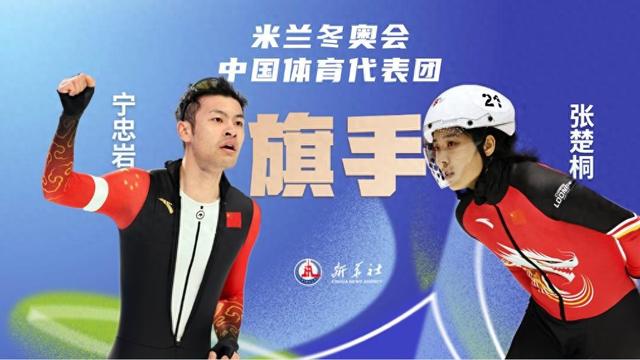
这份冬奥会开幕式旗手名单里,藏着中国冰雪来时路
Xin Lang Cai Jing· 2026-02-04 23:41
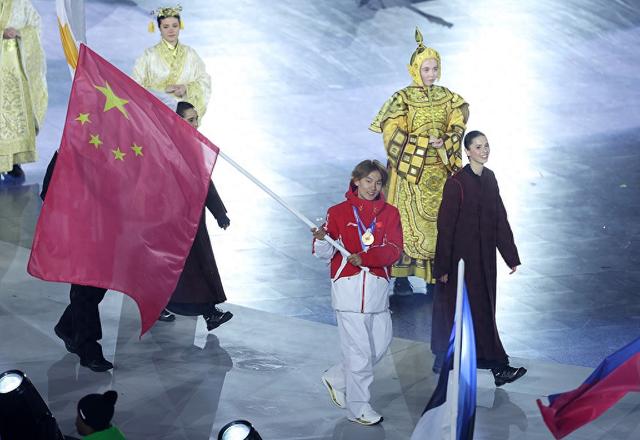
Core Viewpoint - The Chinese sports delegation will have two flag bearers, speed skating world champion Ning Zhongyan and short track speed skating bronze medalist Zhang Chutong, at the opening ceremony of the 2026 Milan-Cortina Winter Olympics, marking a representation of a new generation of Chinese winter sports athletes [1][3]. Group 1: Flag Bearers and Historical Context - The dual flag bearer model is being used for the second time by the Chinese team, showcasing the confidence and upward spirit of young athletes born in 1999 and 2003 [3]. - Being a flag bearer is considered a great honor for athletes, with 13 athletes having served as flag bearers for the Chinese delegation in the previous 12 Winter Olympics [5]. - The list of past flag bearers includes notable athletes from various winter sports, marking significant milestones in China's ice and snow sports history since its first participation in the Winter Olympics in 1980 [6][7]. Group 2: Evolution of Chinese Winter Sports - The first Chinese flag bearer, Zhao Weichang, represented the country at the 1980 Winter Olympics, which was a pivotal moment for China's return to the international Olympic stage [7][9]. - Over the years, Chinese athletes have achieved significant milestones, including the first Winter Olympic medal in 1992 and the first gold medal in 2002, reflecting the growth and development of winter sports in China [13][15]. - The participation of athletes from different generations, including past champions and new stars, illustrates the continuous improvement in China's winter sports performance and the balance between male and female athletes [27][30]. Group 3: Anticipation for Future Events - The upcoming Milan Winter Olympics is expected to see the Chinese flag raised once again, as the nation looks forward to its athletes making new marks in the ice and snow sports arena [32].
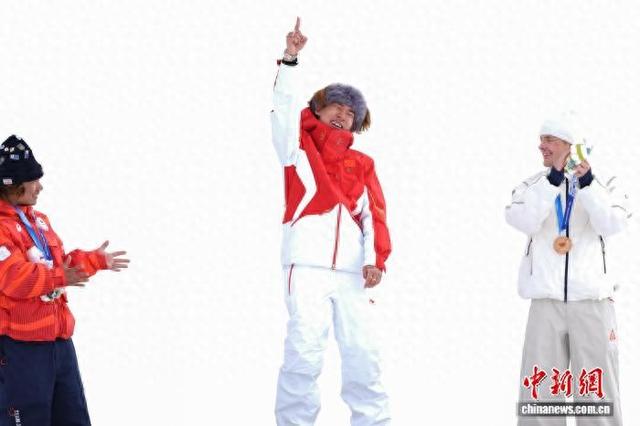
苏翊鸣,从“倒数第一”到“正数第一”
Xin Lang Cai Jing· 2025-12-30 15:02
Core Insights - In 2025, China's ice and snow sports achieved significant milestones, highlighted by a historic performance at the Harbin Asian Winter Games and strong results in the Milan Winter Olympics qualifiers, showcasing both veteran athletes and emerging talents [1][7] Group 1: Achievements and Milestones - The Chinese delegation topped the medal table at the Harbin Asian Winter Games with a record of 32 gold, 27 silver, and 26 bronze medals, marking the best performance in history [1] - A notable shift occurred as 19 out of the 32 gold medals were won in snow events, indicating progress towards balanced development in ice and snow sports [1] - Athletes like Su Yiming and Gu Ailing made significant technical breakthroughs during summer training, with Su achieving a remarkable comeback in the World Cup standings [1][3] Group 2: Winter Olympics Preparation - As the 2026 Milan Winter Olympics approaches, various qualification and ranking competitions have intensified, with Chinese athletes making key advancements across multiple events [4][5] - The freestyle skiing aerials team excelled at the Chongli Yunding World Cup, demonstrating strong group performance [4] - Veteran athlete Xu Mengtao, despite injuries, secured a gold medal and is on track for the Milan Olympics, while younger athletes like Ge Chunyu and Zhao Yingxu are also achieving personal bests [5] Group 3: Team Dynamics and Future Prospects - The Chinese short track speed skating team has secured full participation slots for the Milan Olympics, with a balanced mix of experienced and young athletes contributing to the team's strength [5][6] - The figure skating team has successfully qualified for the team event, with returning champions poised to compete for medals [6] - The overall development of China's ice and snow sports is characterized by a blend of tradition and innovation, with a strong focus on preparing for the upcoming Winter Olympics [7]