冰雪运动

Search documents
装备销量猛增 多种消费业态涌现 米兰冬奥会掀起冰球热潮
Mei Ri Shang Bao· 2026-02-26 22:21
Group 1 - The Milan Winter Olympics has significantly increased interest in ice hockey, highlighted by the USA team's victory over Canada, marking their first Olympic gold medal in men's ice hockey since 1980 [1] - The topic of "Winter Olympic Ice Hockey" has garnered 3.301 million views on Douyin, indicating a surge in public interest in ice sports [1] Group 2 - Sales of ice hockey equipment are experiencing a notable increase, with a specific GRAF ice hockey shoe priced at 394 yuan showing a stock shortage due to high demand [2] - Consumers are increasingly purchasing ice hockey gear for their children after watching the Olympics, with one customer ordering a complete youth protective gear set totaling 1990 yuan [2] Group 3 - The ice hockey sport requires a comprehensive set of equipment, with costs for a complete set often exceeding 10,000 yuan, reflecting the growing consumer focus on professional performance [3] - Customized ice hockey sticks are becoming popular among enthusiasts, with one amateur player opting for a carbon fiber stick tailored to her specifications for improved performance [3] Group 4 - Various consumer experiences and training camps are emerging, such as the Century Star Ice Rink offering single-use experiences for 100 yuan and annual memberships for 3990 yuan [4] - Ice hockey training courses are priced at 9990 yuan annually, including private lessons and access to facilities, indicating a structured approach to training [4] - There is a trend towards younger participants in ice hockey training, with a significant proportion of students aged 4-6, as parents seek to instill long-term sports habits in their children [4]
全民乐享冰雪运动
Xin Lang Cai Jing· 2026-02-26 21:46
Group 1 - The core viewpoint of the articles highlights the significant growth of ice and snow sports in China, with the ice and snow economy expected to exceed 1 trillion yuan by 2025, and over 14,000 related enterprises, reflecting an 11% year-on-year growth [1] - Ice sports consumption remains highly concentrated in traditional ice and snow provinces, with Heilongjiang, Jilin, and Liaoning accounting for over 50% of transaction volume, indicating a strong cultural and infrastructural foundation [1] - The introduction of "snow holidays" in regions like Urumqi and Jilin has effectively linked local resources with school vacation times, enhancing the ice and snow consumption atmosphere and promoting cross-regional tourism [1] Group 2 - The southern regions of China, previously lacking in snow, are emerging as new growth drivers for ice and snow consumption, with 26.05 million ski visits expected in the 2024-2025 season, and southern provinces like Zhejiang and Guangdong entering the top ten for ski visits [2] - The number of indoor ski resorts has surged from 5 in the 2013-2014 season to 59 in the 2023-2024 season, primarily located in southern cities, indicating a shift in consumer behavior towards regular participation in ice sports [2] - Ice sports equipment consumption is rapidly increasing, with Zhejiang experiencing a fivefold increase and Shanghai a 3.2-fold increase in transaction volume, reflecting a transition from experiential to regular consumption among southern consumers [2] Group 3 - The introduction of the "snow gear convenience service" by China Railway allows travelers to easily transport ski equipment, addressing a significant logistical challenge and enhancing the overall ice and snow economic experience [3] - The explosive growth in ice and snow consumption is driving the industry towards a more refined transformation, emphasizing the importance of service quality to attract tourists and gain competitive advantages [3] - As the ice and snow consumption landscape continues to evolve and infrastructure improves, ice and snow sports are expected to transcend regional and seasonal limitations, becoming a shared lifestyle for all [3]
春节消费新趋势,一组数据带你感受
Xin Hua Wang· 2026-02-26 06:09
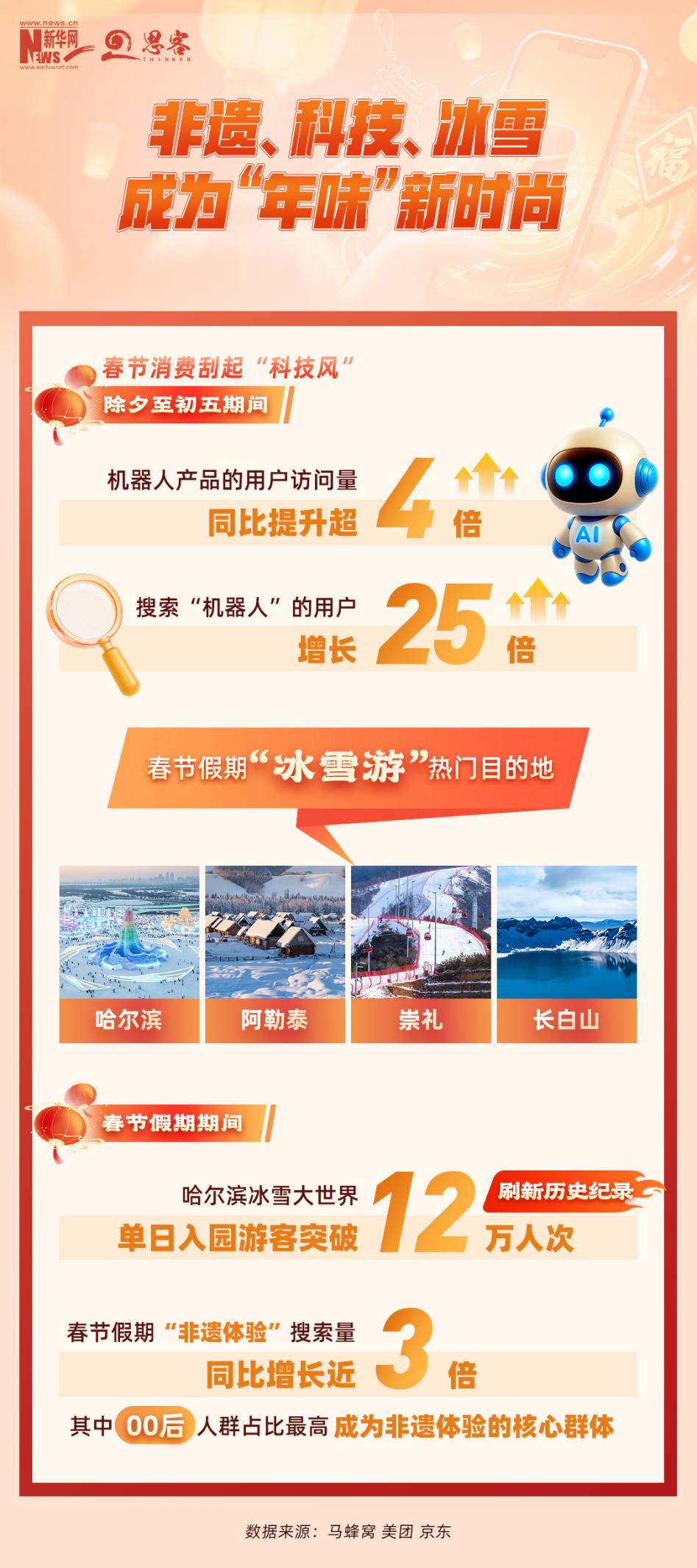
Group 1 - The Spring Festival holiday saw a surge in consumer activity, with new trends emerging in consumption patterns, including "segment-style" and "reverse" celebrations [2][6] - Foreign tourists are increasingly visiting China during the Spring Festival to experience traditional culture, with cities like Beijing and Shanghai offering curated travel routes and cultural experiences [2] - The integration of technology into the Spring Festival celebrations, such as robot performances, has sparked consumer interest in tech products, leading to significant sales growth [3][6] Group 2 - The experience of intangible cultural heritage has shifted from "check-in" to "immersive," attracting young tourists to engage in traditional cultural activities [6] - The Winter Olympics coinciding with the Spring Festival has boosted interest in winter sports, with indoor skiing facilities seeing a 117% increase in search volume in Shanghai [6] - New service consumption trends have emerged, including on-demand services like pet care and home chefs, reflecting a growing demand for personalized and quality services during the holiday [7][9]

米兰之后,中国冰雪如何跨越“后奥运”周期?从竞技突围到产业深耕
Xin Lang Cai Jing· 2026-02-25 12:49
Core Insights - The 25th Winter Olympics in Italy showcased the rising momentum of Chinese winter sports athletes, with a significant increase in viewership and engagement due to the immersive experience created by digital broadcasting and virtual interaction technologies [1][4] Industry Trends - The Winter Olympics have transformed from a seasonal event to a year-round popular sport, with a notable increase in interest towards high-skill and high-aesthetic sports like freestyle skiing and snowboarding [3][4] - The ice and snow economy is projected to grow significantly, with the total industry consumption expected to exceed 187.5 billion yuan in the 2024-2025 season, marking a 25% year-on-year increase [5] - The Chinese snow sports equipment market is anticipated to surpass 100 billion yuan by 2026, driven by increasing consumer demand for high-quality and personalized products [5][6] Economic Impact - The Milan Winter Olympics is expected to act as a "dual accelerator" for the ice and snow economy, with a surge in Chinese tourists to Italy during the event, coinciding with the Chinese New Year holiday [4][6] - The event has opened new international windows for Chinese ice and snow consumption, brand export, and technology application, enhancing China's role from a participant to a significant driver in the global ice and snow economy [6][19] Technological Integration - The integration of technology in training and equipment development is becoming a key support for competitive performance and industry growth, with advancements in data analytics and AI being utilized for athlete training [6][8] - Professional brands like DESCENTE are playing a crucial role in the development of the ice and snow ecosystem, transitioning from mere equipment producers to ecosystem builders [19] Long-term Development - The Chinese government is focusing on quality improvement in the ice and snow industry, as outlined in the "14th Five-Year" sports development plan and the "Ice and Snow Economy Action Plan" [17][19] - The collaboration between brands and national teams is fostering innovation and enhancing the competitive edge of Chinese athletes, while also promoting the long-term sustainability of the ice and snow economy [12][19]

“最长春节假期”激活内需潜力
Xin Lang Cai Jing· 2026-02-24 22:23
Group 1 - The core viewpoint of the article highlights the strong domestic consumption and investment activity during the extended Spring Festival holiday, indicating a robust recovery in the economy [1][2][4]. - Key retail and catering enterprises experienced a daily sales increase of 5.7% compared to the 2025 Spring Festival holiday, with over 28 billion people traveling across regions [1]. - Domestic travel reached 596 million person-times, with total spending amounting to 803.483 billion yuan during the holiday [1]. Group 2 - The optimization of the holiday system has released time dividends, further stimulating consumer activity, particularly in the tourism sector, where the average travel days per person increased by 1.1 days to 5.9 days compared to the previous year [2]. - The report from the China Travel Service Association and Tuniu indicates that long-distance travel orders (over 5 days) accounted for 59.6% of total orders, reflecting a shift towards longer vacations [2]. - New consumption scenarios, such as the "movie + market" concept in Changsha, have emerged, enhancing the holiday experience and driving sales across various sectors [3]. Group 3 - Government policies have been implemented to boost consumer welfare and market vitality, including a total of 625 billion yuan allocated for consumer goods replacement subsidies and 20.5 billion yuan for direct consumer incentives during the holiday [4]. - Key monitored pedestrian streets and business districts saw a 6.7% increase in foot traffic and a 7.5% increase in sales compared to the previous Spring Festival [4]. - Sales in the catering sector rose by 5.2%, while sales of smart glasses and intelligent robots surged by 47.3% and 32.7%, respectively, compared to last year's holiday [4]. Group 4 - The introduction of visa-free policies for travelers from Canada and the UK has led to a significant increase in inbound tourism, with 460,000 foreign visitors entering under the visa exemption policy, marking a 28.5% daily increase compared to the previous year [5][6]. - The construction of major projects continues to progress, with significant investments planned, such as over 3 billion yuan for the first quarter by the Southern Power Grid [6]. - The Spring Festival period serves as a critical time for attracting investment, with numerous projects signed during the holiday, including 43 projects in Hubei and 20 projects in Fuzhou, covering key sectors like chips and new materials [6].
冰天雪地燃起运动激情
Xin Lang Cai Jing· 2026-02-24 20:22
Core Viewpoint - The winter sports season in Hulunbuir is thriving, showcasing a blend of traditional and modern ice and snow activities that engage both locals and tourists, highlighting the region's cultural heritage and promoting winter sports participation [1][2][3][4] Group 1: Events and Activities - The "Happy Ice and Snow Season" and the 21st Inner Mongolia Ice and Snow Nadam Festival have been launched, featuring various sports events that combine traditional competitions with modern winter tourism elements [1] - A variety of winter sports events, including horse racing, camel racing, and winter swimming, are being held, attracting participants from across the country and enhancing the local sports culture [2] - Over 100 ice and snow events at different levels have been organized in Hulunbuir, creating a dynamic sports environment with weekly competitions and engaging activities for the community [2] Group 2: Youth Engagement - The "Millions of Youth on Ice and Snow" initiative has led to the establishment of over 200 ice and snow sports teams in schools, promoting winter sports among children and ensuring full coverage of ice and snow sports courses in primary and secondary schools [3] - Schools are actively organizing ice and snow themed activities, allowing students to experience winter sports and fostering a love for ice and snow activities from a young age [3] - The local government is addressing the shortage of professional coaches by integrating sports education and hiring retired athletes and graduates to teach, enhancing the quality of ice and snow sports education [3] Group 3: Future Development - The Hulunbuir Sports Bureau aims to optimize the layout of winter sports events and develop internationally influential brand events, promoting the integration of sports with tourism, culture, and health industries [4] - The focus is on leveraging the region's ice and snow resources to drive high-quality development and create lasting economic benefits from winter sports [4]
促消费、稳投资 “最长春节假期”激活内需潜力
Xin Hua Wang· 2026-02-24 14:11
Group 1 - The longest Spring Festival holiday of 9 days has significantly boosted domestic consumption, with daily sales of key retail and catering enterprises increasing by 5.7% compared to the 2025 Spring Festival holiday, and total domestic travel expenditure reaching 803.48 billion yuan [1][4] - The holiday has led to unprecedented opportunities in tourism, transportation, retail, and catering sectors, with a notable increase in long-distance travel and a shift towards a "segment-style New Year" where families reunite before vacationing [2][3] - The introduction of new consumption scenarios, such as "movie + market" events, has enriched holiday experiences and stimulated consumer spending, showcasing innovative approaches to attract visitors [3] Group 2 - Government policies have enhanced consumer welfare and market vitality, with 625 billion yuan allocated for consumption subsidies and various promotional activities during the holiday, resulting in a 6.7% increase in foot traffic and a 7.5% increase in sales in monitored pedestrian streets [4] - The implementation of visa-free policies for travelers from certain countries has led to a 28.5% increase in foreign visitors during the holiday, further driving domestic consumption and tourism [5] - Major infrastructure projects are progressing steadily during the holiday, with significant investments planned to enhance effective investment and economic growth, reflecting a strong commitment to expanding domestic markets [6]
营造更好环境促成“消费大年”
Di Yi Cai Jing Zi Xun· 2026-02-24 02:40
Group 1 - The core viewpoint of the articles emphasizes the significant boost in consumer spending during the recent Spring Festival holiday, indicating a strong potential for consumption-driven economic growth in China [2][7] - Data from Fliggy shows that domestic travel orders reached a new high during the Spring Festival, with ticket orders increasing by over 80% year-on-year and hotel night bookings rising by 75% [2] - The average booking amount for domestic travel increased by approximately 10% compared to last year, with popular theme park and attraction package orders seeing a 140% year-on-year growth [2] Group 2 - The Ministry of Commerce, the People's Bank of China, and the Financial Regulatory Authority jointly issued a notification aimed at enhancing collaboration between commerce and finance to stimulate consumption through a combination of government subsidies, financial support, and merchant discounts [3] - Local governments allocated 2.05 billion yuan to stimulate consumer spending through vouchers and subsidies, effectively igniting market enthusiasm [3] - New consumption trends emerged during the holiday, including a surge in ice and snow sports and the integration of technology with traditional customs, reflecting a shift in consumer focus towards personalized and high-quality service products [5] Group 3 - The articles suggest that to truly establish a "year of consumption," it is essential to continue increasing policy support, create new consumption scenarios, and provide a solid financial and temporal foundation for consumers [7] - The "14th Five-Year Plan" proposes goals for high-quality employment, synchronized growth of resident income and economic growth, and improved public services, which are crucial for enhancing consumer spending [6] - Recommendations include reducing the burden of housing loans through interest subsidies to promote consumer growth, as well as encouraging more flexible holiday arrangements to enhance consumer experiences [6]

“追赶者”的角色没有改变
Xin Lang Cai Jing· 2026-02-23 19:42
Core Insights - The Chinese delegation achieved a historic best performance at the Milan Winter Olympics, securing 5 gold, 4 silver, and 6 bronze medals, totaling 15 medals, which matches the record set during the Beijing Winter Olympics [11][14] - Despite the success, the overall status of Chinese winter sports remains behind that of leading nations, indicating a need for continued improvement and competitiveness [12][13] Performance Highlights - Chinese athletes won medals in 8 events, reinforcing the established competitive landscape from the Beijing Winter Olympics [11] - The number of top-eight finishes increased by 32.4% from the Beijing Olympics, with 49 top-eight finishes achieved [12] - 18 events showed improvement, representing 19.6% of the total events participated, indicating a shift from being mere participants to becoming competitive contenders [12] Talent Development - There has been an increase in the depth of talent, with multiple athletes competing in events that previously had only one representative [12] - A new generation of young athletes has emerged, showcasing strong competitive abilities and potential for future growth [12][19] Competitive Landscape - The level of competition in winter sports has intensified globally, with many events seeing new records set, particularly in speed skating and freestyle skiing [13] - The need for reform in training methods and talent development is emphasized to keep pace with international standards [13] Historical Context - The journey of Chinese winter sports spans 46 years, with significant milestones marking the evolution from initial participation to achieving competitive success [18][19] - The spirit of perseverance and dedication among athletes is highlighted, showcasing their commitment to representing the country on the international stage [19]
春节假期消费市场观察:“市面”红火 “新潮”涌动
Xin Hua Wang· 2026-02-23 07:57
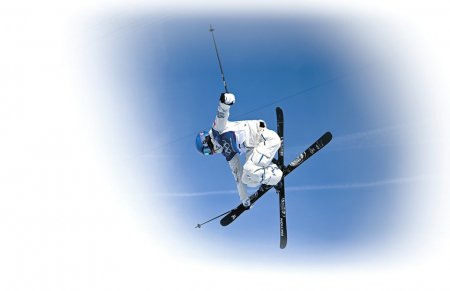
Group 1: Consumer Market Trends - The consumer market during the Year of the Horse Spring Festival is vibrant, blending traditional customs with new consumption trends, showcasing a fresh landscape of consumer behavior [1] - The ice and snow economy is thriving, driven by the enthusiasm for winter sports, with many regions promoting ice-related activities to stimulate holiday consumption [3][5] Group 2: Technological Integration in Cultural Tourism - The integration of technology into cultural tourism has created new experiences, allowing visitors to engage with traditional culture in innovative ways, enhancing the quality of cultural consumption [7] - Events like the national Yangge performance in Shaanxi have incorporated robotics and digital elements, transforming traditional performances into interactive experiences [9] Group 3: Film Industry Impact - The film industry has played a significant role in driving consumer engagement during the Spring Festival, with total box office revenue exceeding 5 billion yuan by February 22, 2026 [13] - The "film+" model has been promoted, linking movies with tourism and local cultural experiences, leading to various initiatives that encourage spending in related sectors [17][19]