中国定制

Search documents
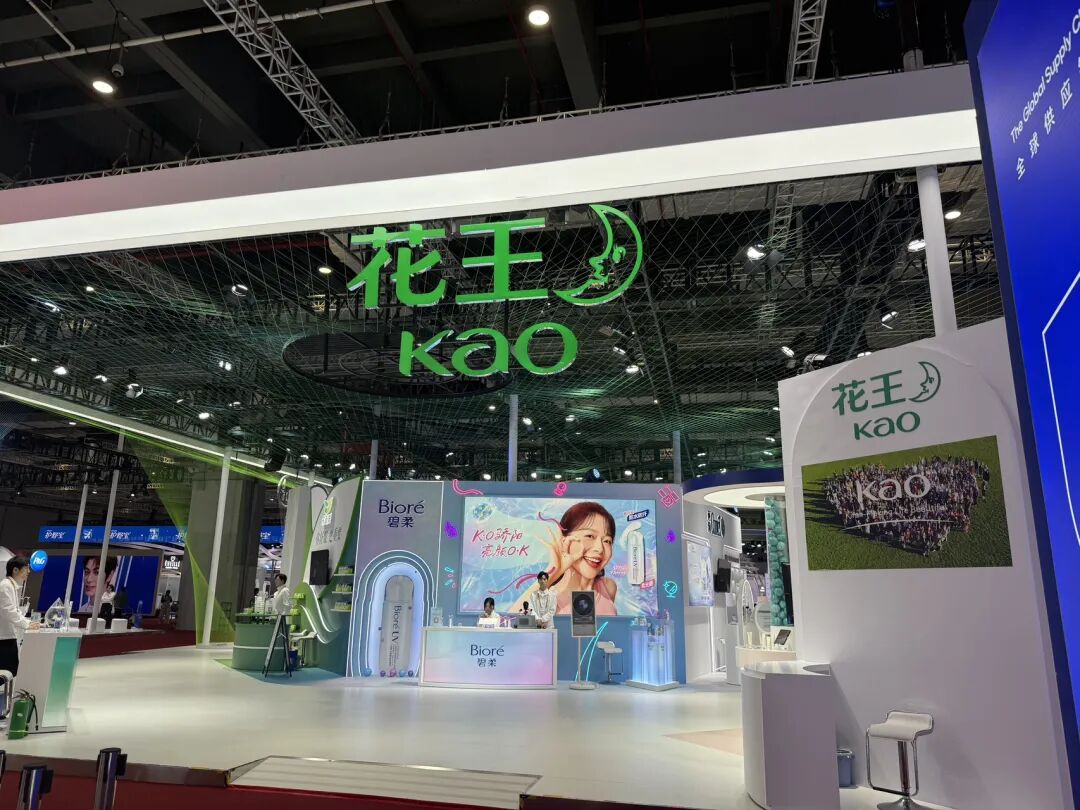
聚焦进博|专访花王大仓诚一:上海是中国战略的核心之一
Guo Ji Jin Rong Bao· 2025-11-06 11:07
Core Insights - The eighth China International Import Expo (CIIE) is being held from November 5 to 10 in Shanghai, with Kao Corporation showcasing its commitment to the Chinese market through the theme "Co-creating a Beautiful Future" [1][3]. Product Customization - Kao's participation features a strong focus on customized products tailored to Chinese consumers' needs, including skincare, sun protection, hair dye, and feminine care [4][6]. - The newly launched Curel Ryukou Shuhon series addresses common skin issues faced by Chinese women, leveraging nearly 40 years of research in ceramide care [4]. - The brand Fressy has developed products that consider environmental stressors and emotional fluctuations, exemplified by the innovative amino acid-based cleansing products [4][6]. Localization Strategy - Kao has established its global headquarters for Fressy in Shanghai, enhancing product development efficiency by 30% since the move, allowing for quicker adaptation to local market demands [6][11]. - The company has successfully localized the production of its popular hair dye brand, Liese, which debuted at the CIIE in 2022 and has since been well-received in the Chinese market [7][11]. Market Insights - Shanghai is pivotal for Kao's development strategy, providing unique advantages in policy, talent, and consumer insights, which have accelerated the company's localization efforts [11][12]. - The changing consumer landscape in Shanghai, characterized by the rise of domestic brands and a shift towards green consumption, has prompted Kao to enhance its R&D and branding strategies [14]. Future Outlook - Kao aims to leverage the CIIE as a platform for further integrating Japanese technology with Chinese consumer needs, continuing to innovate and optimize its product offerings [14].

合资反攻:日韩新能源在中国的“起势之年”
Tai Mei Ti A P P· 2025-11-03 06:17
Core Insights - The joint venture brands in China are poised for a significant shift in the electric vehicle (EV) market by 2025, with a focus on new energy vehicles (NEVs) becoming a primary strategy [2][5] - Recent launches of affordable electric models by joint ventures indicate a strategic move to penetrate the mainstream market, challenging the dominance of domestic brands [3][4] Pricing Strategy - The newly launched models, such as the GAC Toyota BZ3X and Dongfeng Nissan N7, are priced competitively, with starting prices around 109,800 to 119,800 yuan, aiming to attract price-sensitive consumers [3][4] - The pricing strategy emphasizes a "low price" approach to disrupt market perceptions and engage in direct competition with domestic brands [3][4] Market Dynamics - The 100,000 to 150,000 yuan price range is identified as a critical segment in the Chinese passenger vehicle market, accounting for over 30% of total sales, making it a highly competitive arena [4] - Joint venture brands are now actively participating in this segment, which was previously overlooked due to low profitability [5] Technological Advancements - The new models are addressing previous shortcomings in smart technology by collaborating with local tech companies, enhancing their competitive edge [6][7] - Features such as advanced driver assistance systems and smart cockpit technologies are being integrated, leveraging local innovations to meet consumer expectations [6][7] Localization Efforts - The integration of local supply chains is crucial, with high localization rates reported for the new models, such as nearly 100% for the Dongfeng Nissan N7 [8][9] - The shift from a model of "foreign technology, local production" to a "China-led development" approach is evident, with local teams driving product design and features [8][9] Market Positioning - Despite the positive developments, joint venture brands still face challenges in gaining market share, with domestic brands holding a significant lead in the NEV segment [11][12] - The perception of joint venture brands as lagging in smart technology remains a hurdle, necessitating ongoing efforts to reshape brand image and consumer trust [11][12] Future Outlook - The year 2025 is seen as a pivotal moment for joint venture brands in the NEV market, marking the beginning of a more aggressive strategy to reclaim market share [5][12] - The success of these brands will depend on their ability to adapt to consumer needs and market trends, as well as their capacity to innovate and compete effectively against domestic players [12]