
中国特色反贫困理论

Search documents
夯实中国式现代化的底座
Xin Lang Cai Jing· 2026-02-27 18:26
Core Viewpoint - China has achieved a historic victory in poverty alleviation, lifting nearly 100 million people out of poverty over eight years, and is now focusing on consolidating these gains while promoting rural revitalization as part of its modernization strategy [3][6][24]. Group 1: Poverty Alleviation Achievements - The country has completed the largest poverty reduction effort globally, achieving the UN's 2030 sustainable development goal a decade early [6][10]. - A five-year transition period has been established to ensure the sustainability of poverty alleviation efforts and prevent large-scale return to poverty [6][10][20]. - The average disposable income of farmers in poverty-stricken counties has consistently outpaced the national average, with over 30 million people employed in these areas for five consecutive years [10]. Group 2: Rural Revitalization Strategy - The strategy emphasizes that achieving a moderately prosperous society is not the end but a new beginning, with a focus on integrating poverty alleviation with rural revitalization [3][20]. - Xi Jinping has highlighted the importance of developing rural industries as a key component of rural revitalization, urging the extension of industrial chains and increasing added value [10][12][16]. - The government aims to implement a long-term mechanism to prevent poverty, ensuring that the gains from poverty alleviation are maintained [9][21]. Group 3: Implementation and Monitoring - A robust monitoring and support mechanism has been established to identify and assist over 7 million individuals at risk of falling back into poverty [10]. - The government is committed to enhancing collaboration between regions to support poverty alleviation and rural development efforts [9][21]. - Local leaders are encouraged to engage with communities to address their needs and ensure effective implementation of poverty alleviation policies [21]. Group 4: Future Outlook - The upcoming "15th Five-Year Plan" will focus on solidifying the foundations of rural revitalization and agricultural modernization [19][20]. - Continuous efforts will be made to ensure that rural revitalization aligns with the broader goals of national modernization, emphasizing the importance of agriculture and rural development [22][24]. - The commitment to high-quality development in rural areas is seen as essential for achieving overall national progress [22][23].

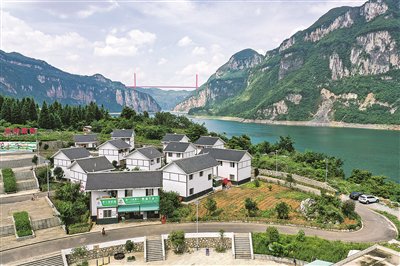
让农民生活更加富裕美好
Ren Min Ri Bao· 2026-02-27 03:28
Core Viewpoint - The journey of Chinese-style modernization has successfully eradicated absolute poverty, with 98.99 million rural poor lifted out of poverty, marking a historic achievement in poverty alleviation [1][5][4]. Group 1: Poverty Alleviation Achievements - The Chinese government has established a five-year transition period to ensure the sustainability of poverty alleviation efforts and prevent large-scale return to poverty [1][10]. - The transition period has seen the completion of various goals, with a focus on monitoring and supporting the livelihoods of previously impoverished populations [11][27]. - By 2025, over 7 million individuals are expected to receive assistance to stabilize their livelihoods, with a continuous increase in rural residents' disposable income [13][24]. Group 2: Policy Framework and Implementation - A comprehensive policy system has been developed, including innovative measures tailored to local conditions, to effectively combat poverty [5][19]. - The establishment of a monitoring and support system has been crucial in identifying and addressing risks of returning to poverty [11][27]. - The government emphasizes a multi-level responsibility mechanism, with over 3 million officials deployed to support poverty alleviation efforts [7][19]. Group 3: Economic Development and Sustainability - The integration of poverty alleviation with rural revitalization is a key strategy, ensuring that industries in formerly impoverished areas are sustainable and contribute to long-term economic growth [13][24]. - The development of local industries, such as tourism and agriculture, has significantly improved the economic conditions of rural communities [3][20]. - By 2025, the total output value of leading industries in 832 poverty-stricken counties is projected to exceed 1.7 trillion yuan [20]. Group 4: Future Directions - The end of the five-year transition period is viewed as a new starting point for ongoing efforts towards rural revitalization and preventing poverty [25][27]. - The focus will shift towards ensuring that the achievements in poverty alleviation are maintained and that rural areas continue to develop economically and socially [26][31]. - The government aims to create a unified national market that supports the development of formerly impoverished regions, enhancing their economic potential [28][30].
让农民生活更加富裕美好——从打赢脱贫攻坚战到圆满完成5年过渡期任务
Ren Min Ri Bao· 2026-02-26 22:06
Core Viewpoint - The article emphasizes China's successful poverty alleviation efforts, highlighting the historical achievement of eradicating absolute poverty and the ongoing commitment to sustain and expand these gains through a structured five-year transition period and targeted support measures [1][5][27]. Group 1: Poverty Alleviation Achievements - In 2021, China declared victory in its poverty alleviation campaign, with 98.99 million rural poor lifted out of poverty [1]. - The transition period of five years is designed to ensure that the gains made in poverty alleviation are consolidated and that no large-scale return to poverty occurs [1][10]. - The article notes that nearly 1 billion people have been lifted out of poverty over the past 13 years, showcasing the effectiveness of China's unique poverty alleviation approach [5][25]. Group 2: Implementation Strategies - The establishment of a robust monitoring and support system is crucial to prevent the recurrence of poverty, with over 700 million individuals targeted for assistance by 2025 [11][27]. - The article discusses the importance of tailored support measures, such as the "one household, one profile" monitoring mechanism, to address the specific needs of vulnerable populations [11][12]. - The integration of local resources and industries into the poverty alleviation strategy has led to sustainable economic development in various regions, such as the tourism industry in rural areas [3][13]. Group 3: Policy Framework - The article highlights the central role of the Communist Party of China in leading and coordinating poverty alleviation efforts, emphasizing a multi-tiered governance structure that includes local governments and community leaders [7][19]. - A series of innovative policies and frameworks have been developed to address the complexities of poverty, ensuring that assistance is both effective and sustainable [5][19]. - The focus on "precision poverty alleviation" involves targeted interventions that consider the unique circumstances of each community, thereby enhancing the effectiveness of the initiatives [17][18]. Group 4: Future Directions - The transition from poverty alleviation to rural revitalization is framed as a critical next step, with ongoing efforts to ensure that the benefits of development reach all segments of the population [24][27]. - The article stresses the need for continued investment in infrastructure and public services to support long-term rural development and prevent a return to poverty [30][31]. - The commitment to achieving common prosperity is underscored, with a focus on inclusive growth that benefits all citizens [24][31].
叶兴庆:推进乡村全面振兴不断取得实质性进展阶段性成果
Xin Lang Cai Jing· 2026-01-28 00:14
Core Viewpoint - The modernization of agriculture and rural areas is crucial for the overall modernization of China, emphasizing the importance of the "Three Rural Issues" [1] Group 1: Agricultural and Rural Modernization - Xi Jinping highlighted the significance of agricultural and rural modernization as a foundation for China's modernization, urging for solid progress in rural revitalization and urban-rural integration [1] - The Central Rural Work Conference analyzed the challenges facing the "Three Rural Issues" and provided guidance for the 2026 work plan [1] - The 20th National Congress emphasized prioritizing the resolution of "Three Rural Issues" as a key focus for the Party [1] Group 2: Poverty Alleviation and Rural Revitalization - The theory of poverty alleviation with Chinese characteristics has been established, focusing on a comprehensive policy system to prevent large-scale poverty [2][3] - The transition period for poverty alleviation policies aims to maintain stability and support for impoverished areas, with over 7 million monitoring objects identified to mitigate poverty risks [3] - The theory has global significance, contributing to the global poverty reduction efforts and enhancing the framework of poverty alleviation strategies [3] Group 3: Ensuring Food Security - Food security is deemed a national priority, with a focus on self-sufficiency to support over 1.4 billion people [7] - Continuous improvements in grain production and agricultural practices are necessary to meet the increasing quality demands of food products [7] - A comprehensive approach is required to enhance agricultural productivity and reduce food waste [7] Group 4: Preventing Return to Poverty - The transition period marks a shift to normalized support mechanisms to prevent large-scale poverty [8] - A robust monitoring and support system is essential to address challenges faced by vulnerable populations [8] - Skills training and support for local industries are critical for enhancing employment opportunities for the formerly impoverished [8] Group 5: Enhancing Rural Development - The focus is on improving rural industry, construction, and governance levels to achieve substantial progress in rural revitalization [9] - Developing local industries and enhancing infrastructure are key to increasing farmers' income and improving living conditions [10][11] - Governance improvements are necessary to ensure effective rural management and community engagement [12] Group 6: Strengthening Technological and Reform Initiatives - Technological advancements and reforms are essential for driving agricultural modernization and enhancing farmers' livelihoods [13][14] - Emphasis on innovation in agricultural practices and resource management is crucial for sustainable development [14] - Policies aimed at increasing farmers' income and ensuring equitable distribution of resources are vital for rural prosperity [15]
人民时评:“牵挂”的力量——中国减贫脱贫启示录①
Ren Min Ri Bao· 2025-11-28 09:40
Group 1 - The core message emphasizes the deep concern of leadership for the well-being of the people, particularly in the context of poverty alleviation efforts [1][2][3] - The article highlights the commitment of the Chinese Communist Party to a people-centered development philosophy, showcasing examples of local leaders who have dedicated their efforts to poverty alleviation [3][4] - It discusses the systematic approach to poverty alleviation in China, including the establishment of a comprehensive management system that involves multiple levels of government and societal participation [5] Group 2 - The article presents significant achievements in poverty alleviation, noting that 98.99 million rural poor have been lifted out of poverty, accounting for over 70% of the global reduction in poverty during the same period [6] - It underscores the importance of maintaining the gains achieved in poverty alleviation while ensuring effective integration with rural revitalization efforts [6] - The "14th Five-Year Plan" emphasizes the principle of "people first" as a guiding tenet for economic and social development [6]
“牵挂”的力量(人民时评)
Ren Min Ri Bao· 2025-11-27 22:30
Core Viewpoint - China's poverty alleviation achievements have garnered significant international attention, showcasing a unique path and theoretical framework for poverty reduction that can serve as a model for other countries [1][2][8] Group 1: Achievements in Poverty Alleviation - Since the 18th National Congress, China has made epoch-making progress in poverty alleviation, achieving the goal of lifting 98.99 million rural poor out of poverty, which accounts for over 70% of the global poverty reduction population during the same period [8] - The country has achieved the United Nations' 2030 Sustainable Development Goals for poverty reduction a decade ahead of schedule [8] Group 2: Theoretical Framework and Global Significance - China's unique anti-poverty theory has become a valuable asset for global poverty alleviation efforts, providing insights and experiences for other nations [2][8] - The development practices of China highlight wisdom and offer a guiding light for other countries striving for poverty alleviation [8] Group 3: Governance and Implementation - The poverty alleviation strategy is characterized by a centralized management system that ensures coordinated efforts from the central government to local levels, creating a comprehensive poverty alleviation framework [6] - Significant financial resources have been mobilized, with nearly 1.6 trillion yuan allocated for poverty alleviation, alongside the deployment of over 255,000 village work teams and millions of local officials [6] Group 4: Commitment to Continuous Improvement - The commitment to prevent large-scale poverty recurrence and to effectively connect poverty alleviation outcomes with rural revitalization is emphasized, ensuring ongoing efforts to improve the lives of the people [8] - The "14th Five-Year Plan" prioritizes the principle of "people first" in economic and social development, reflecting a sustained focus on the well-being of the populace [8]
“牵挂”的力量——中国减贫脱贫启示录①(人民时评)
Ren Min Ri Bao· 2025-11-27 22:20
Core Viewpoint - China's poverty alleviation success has garnered significant international attention, showcasing a unique path and theoretical framework that can serve as a model for other countries [1][2][8] Group 1: Achievements in Poverty Alleviation - Since the 18th National Congress, China has achieved historic milestones in poverty alleviation, establishing a distinctive approach and theory that contributes to global poverty reduction efforts [1][2][8] - The country has successfully lifted 98.99 million rural poor out of poverty, accounting for over 70% of the global poverty reduction population during the same period, achieving the UN's 2030 poverty reduction goals a decade early [8] Group 2: Leadership and Commitment - The commitment of Chinese leadership to poverty alleviation is evident, with significant personal engagement from top officials, reflecting a deep concern for the welfare of the people [2][3][4] - The governance structure emphasizes a coordinated approach, with responsibilities clearly defined from the central government to local levels, ensuring effective implementation of poverty alleviation strategies [6] Group 3: Systematic Approach and Funding - A comprehensive poverty alleviation system has been established, involving substantial financial investment of nearly 1.6 trillion yuan, and mobilizing over 3 million officials to work directly in villages [6] - The strategy includes a multi-faceted approach that combines special, industry, and social poverty alleviation efforts, creating a broad coalition of support [6] Group 4: Future Directions - The ongoing efforts aim to prevent large-scale return to poverty and ensure the sustainability of poverty alleviation achievements, aligning with rural revitalization initiatives [8] - The "14th Five-Year Plan" emphasizes the principle of "people first," indicating a continued focus on improving the lives of citizens [8]