脱贫攻坚

Search documents
两会首场发布会举行,发言人刘结一回应当前经济形势|聚焦两会
清华金融评论· 2026-03-03 09:06
Core Viewpoint - The article emphasizes China's economic resilience and growth despite external uncertainties and domestic challenges, highlighting the importance of confidence and strategic responses to maintain a positive economic trajectory [3]. Economic Performance - In 2025, China's economy is projected to achieve a 5% growth rate, with the total economic output reaching 140 trillion yuan, maintaining a leading position among major global economies [3]. - Domestic consumption during the recent Spring Festival exceeded 803.4 billion yuan, an increase of 126.4 billion yuan compared to the previous year, indicating robust market vitality [3]. Policy and Governance - The National Committee of the Chinese People's Political Consultative Conference (CPPCC) is focused on enhancing macroeconomic governance and building a modern industrial system, conducting quarterly economic analysis meetings to inform policy-making [4]. - The CPPCC is actively involved in promoting high-quality development through research and recommendations on key issues such as market unification and the development of emerging industries [4]. Proposal Work - The CPPCC has made significant strides in improving the quality of proposals, ensuring they are politically relevant and address public concerns, with a focus on high-impact areas such as education and health [5][6]. - A notable example includes a proposal aimed at enhancing the physical health of children and adolescents, which was integrated into a broader health initiative [6]. Poverty Alleviation - China achieved a historic milestone in 2020 by eliminating absolute poverty, a feat recognized globally as a significant contribution to international poverty reduction efforts [8][9]. - The CPPCC is committed to sustaining poverty alleviation achievements by implementing mechanisms to prevent a return to poverty and promoting sustainable rural development [9][10]. International Cooperation - China actively participates in international poverty reduction initiatives, collaborating with over 150 countries and providing support through projects that create jobs and enhance local economies [9]. - The CPPCC emphasizes sharing China's poverty alleviation experiences with the world, contributing to global efforts to combat poverty [10].


长久守牢不发生规模性返贫致贫的底线——访农业农村部党组书记、部长韩俊
Ren Min Ri Bao· 2026-02-28 02:03
Core Viewpoint - The article discusses the successful completion of the five-year transition period for consolidating and expanding poverty alleviation achievements in China, emphasizing the importance of effective policies and strategies to prevent a return to poverty and promote rural revitalization [1][2]. Group 1: Transition Period Achievements - The five-year transition period has successfully maintained a baseline to prevent large-scale poverty return, with all 98.99 million rural poor lifted out of poverty, 832 impoverished counties removed from the poverty list, and 128,000 impoverished villages eliminated [2][3]. - The average disposable income of rural residents in poverty-stricken counties is expected to grow faster than the national average for five consecutive years from 2021 to 2025, indicating a more stable and sustainable foundation for poverty alleviation [2]. Group 2: Key Measures Implemented - A comprehensive monitoring and assistance mechanism has been established to prevent poverty return, with over 7 million monitored individuals receiving targeted support to eliminate risks [3]. - Employment and industry support have been prioritized, with over 30 million individuals from impoverished populations engaged in stable employment for five consecutive years, ensuring at least one member from each labor-capable household is employed [3]. - A collaborative effort involving various societal sectors has been mobilized, with 310 central units providing targeted assistance to impoverished counties and over 150,000 village work teams actively engaged in rural areas [3]. Group 3: Global Contribution and Experience Sharing - China's poverty alleviation experience offers valuable insights for other developing countries, demonstrating that poverty can be effectively addressed and prevented from recurring [4][5]. - Key principles of China's poverty alleviation strategy include maintaining strong party leadership, prioritizing people-centered development, implementing precise strategies, and focusing on development-oriented assistance [5][6]. Group 4: Future Strategies for Poverty Prevention - A permanent mechanism for preventing poverty return will be established, integrating regular assistance into the rural revitalization strategy to enhance internal development momentum and ensure a robust social security system [7][8]. - Continued focus on developing industries and promoting employment for impoverished populations will be essential, with efforts to improve the quality and stability of employment opportunities [8][9]. - The existing assistance policies will remain stable post-transition, with an emphasis on effective implementation and optimization of support measures to enhance the impact of ongoing poverty alleviation efforts [9].
长久守牢不发生规模性返贫致贫的底线(权威访谈)
Ren Min Ri Bao· 2026-02-28 00:55
Core Viewpoint - The article discusses the successful completion of the five-year transition period for consolidating and expanding poverty alleviation achievements in China, emphasizing the importance of effective policies and strategies in preventing large-scale poverty recurrence and promoting rural revitalization [1][2]. Group 1: Achievements in Poverty Alleviation - The transition period has successfully maintained a bottom line of no large-scale return to poverty, with 98.99 million rural poor lifted out of poverty, 832 impoverished counties removed from the poverty list, and 128,000 impoverished villages eliminated [2][3]. - The average disposable income of rural residents in poverty-stricken counties is expected to grow faster than the national average for five consecutive years from 2021 to 2025, indicating a more stable and sustainable foundation for poverty alleviation [2][3]. Group 2: Key Measures Implemented - A comprehensive monitoring and assistance mechanism has been established to prevent poverty recurrence, with over 7 million monitored individuals receiving targeted support [3]. - Employment and industry support have been prioritized, with over 30 million individuals from impoverished populations maintaining stable employment for five consecutive years [3]. - A collaborative effort involving various societal forces has been mobilized, including partnerships between eastern and western provinces, central government support, and private sector involvement [3]. Group 3: Global Contribution and Experience Sharing - China's poverty alleviation experience offers valuable insights for other developing countries, demonstrating that poverty can be effectively addressed and prevented from recurring [4][5]. - The four key principles of China's poverty alleviation strategy include: 1. Upholding the leadership of the Communist Party [4] 2. Adopting a people-centered development approach [5] 3. Implementing precise strategies tailored to specific needs [5] 4. Emphasizing development-oriented assistance to empower individuals [6]. Group 4: Future Strategies for Sustained Support - A permanent mechanism for preventing poverty recurrence will be established, integrating assistance into the rural revitalization strategy [7]. - Continuous monitoring and targeted support will be implemented to identify and assist at-risk populations effectively [7][8]. - Development of local industries and employment opportunities will remain a core strategy for sustaining poverty alleviation efforts [8][9]. - The existing assistance policies will be maintained with minor adjustments to enhance effectiveness, focusing on industry support, employment, and development in underdeveloped areas [9].
长久守牢不发生规模性返贫致贫的底线(权威访谈) ——访农业农村部党组书记、部长韩俊
Ren Min Ri Bao· 2026-02-27 23:15
Core Viewpoint - The article discusses the successful completion of the five-year transition period for consolidating and expanding poverty alleviation achievements in China, emphasizing the importance of effective policies and strategies for sustainable rural development and poverty reduction [1][2]. Group 1: Transition Period Achievements - The five-year transition period has successfully maintained a baseline to prevent large-scale poverty return, with 98.99 million rural poor lifted out of poverty, 832 impoverished counties removed from the poverty list, and 128,000 impoverished villages eliminated [2][3]. - The average disposable income of rural residents in poverty-stricken counties is expected to grow faster than the national average for five consecutive years from 2021 to 2025, indicating a more solid foundation for poverty alleviation [2][3]. Group 2: Key Measures Implemented - A comprehensive monitoring and assistance mechanism has been established to prevent poverty return, with over 7 million monitored individuals receiving targeted support [3]. - Employment and industry support have been prioritized, with over 30 million people from impoverished backgrounds maintaining stable employment for five consecutive years [3]. - A collaborative effort involving various societal forces has been mobilized to strengthen poverty alleviation, including partnerships between eastern and western provinces and support from central government units [3]. Group 3: Global Contribution and Experience Sharing - China's poverty alleviation experience offers valuable insights for other developing countries, demonstrating that poverty can be effectively addressed and prevented from recurring [4][5]. - The four key principles of China's poverty alleviation strategy include: 1. Upholding the leadership of the Communist Party [4]. 2. Adopting a people-centered development approach [5]. 3. Implementing precise strategies tailored to specific needs [6]. 4. Emphasizing development-oriented assistance to empower individuals [6]. Group 4: Future Strategies for Sustained Support - A permanent mechanism for preventing poverty return will be established, integrating assistance into the rural revitalization strategy to enhance internal development momentum [7]. - Continued focus on developing industries and promoting employment for poverty alleviation will be essential, with efforts to improve the quality and stability of job opportunities [8]. - The existing assistance policies will remain stable, with an emphasis on optimizing implementation methods to enhance effectiveness [9].
夯实中国式现代化的底座
Xin Lang Cai Jing· 2026-02-27 18:26
Core Viewpoint - China has achieved a historic victory in poverty alleviation, lifting nearly 100 million people out of poverty over eight years, and is now focusing on consolidating these gains while promoting rural revitalization as part of its modernization strategy [3][6][24]. Group 1: Poverty Alleviation Achievements - The country has completed the largest poverty reduction effort globally, achieving the UN's 2030 sustainable development goal a decade early [6][10]. - A five-year transition period has been established to ensure the sustainability of poverty alleviation efforts and prevent large-scale return to poverty [6][10][20]. - The average disposable income of farmers in poverty-stricken counties has consistently outpaced the national average, with over 30 million people employed in these areas for five consecutive years [10]. Group 2: Rural Revitalization Strategy - The strategy emphasizes that achieving a moderately prosperous society is not the end but a new beginning, with a focus on integrating poverty alleviation with rural revitalization [3][20]. - Xi Jinping has highlighted the importance of developing rural industries as a key component of rural revitalization, urging the extension of industrial chains and increasing added value [10][12][16]. - The government aims to implement a long-term mechanism to prevent poverty, ensuring that the gains from poverty alleviation are maintained [9][21]. Group 3: Implementation and Monitoring - A robust monitoring and support mechanism has been established to identify and assist over 7 million individuals at risk of falling back into poverty [10]. - The government is committed to enhancing collaboration between regions to support poverty alleviation and rural development efforts [9][21]. - Local leaders are encouraged to engage with communities to address their needs and ensure effective implementation of poverty alleviation policies [21]. Group 4: Future Outlook - The upcoming "15th Five-Year Plan" will focus on solidifying the foundations of rural revitalization and agricultural modernization [19][20]. - Continuous efforts will be made to ensure that rural revitalization aligns with the broader goals of national modernization, emphasizing the importance of agriculture and rural development [22][24]. - The commitment to high-quality development in rural areas is seen as essential for achieving overall national progress [22][23].
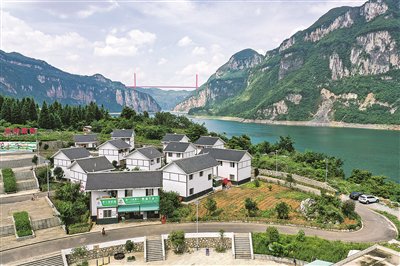
夯实中国式现代化的底座——习近平总书记引领中国从脱贫攻坚迈向乡村全面振兴
Xin Hua She· 2026-02-27 08:04
Core Viewpoint - China has achieved a historic victory in poverty alleviation, lifting nearly 100 million people out of poverty over eight years, and has established a five-year transition period to consolidate these gains and prevent a return to poverty [2][5][22]. Group 1: Poverty Alleviation Achievements - China completed the largest poverty reduction effort globally, achieving the UN's 2030 sustainable development goal a decade early [5]. - The transition period aims to ensure that the gains from poverty alleviation are maintained and that there is no large-scale return to poverty [5][6]. - The government emphasizes that the consolidation of poverty alleviation results is a baseline task for advancing rural revitalization [5][6]. Group 2: Rural Revitalization Strategy - The strategy for rural revitalization is integrated with the ongoing efforts to prevent a return to poverty, highlighting the importance of continuous support [3][18]. - Xi Jinping has stated that achieving a moderately prosperous society is not the end but a new starting point, emphasizing the need for effective connections between poverty alleviation and rural revitalization [3][18]. - The focus on rural revitalization is seen as essential for the modernization of China, with agriculture and rural development being prioritized [17][20]. Group 3: Industry Development - The revitalization of rural areas is heavily reliant on the development of local industries, which is considered a key aspect of the rural revitalization strategy [10][11]. - Over the past five years, 832 poverty-stricken counties have developed 2 to 3 leading industries, generating a total output value exceeding 1.7 trillion yuan [14]. - The government is committed to enhancing the value chain of rural industries and ensuring that farmers benefit from these developments [15][19]. Group 4: Monitoring and Support Mechanisms - A robust monitoring and support system has been established to prevent a return to poverty, with over 7 million individuals identified for assistance [9][19]. - The government has implemented a "one household, one policy" approach to tailor support for each household, ensuring effective assistance [6][9]. - Continuous efforts are being made to adapt to challenges such as natural disasters and economic fluctuations, reinforcing the commitment to maintaining poverty alleviation gains [6][19].
同心筑梦共绘边疆发展新画卷
Xin Lang Cai Jing· 2026-02-25 23:03
Core Viewpoint - The article highlights the significant transformation in Wenshan, Yunnan Province, due to targeted assistance from the Supreme People's Procuratorate, showcasing the successful implementation of poverty alleviation and rural revitalization initiatives [1][2][20]. Group 1: Background and Historical Context - Wenshan, once characterized by poverty with a poverty rate reaching 20%, has undergone substantial changes with improved infrastructure and living conditions [1]. - The Supreme People's Procuratorate has been involved in targeted assistance since 1995, initially focusing on Xichou County and later on Funing County, addressing the needs of these historically impoverished areas [5][6]. Group 2: Assistance Measures and Impact - The Supreme People's Procuratorate has deployed 47 officials to assist in Wenshan, providing new ideas and methods alongside financial support totaling over 540 million yuan [7]. - A total of 144.19 billion yuan in various forms of assistance has been coordinated to enhance local economic development and social welfare [7]. - Key infrastructure projects, including highways and railways, have been initiated to stimulate economic growth and improve living standards [7][10]. Group 3: Education and Talent Development - The Supreme People's Procuratorate has emphasized educational support, establishing 56 rural kindergartens and significantly increasing enrollment rates in early childhood education [18]. - Training programs for local officials and community leaders have been implemented, enhancing their capabilities and fostering local governance [16][17]. Group 4: Legal and Governance Support - Legal awareness and governance have been strengthened through the establishment of a law square in Wafang Village, promoting legal education and community engagement [20][21]. - The integration of legal functions into rural revitalization efforts has improved local governance and community resilience [21]. Group 5: Recognition and Future Directions - The Supreme People's Procuratorate's efforts have been recognized nationally, receiving awards for its contributions to poverty alleviation [22]. - Future initiatives will continue to focus on consolidating poverty alleviation results and promoting comprehensive rural revitalization in line with national policies [23].
镜观·领航丨续写彪炳史册的人间奇迹
Xin Hua She· 2026-02-25 13:10
Core Viewpoint - The article emphasizes the importance of consolidating poverty alleviation achievements and advancing rural revitalization as a new starting point for development under the leadership of the Communist Party of China [1][3]. Group 1: Poverty Alleviation and Rural Revitalization - The victory in poverty alleviation is not the end but the beginning of a new life and struggle, highlighting the need for continuous efforts in rural development [3]. - There is a focus on dynamic monitoring and support to prevent a return to poverty, ensuring that the achievements in poverty alleviation are solid and sustainable [4][6]. - The integration of poverty alleviation and rural revitalization is crucial, with an emphasis on tracking income changes and maintaining basic living standards [6][15]. Group 2: Agricultural Development and Food Security - The article stresses the importance of agricultural modernization and food security, advocating for self-reliance in seed technology and agricultural innovation [19][25]. - There is a call for enhancing agricultural technology promotion and training to support the development of green and efficient agriculture [22][41]. - The development of rural characteristic industries is highlighted as a foundation for comprehensive rural revitalization, with a focus on increasing added value and driving income growth for farmers [44][26]. Group 3: Role of Grassroots Organizations - Strengthening grassroots party organizations is essential for effective rural governance and the implementation of poverty alleviation policies [51][60]. - The article emphasizes the need for a strong cadre team in rural revitalization, attracting various talents to contribute to rural development [51][54]. - The grassroots organizations are seen as the backbone of community support, ensuring that the benefits of policies reach the people effectively [57][60].

天天学习|方寸桌凳载深情
Yang Shi Wang· 2026-02-25 07:06
Group 1 - The core message emphasizes the importance of "targeted poverty alleviation" as introduced by President Xi Jinping during his visits to various villages, highlighting the need for policies to reflect the well-being of the local people [1] - The transition from poverty alleviation to rural revitalization is marked as a critical phase, with 2025 being the final year of the five-year transition period to consolidate and expand the achievements of poverty alleviation [2] - The ongoing dialogue between the President and local residents signifies a commitment to maintaining a close relationship with the people, ensuring that policies are effectively implemented and resonate with their needs [2]

申万宏源助力宣汉发展投资集团3亿公司债成功发行
申万宏源证券上海北京西路营业部· 2026-02-25 03:11
Core Viewpoint - The successful issuance of the corporate bonds by Xuanhan Development Investment Group demonstrates the company's strong market position and ability to secure low-cost, long-term funding for local infrastructure and economic development projects [2][3]. Group 1 - The bond issuance amounted to 300 million yuan, with a maturity of 5 years and an interest rate of 2.80%, achieving a subscription multiple of 2.93 times [2]. - Xuanhan Development Group plays a crucial role in managing state assets and investing in infrastructure and urban development in Xuanhan County, ensuring sustainable business operations [2]. - The company has effectively integrated poverty alleviation and rural revitalization efforts, addressing common challenges and promoting comprehensive upgrades in infrastructure and rural development [2]. Group 2 - The successful bond issuance reflects the collaborative efforts of Shenwan Hongyuan's fixed income financing headquarters and its Sichuan and Mianyang branches, showcasing the company's comprehensive strength and market reputation [3]. - The funds raised will optimize the financial structure of Xuanhan Development Group and enhance its market image, providing robust financial support for urban construction and economic growth in Xuanhan County [3]. - Shenwan Hongyuan aims to continue serving national strategies and the real economy, focusing on key regions and core clients to promote high-quality regional economic development [3].