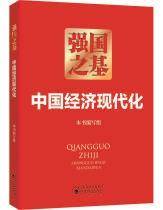
中国经济现代化

Search documents
书苑掠影|《强国之基》《飞羽之美》《沉默的宇宙》
Sou Hu Cai Jing· 2025-12-07 13:37
Group 1 - The book "Strong Foundation: China's Economic Modernization" showcases the monumental journey of economic modernization in China since the establishment of the new China, emphasizing the historical, practical, and theoretical logic of Chinese-style modernization [3] - The book summarizes the characteristics and experiences of China's economic modernization, focusing on industrialization, through multiple dimensions such as resource endowment, social systems, and development paths [3] - The publication serves as both a historical summary of China's economic modernization achievements and an important theoretical support for advancing Chinese-style modernization in the future [3] Group 2 - The book "The Beauty of Feathers: 100 Questions to Understand Birds" focuses on basic knowledge about birds, covering topics such as evolution, morphology, ecology, and the relationship between birds and humans [4] - It aims to convey the value of protecting birds and their habitats while promoting harmony between humans and nature [4] Group 3 - The book "The Silent Universe: The 'Great Filter' and the Future of Humanity" integrates astrophysics, biology, artificial intelligence, and philosophical reflection to provide a guide for the survival of human civilization [7] - It discusses the key challenges and breakthrough paths for human civilization to cross the "Great Filter" and move towards higher cosmic civilizations [7] - The author identifies three pillars for the survival of human civilization: safeguarding the Earth, technological innovation, and interstellar expansion, offering a multidimensional framework for understanding this survival [7]

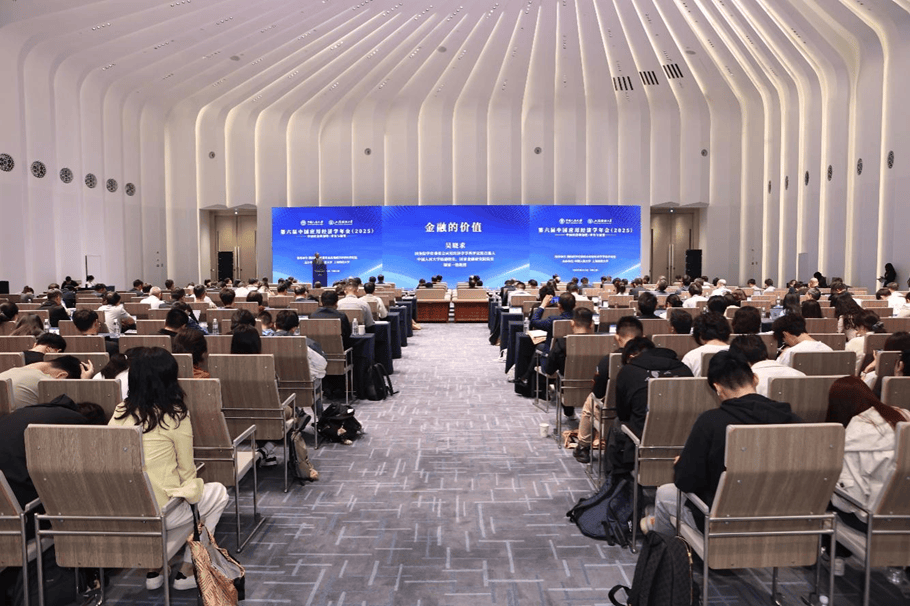
吴晓求最新发声:以制度改革引领经济跃升
Sou Hu Cai Jing· 2025-05-17 05:28
Group 1: Economic Modernization Framework - The core argument emphasizes the need to construct an academic framework for analyzing China's economic modernization through dimensions such as global pattern evolution, internal institutional reform, external demand expansion, and financial function transformation [2][4][8] Group 2: Institutional Civilization for Economic Growth - China's manufacturing sector has surpassed 30% of the global share, marking a transition from a manufacturing giant to a strong industrial system [4][11] - The long-term sustainable growth of the economy requires a foundation of institutional civilization, necessitating the establishment of three strategic pillars: improving the rule of law in the market economy, reforming income distribution and enhancing social security, and promoting a higher level of institutional openness [4][11] Group 3: Restructuring Domestic Demand - The current challenge of expanding domestic demand is attributed to insufficient institutional incentives rather than a lack of consumption capacity [5][12] - Key issues include income structure imbalance, unstable consumption expectations, and social security constraints, which necessitate systemic institutional reforms [5][12] Group 4: Global Rule Reconstruction - China's global economic role is shifting from "embedding in the global" to "participating in reconstruction," emphasizing the need for a new type of open structure [7][13] - China should actively seek to participate in the formulation of international rules, particularly in areas like WTO reform, digital trade, and green finance [7][15] Group 5: Financial System and Modern Economic Civilization - Financial systems are not only resource allocation mechanisms but also embodiments of institutional civilization, influencing market efficiency and wealth distribution [8][17] - The current phase of "dual disintermediation" in China is leading to a historical transformation of the financial structure, positioning finance as a resource allocation hub and a promoter of institutional civilization [8][17] Group 6: Future Economic Growth and Institutional Evolution - The next stage of China's economic growth will depend on the systematic evolution of the institutional framework and the rational reconstruction of social values [9][18] - The proposed "institution-strategy-value-civilization" four-dimensional analytical framework provides a clear path for understanding the internal logic of China's economic transformation [9][18]