中外合资药企股权调整

Search documents
中美施贵宝将易主 老牌合资药企洗牌
Bei Jing Shang Bao· 2026-02-05 16:37
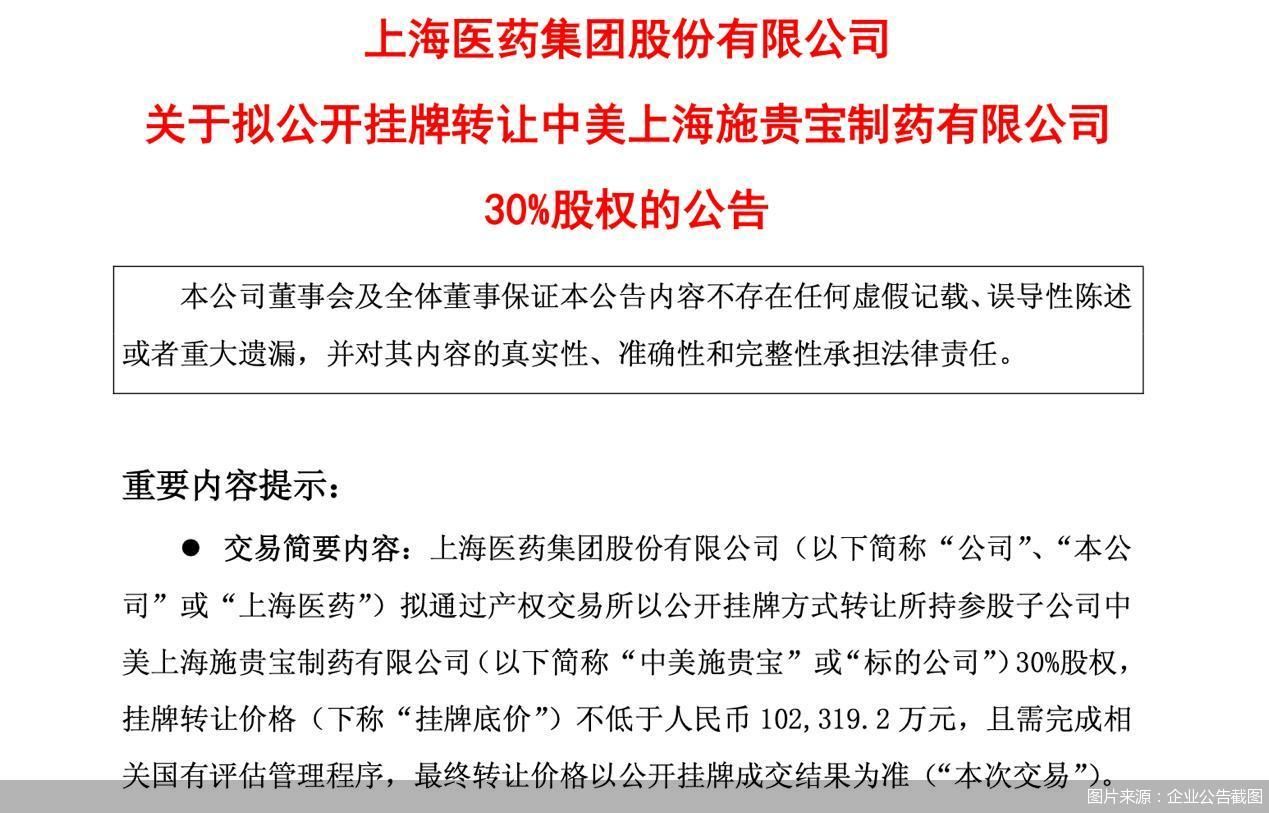
Core Viewpoint - The restructuring of China-U.S. Shanghai Bristol-Myers Squibb Co., a joint venture with over 40 years of history, is underway as Shanghai Pharmaceuticals plans to sell its 30% stake, marking a significant shift in ownership amid declining performance [1][6]. Group 1: Share Transfer Details - Shanghai Pharmaceuticals intends to publicly auction its 30% stake in China-U.S. Bristol-Myers Squibb with a minimum price of RMB 1.023 billion, following the sale of a 60% stake by Bristol-Myers Squibb to Hillhouse Capital [3][4]. - After the transfer, Shanghai Pharmaceuticals will no longer hold any shares in China-U.S. Bristol-Myers Squibb, aiming to optimize its investment structure and maximize asset value [3][4]. Group 2: Financial Performance - China-U.S. Bristol-Myers Squibb's revenue has plummeted over 60% from a peak of RMB 4.724 billion in 2016 to an estimated RMB 1.795 billion in 2024, with a net profit of only RMB 248 million [6][7]. - The company reported revenue of RMB 1.096 billion and a net profit of RMB 87.12 million for the first three quarters of 2025, indicating ongoing financial struggles [6]. Group 3: Market Dynamics and Strategic Choices - The decline in performance is attributed to the expiration of patents for key original drugs and the inability to secure competitive new drug pipelines from foreign partners, leading to a lack of growth drivers [7]. - The decision by Shanghai Pharmaceuticals to divest is seen as a rational choice to recover over RMB 1 billion in capital, aligning with the need to focus on high-growth areas and optimize resource allocation [7][8]. Group 4: Industry Trends - China-U.S. Bristol-Myers Squibb is not the only joint venture undergoing restructuring; other early foreign-invested pharmaceutical companies like Xi'an Janssen and China-SK have also made similar adjustments [8][9]. - The exit of these joint ventures reflects a broader transformation in the Chinese pharmaceutical landscape, driven by policy changes, strategic refocusing by multinational companies, and a shift in market competition dynamics [10].



上海医药拟转让中美施贵宝30%股权,又一家中外合资巨头迎来洗牌时刻
Bei Jing Shang Bao· 2026-02-05 09:38
Core Viewpoint - The restructuring of China-U.S. Bristol-Myers Squibb (BMS) marks a significant shift in the landscape of joint ventures in the pharmaceutical industry, driven by declining performance and strategic realignment [1][10]. Group 1: Share Transfer Details - Shanghai Pharmaceuticals plans to publicly transfer its 30% stake in China-U.S. Bristol-Myers Squibb through a property trading platform, with a minimum listing price of RMB 1.023 billion [1][5]. - BMS previously sold its 60% stake in the joint venture to Hillhouse Capital, with the transaction expected to complete in early 2026 [5][6]. - The transfer of shares is part of a broader trend where early joint ventures in the pharmaceutical sector are undergoing ownership changes and brand integrations [1][10]. Group 2: Financial Performance - China-U.S. Bristol-Myers Squibb's revenue has declined over 60% from its peak of nearly RMB 5 billion in 2016 to an estimated RMB 1.795 billion in 2024 [1][8]. - The company reported a net profit of only RMB 248 million in 2024, with revenues of RMB 1.096 billion in the first three quarters of 2025 [8][9]. - The decline in performance is attributed to market pressures and an aging product line, with key original drugs losing patent protection and facing competition from low-cost generics [9][11]. Group 3: Strategic Implications - The decision by Shanghai Pharmaceuticals to divest its stake is seen as a rational choice to maximize asset value and protect shareholder interests, particularly for minority shareholders [9][10]. - The shift in focus from mature drug businesses to innovative drug development aligns with the strategic direction of Shanghai Pharmaceuticals [9][11]. - The exit of early joint venture giants from the market reflects a significant transformation in the Chinese pharmaceutical landscape, driven by policy changes and evolving market dynamics [10][11].