中日关系发展

Search documents
被王毅痛斥后,日本急了
Xin Lang Cai Jing· 2026-02-16 01:07
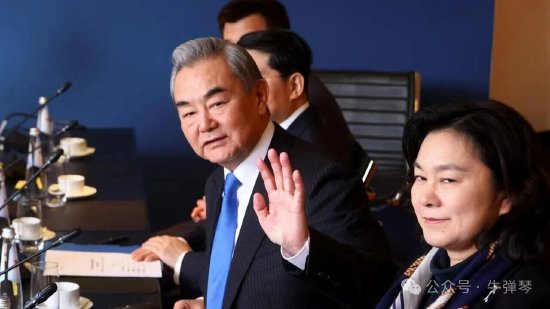
Core Viewpoint - The recent Munich Security Conference highlighted a significant confrontation between China and Japan, with Chinese Foreign Minister Wang Yi receiving considerable attention for his criticisms of Japan's security policies, leading to a strong response from Japan [2][32][34]. Group 1: Wang Yi's Statements - Wang Yi asserted that Asia remains largely peaceful, countering claims of escalating tensions in the region, and emphasized China's role as a stabilizing force [4][36]. - He warned of Japan's dangerous rhetoric regarding Taiwan, marking a significant shift in Japan's post-war stance and challenging China's sovereignty [6][38]. - Wang Yi compared Japan's post-war handling of its history unfavorably to Germany's, highlighting Japan's continued veneration of war criminals as a root cause of regional tensions [9][41]. Group 2: Japan's Response - Following Wang Yi's remarks, Japan's Foreign Ministry issued a statement condemning his comments as unfounded and initiated diplomatic protests [34][46]. - Japanese officials attempted to clarify their positions but struggled to gain traction against Wang Yi's impactful statements [32][34]. Group 3: Implications for Sino-Japanese Relations - The current state of Sino-Japanese relations is precarious, with Wang Yi indicating that Japan's provocative statements could lead to further deterioration [22][54]. - The recent electoral success of Japan's Prime Minister Kishi Sanae has not alleviated tensions, as her comments on Taiwan remain a point of contention [56]. Group 4: Global Context - The conference underscored shifting global dynamics, particularly the growing rift between the US and Europe, and the implications for international relations, including the need for Europe to take a more active role in global issues [58][59]. - Wang Yi expressed hope for a cooperative future in US-China relations but acknowledged the risks posed by adversarial elements within the US [60][61].

“铭记历史、面向未来”——纪念抗战胜利80周年主题交流会在日本名古屋举行
Xin Hua She· 2025-08-03 15:38
Core Viewpoint - The event commemorates the 80th anniversary of the victory in the Chinese People's Anti-Japanese War and the World Anti-Fascist War, emphasizing the importance of remembering history to foster peace and improve Sino-Japanese relations [1][2] Group 1: Event Overview - The "Remembering History, Facing the Future" Sino-Japanese Peace and Friendship Exchange Conference was held in Nagoya, Japan, attended by over 140 representatives from political, academic, and civil sectors [1] - Chinese officials expressed a commitment to combat any distortion or denial of historical facts regarding wartime aggression [1] Group 2: Contributions and Statements - Chinese Consul General Yang Xian highlighted China's significant contributions to the victory in the World Anti-Fascist War and called for collaboration to create a better future for Sino-Japanese relations [1] - Japanese House of Representatives member Matsuda Isao emphasized the importance of remembering history to maintain peace and advance Sino-Japanese relations [1] Group 3: Historical Evidence - Daito Jin, the abbot of Enkoji Temple in Aichi Prefecture, presented a batch of historical materials related to the Japanese military's invasion of China, underscoring the importance of historical evidence in promoting peace [2]
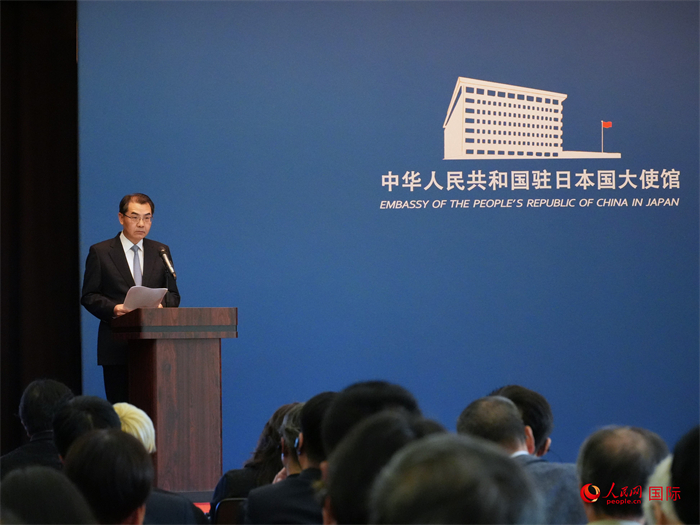
中国驻日本大使馆举办中日媒体沙龙及交流会
人民网-国际频道 原创稿· 2025-06-14 04:18
Group 1 - The core viewpoint of the event is to enhance media cooperation and improve public opinion between China and Japan, as emphasized by the Chinese Ambassador to Japan, Wu Jianghao [2][5] - The event was attended by approximately 130 representatives from various media, content creators, and experts, indicating a strong interest in fostering bilateral relations [1][4] - The discussions highlighted the importance of media's social responsibility and its role as a bridge in improving understanding and trust between the two nations [2][5] Group 2 - The recent resumption of high-level cultural exchange consultations between China and Japan aims to strengthen media and think tank collaboration [2] - Participants expressed a desire to deepen cooperation in reporting and cultural dissemination to positively impact the development of bilateral relations [5] - The event included a viewing of cultural exchange videos and exhibitions, showcasing the collaborative efforts in film and cultural reporting between the two countries [7]