世界秩序变化

Search documents
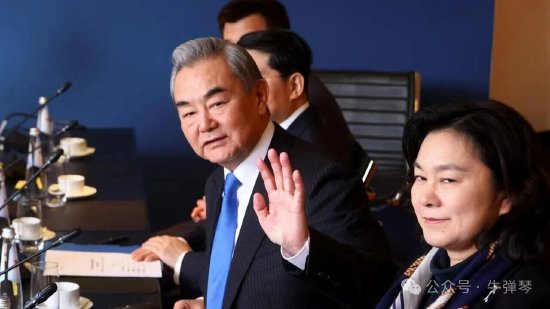
被王毅痛斥后,日本急了
Xin Lang Cai Jing· 2026-02-16 01:07
Core Viewpoint - The recent Munich Security Conference highlighted a significant confrontation between China and Japan, with Chinese Foreign Minister Wang Yi receiving considerable attention for his criticisms of Japan's security policies, leading to a strong response from Japan [2][32][34]. Group 1: Wang Yi's Statements - Wang Yi asserted that Asia remains largely peaceful, countering claims of escalating tensions in the region, and emphasized China's role as a stabilizing force [4][36]. - He warned of Japan's dangerous rhetoric regarding Taiwan, marking a significant shift in Japan's post-war stance and challenging China's sovereignty [6][38]. - Wang Yi compared Japan's post-war handling of its history unfavorably to Germany's, highlighting Japan's continued veneration of war criminals as a root cause of regional tensions [9][41]. Group 2: Japan's Response - Following Wang Yi's remarks, Japan's Foreign Ministry issued a statement condemning his comments as unfounded and initiated diplomatic protests [34][46]. - Japanese officials attempted to clarify their positions but struggled to gain traction against Wang Yi's impactful statements [32][34]. Group 3: Implications for Sino-Japanese Relations - The current state of Sino-Japanese relations is precarious, with Wang Yi indicating that Japan's provocative statements could lead to further deterioration [22][54]. - The recent electoral success of Japan's Prime Minister Kishi Sanae has not alleviated tensions, as her comments on Taiwan remain a point of contention [56]. Group 4: Global Context - The conference underscored shifting global dynamics, particularly the growing rift between the US and Europe, and the implications for international relations, including the need for Europe to take a more active role in global issues [58][59]. - Wang Yi expressed hope for a cooperative future in US-China relations but acknowledged the risks posed by adversarial elements within the US [60][61].

Pimco看好黄金长线前景 称历史性大跌之后长期结构性支撑未变
Xin Lang Cai Jing· 2026-02-05 23:29
Group 1 - The long-term upward trend of gold prices remains unchanged despite a recent significant drop in prices [1][2] - The two main driving factors for gold's value are changes in the world order and inflation, leading to a desire for diversified investments [1][2] - Gold prices have fallen by 15% from last week's historical high, following a period of rapid increases driven by speculative buying, geopolitical tensions, and concerns over the independence of the Federal Reserve [1][2] Group 2 - Some market participants caution that the rapid price increases were excessive, resulting in the largest drop in gold prices since 2013 and the largest single-day drop in silver prices [1][2] - There are long-term buyers for gold, but short-term funds can easily push prices down by 10% to 15%, which does not alter the long-term trend [1][2]
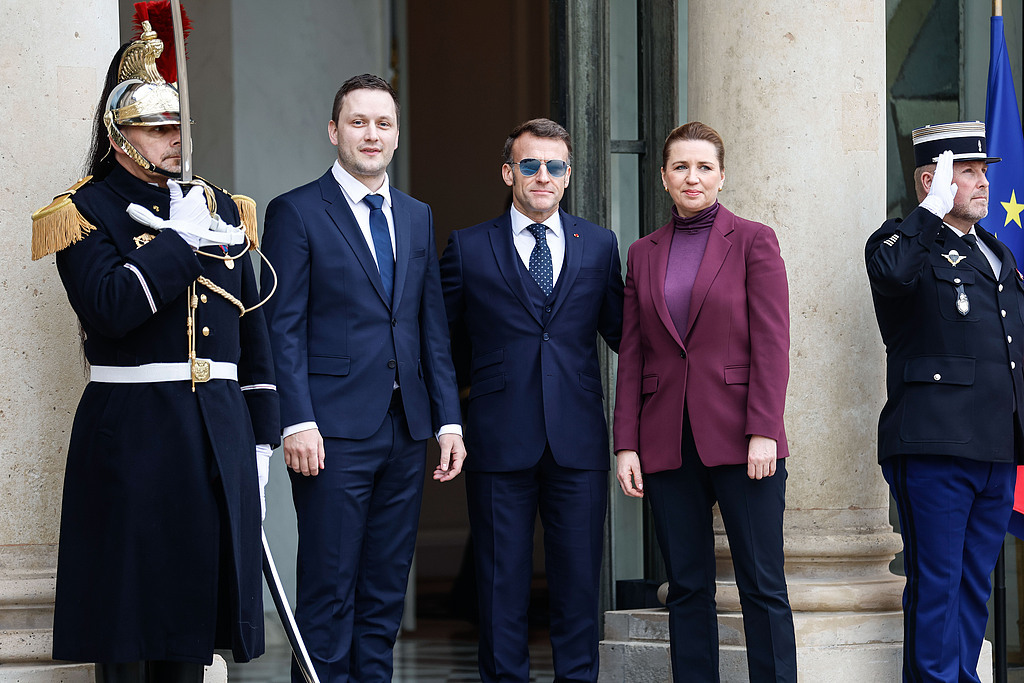
会见来访丹麦首相,聚焦格陵兰岛危机,马克龙:美国给欧洲敲响战略警钟
Huan Qiu Shi Bao· 2026-01-28 22:54
Core Viewpoint - The diplomatic efforts surrounding the Greenland crisis are ongoing, with Denmark and Greenland's leaders reaffirming their unity with France against external pressures, particularly from the U.S. [1][3] Group 1: Diplomatic Meetings - Danish Prime Minister Frederiksen and Greenland's Premier Nielsen met with French President Macron to discuss the ongoing Greenland crisis and the need for a united European front [1][3] - Macron emphasized the importance of strengthening defense deployments in the Arctic region and expressed France's support for Denmark and Greenland [3] - The meetings aimed to ensure continued support from allies for Denmark and Greenland amidst the crisis, which, while eased, remains a concern due to potential unpredictable actions from the U.S. [3][4] Group 2: European Unity and Security - Frederiksen highlighted the necessity for Europe to become stronger and more self-reliant in the face of external threats, stating that recent events have shown the effectiveness of a united European stance [3][4] - German Chancellor Merz reiterated Germany's commitment to supporting Denmark and Greenland within NATO, emphasizing the transatlantic shared interests in Arctic security [4] - The ongoing uncertainty regarding U.S. intentions and the future of Greenland's sovereignty remains a critical issue, with discussions about potential U.S. military bases in Greenland still unresolved [4][5] Group 3: Sovereignty Concerns - Frederiksen reiterated that while Denmark is open to deeper military cooperation with the U.S., national sovereignty remains a "red line" that cannot be crossed [5] - The discussions have raised questions about the future of the established world order, with Frederiksen stating that the previous order has ended and will not return [5]