
中美关系走向

Search documents
被王毅痛斥后,日本急了
Xin Lang Cai Jing· 2026-02-16 01:07
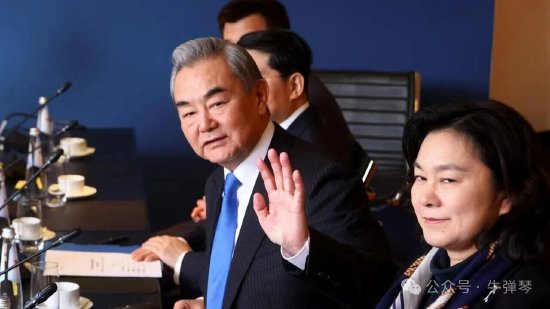
Core Viewpoint - The recent Munich Security Conference highlighted a significant confrontation between China and Japan, with Chinese Foreign Minister Wang Yi receiving considerable attention for his criticisms of Japan's security policies, leading to a strong response from Japan [2][32][34]. Group 1: Wang Yi's Statements - Wang Yi asserted that Asia remains largely peaceful, countering claims of escalating tensions in the region, and emphasized China's role as a stabilizing force [4][36]. - He warned of Japan's dangerous rhetoric regarding Taiwan, marking a significant shift in Japan's post-war stance and challenging China's sovereignty [6][38]. - Wang Yi compared Japan's post-war handling of its history unfavorably to Germany's, highlighting Japan's continued veneration of war criminals as a root cause of regional tensions [9][41]. Group 2: Japan's Response - Following Wang Yi's remarks, Japan's Foreign Ministry issued a statement condemning his comments as unfounded and initiated diplomatic protests [34][46]. - Japanese officials attempted to clarify their positions but struggled to gain traction against Wang Yi's impactful statements [32][34]. Group 3: Implications for Sino-Japanese Relations - The current state of Sino-Japanese relations is precarious, with Wang Yi indicating that Japan's provocative statements could lead to further deterioration [22][54]. - The recent electoral success of Japan's Prime Minister Kishi Sanae has not alleviated tensions, as her comments on Taiwan remain a point of contention [56]. Group 4: Global Context - The conference underscored shifting global dynamics, particularly the growing rift between the US and Europe, and the implications for international relations, including the need for Europe to take a more active role in global issues [58][59]. - Wang Yi expressed hope for a cooperative future in US-China relations but acknowledged the risks posed by adversarial elements within the US [60][61].

未知机构:【瑞银闭门会IMF0427】分析中国、欧洲、亚洲经济现状、前景与应对策略,探讨全球经济格局变化、中美关系走向及政策调整方向–20250502-20250503
未知机构· 2025-05-02 23:55
Summary of Conference Call Notes Industry or Company Involved - The discussion primarily revolves around the global economic landscape, with a focus on the impacts of tariffs and trade policies, particularly between the United States and China, as well as implications for Europe and Asia. Key Points and Arguments Economic Impact by Region 1. **China**: The economy is facing challenges due to a prolonged real estate slump and external tariff shocks, leading to a projected growth rate of approximately 3.5% this year and 3% next year. The focus of policy is on expanding domestic demand, technological development, and continued openness [1][5][7]. 2. **Europe**: Despite trade war impacts, Europe is expected to stabilize through fiscal stimulus and increased defense spending, although short-term uncertainties pose challenges to investment and growth [1][8][9]. 3. **Asia**: Initially showing strong growth, the region is now adversely affected by tariff shocks, particularly in countries like Vietnam and South Korea. Regional economic integration and effective trade agreements are emphasized as necessary responses [1][11][12]. Global Economic Outlook 4. The International Monetary Fund has downgraded global growth forecasts, indicating a trend towards de-Americanization of the global economy, with increased regional integration and localized supply chains [1][21]. U.S.-China Relations and Policy Outlook 5. Structural changes in U.S.-China relations are noted, with tariffs serving as a significant demand shock. The U.S. tariff policy is seen as multifaceted and unclear, while China maintains an open stance in trade negotiations [1][3][6][22]. Tariff Effects 6. Tariffs are identified as a major demand shock, with China heavily reliant on domestic demand to counteract external pressures. Additional fiscal policies equivalent to 1.5%-2% of GDP are anticipated to support the economy [1][7][19]. European Economic Dynamics 7. Europe is experiencing a slowdown in growth, with private investment declining and public investment uncertain. The need for enhanced European integration and competitiveness is highlighted [1][8][9][10]. Asian Economic Resilience 8. Prior to April, Asian economies were predicted to grow at 4.9% this year, with strong domestic consumption and export performance. However, tariff impacts are expected to reduce growth rates significantly [1][11][12][13]. Trade Agreements and Regional Cooperation 9. The need for improved execution of trade agreements in Asia is emphasized, as many small and medium enterprises struggle to utilize existing agreements effectively [1][17]. Long-term Structural Changes 10. The discussion suggests a long-term shift towards regional supply chains and a more fragmented global economy, with implications for trade and security policies [1][22][23]. Other Important but Possibly Overlooked Content 11. The potential for the euro to gain a more significant role in the global financial system is discussed, alongside concerns about the stability of the U.S. financial market and the dollar's status as a safe asset [1][24]. 12. The conversation touches on the challenges China faces in balancing domestic economic adjustments with external pressures, including the need for structural reforms and increased foreign investment [1][27][28]. This summary encapsulates the key discussions and insights from the conference call, providing a comprehensive overview of the current economic landscape and the implications of ongoing trade tensions.
