久赌必输

Search documents
汇源果汁的四次豪赌:从国民饮料到穷途末路?
3 6 Ke· 2026-01-19 14:15
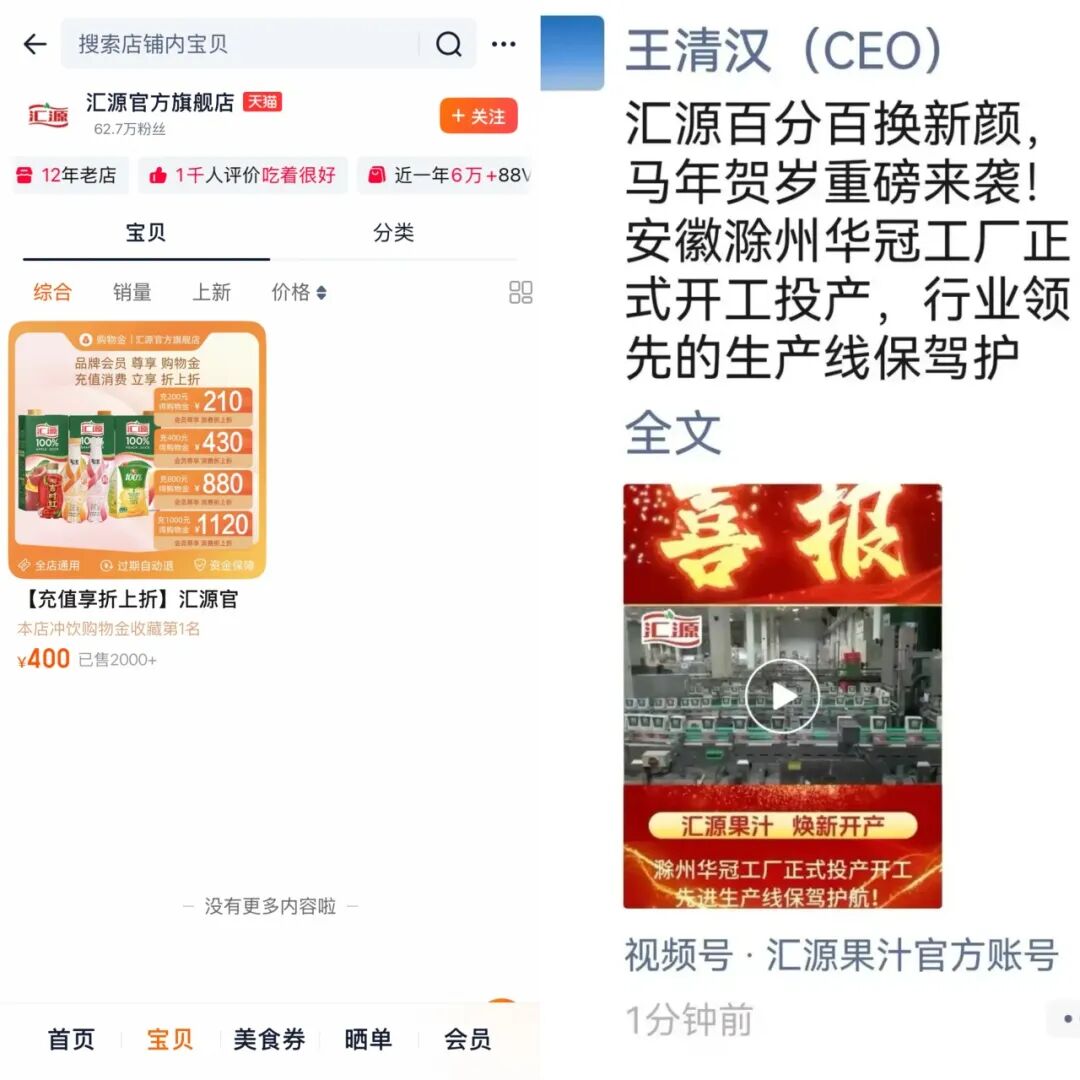
Core Viewpoint - The article discusses the downfall of Huiyuan Group, highlighting the internal conflict between the founder's family and the restructuring investor, Wen Sheng Asset, leading to the division of the company into two entities and a significant decline in market share [1][36][42]. Group 1: Company Division and Internal Conflict - On January 8, Huiyuan Group and its restructuring investor, Wen Sheng Asset, had a public fallout, resulting in the division of the company into "Beijing Huiyuan," controlled by Wen Sheng, and "Huiyuan Group," controlled by the Zhu family [1]. - The Zhu family cut off supply to Beijing Huiyuan, forcing it to seek external manufacturers for production, indicating a significant disruption in the supply chain [1]. - The internal conflict has led to a rare situation in business history where both parties are fighting over control, resulting in a fragmented company structure [5][38]. Group 2: Historical Context and Business Decisions - The article reviews the history of Huiyuan, noting that founder Zhu Xinli made several high-stakes bets throughout his career, which ultimately led to the company's decline [5][6]. - Zhu's first major gamble was a costly advertising bid in 1996, which initially paid off, propelling Huiyuan to success [6][8]. - The company reached a peak in 2000 with a market share of over 20% and went public in 2007, raising 2.4 billion HKD, marking a significant milestone [8][10]. Group 3: Failed Acquisition and Consequences - In 2008, a proposed acquisition by Coca-Cola for 179.2 billion HKD was rejected by the Chinese government, leading to a severe operational crisis for Huiyuan [15][17]. - Following the failed acquisition, Zhu made drastic cuts to the sales team, which resulted in a loss of market presence and a significant drop in revenue [14][16]. - The company reported its first loss in 2009, marking a turning point in its financial health [17]. Group 4: Financial Mismanagement and Legal Issues - Zhu Xinli's attempts to recover from financial difficulties led to the controversial "42.75 billion loan scandal," where funds were misappropriated from the publicly listed Huiyuan to support private ventures [22][24]. - The scandal resulted in a suspension of trading for Huiyuan for 33 months, ultimately leading to its delisting from the Hong Kong Stock Exchange [27][28]. - The company's market value plummeted by over 80% from its peak, illustrating the severe impact of Zhu's financial mismanagement [28][42]. Group 5: Current Status and Future Outlook - After delisting, Huiyuan is burdened with over 10 billion in debt and is described as a "zombie company" [30]. - Zhu Xinli's choice to partner with Wen Sheng Asset, known for dealing with distressed assets, has led to further conflicts over control and funding [33][36]. - The market share of Huiyuan has drastically decreased from over 50% to less than 10%, indicating a significant loss of competitive position in the industry [42].