互联网人工智能

Search documents
我认为投中网上限59分 | Findme
投中网· 2026-01-05 12:56
Core Viewpoint - The article discusses the dynamics of the venture capital (VC) landscape in China, particularly focusing on the influence of personal branding among prominent figures in the industry and the return of US dollar VC investments [4][5][6]. Group 1: Personal Branding in VC - The author compares the branding strategies of notable VC figures like Cao Yi and Cao Xi, suggesting that Cao Yi's approach is heavily influenced by Shen Nanpeng, emphasizing a "prophet-like" image where investors are seen as possessing unique insights into the future [5][6]. - In contrast, Cao Xi and Zhang Ying adopt a more personal branding strategy, positioning themselves as individualistic and emphasizing their personal contributions to the investment landscape [5][6]. - The importance of personal branding for General Partners (GPs) is highlighted, as it provides them with both internal and external power dynamics necessary for survival in a competitive market [6][7]. Group 2: Critique of Current VC Practices - The author expresses dissatisfaction with the current state of Chinese VC, suggesting that the industry is stagnant and overly reliant on established jargon and concepts, which limits innovation and growth [9]. - There is a critique of the superficiality in personal branding, where being likable does not equate to being trustworthy, especially in a market with weak social consensus [8][9]. - The article emphasizes the need for a deeper understanding of value creation in the investment sector, arguing that the discourse should focus on how money is made rather than superficial narratives [9]. Group 3: Insights on Peter Thiel - Peter Thiel is presented as a benchmark for evaluating the Chinese VC landscape, with the author rating him as a "120-point" investor due to his strategic use of political, media, and financial tools to exert influence [12][13]. - Thiel's approach to investment is characterized by a strong ideological foundation, which contrasts with the more opportunistic nature of many in the Chinese VC space [12][14]. - The article suggests that while Thiel's methods may not be directly applicable to China, they serve as a reminder of the potential for greater freedom and innovation within the industry [17].


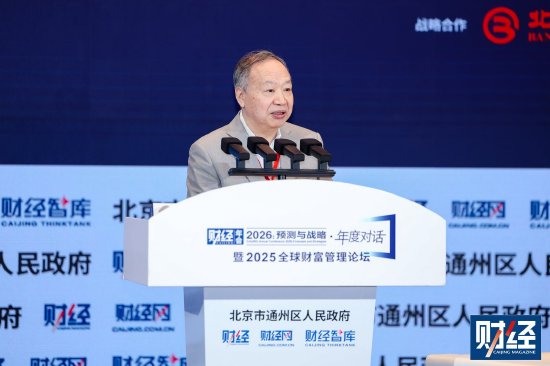
高传捷:信托作为养老金融的核心,应发挥关键作用
Xin Lang Cai Jing· 2025-12-20 02:25
Core Viewpoint - The article emphasizes the transition of China's elderly care model from family-based to socialized care, highlighting the critical role of trusts in this shift [2][5]. Group 1: Elderly Care Model - The elderly care model in China is rapidly shifting towards socialized care, which is recognized as a national core strategy [2][5]. - Trusts are positioned as the central pillar of elderly financial services, playing a key role in this transition [2][5]. Group 2: Proposed New Model - A new elderly care service model is proposed, which centers on trusts, supported by guardianship and contractual care, integrating various sectors such as notarization, law firms, banks, and insurance [2][5]. - The model aims to achieve five main functions: asset preservation and appreciation, ensuring quality of life in later years, care from children and relatives, inheritance of assets, and charitable support [2][5]. Group 3: Implementation and Goals - The core objective of the proposed model is to ensure that elderly individuals have reliable support, legal protection, and effective remedies for rights violations [2][5]. - Tongzhou District is highlighted as a pilot area with a solid foundation for integrating trust innovation with elderly services, with expectations for more practical cases to emerge [2][5]. Group 4: Call to Action for the Trust Industry - The trust industry is urged to seize opportunities, respect innovation trends, learn from historical lessons, and enhance risk management [3][6]. - There is a call for institutional innovation and value reconstruction to support the development of modern service industry strategies in Beijing Tongzhou, contributing to the advancement of the national trust industry and elderly care [3][6].