
交叉创新

Search documents
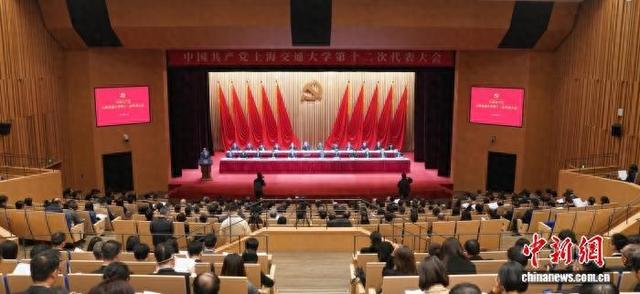
加快迈向世界一流大学前列 上海交大以新战略开启发展新周期
Xin Lang Cai Jing· 2026-01-18 06:06
Core Viewpoint - The Shanghai Jiao Tong University (SJTU) aims to become a world-class university by 2035, with a focus on academic excellence, talent cultivation, and significant contributions to national education modernization [1][3]. Strategic Goals - SJTU plans to gather influential academic masters and top talents, with several disciplines reaching world-class standards by 2035 [3]. - The university emphasizes the importance of the next five years as a critical period for breakthroughs and development [3]. Six Strategic Initiatives - **Talent-Centric Strategy**: Implement a dual-cycle approach for talent acquisition and cultivation, fostering a high-quality innovative talent pool [4]. - **Cross-Disciplinary Innovation**: Break down disciplinary barriers to enhance interdisciplinary collaboration and align with national strategic needs [4]. - **Open Exchange Strategy**: Promote international academic exchanges and collaborations, participating in global scientific initiatives [4]. - **Digital Integration Strategy**: Leverage emerging technologies like AI to enhance education, research, and management services [4]. - **Cultural Leadership Strategy**: Strengthen cultural heritage and values, enhancing the sense of responsibility and progress among the university community [5].

青海大学持续筑牢AI交叉创新支撑体系
Xin Lang Cai Jing· 2026-01-16 18:01
Group 1 - The core viewpoint emphasizes the establishment of a robust AI and scientific computing capability through the development of a "green computing power + data elements" framework at Qinghai University [1][2] - Qinghai University has built a national supercomputing center with a scientific computing capacity of 5.2 PFlops and an intelligent computing capacity of 150 PFlops, aiming for over 1000 PFlops in the future [1] - The university is focusing on applications in various fields such as water and wind resource assessment, agricultural breeding, salt lake chemistry, ecological studies, astronomical observations, and AI-assisted medical diagnostics [1] Group 2 - The university has created a green computing power platform and the "Sanjiangyuan No. 1" satellite ground receiving station, which supports an integrated research system for multi-disciplinary collaboration [2] - The "Sanjiangyuan No. 1" satellite ground receiving station is operational and has received over 20 types of remote sensing data from various satellites, contributing to ecological monitoring in the "Chinese Water Tower" region [2] - Qinghai University has collaborated with the National Supercomputing Center in Wuxi to deploy the DeepSeek large model, which is available for free to all students and faculty [2]