
产品质量把控

Search documents
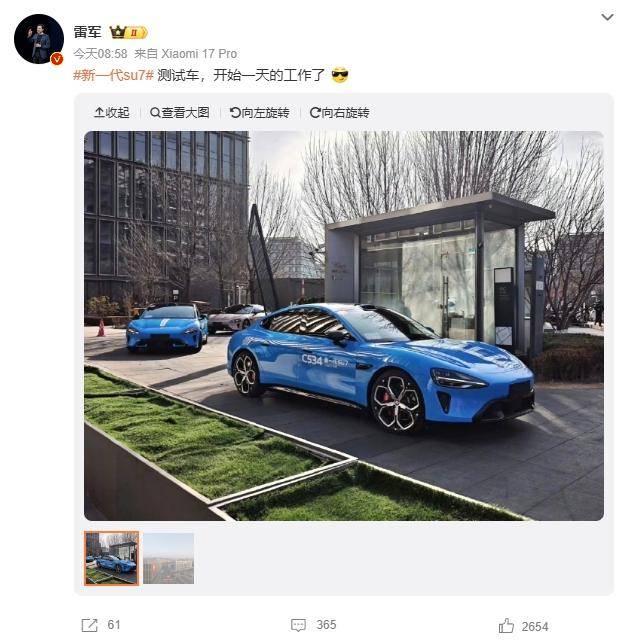
雷军晒新一代SU7照片:称参加过多次测试
Sou Hu Cai Jing· 2026-02-12 16:55
Core Insights - Xiaomi's founder Lei Jun is personally involved in the testing of the new SU7 model, demonstrating his commitment to product quality and performance [1][3] - The new SU7 is set to launch in April 2023, with a focus on creating a desirable vehicle for consumers [3] Group 1: Product Development - Lei Jun has participated in multiple testing sessions for the SU7, including a high-speed test drive from Beijing to Shanghai, indicating a hands-on approach to quality control [1] - The SU7 is available for pre-order, with three versions offered: Standard, Pro, and Max, priced at 229,900 yuan, 259,900 yuan, and 309,900 yuan respectively [3] Group 2: Market Strategy - The company aims to ensure that every vehicle delivered meets the highest standards, reflecting a strong emphasis on customer satisfaction and product excellence [3]

周生生再发声明回应足金材质质疑,第三方检测结果符合国标
Cai Jing Wang· 2026-02-05 15:13
Core Viewpoint - The company, Chow Sang Sang, addressed consumer concerns regarding the material of a gold product, confirming that it meets national standards for gold purity [1] Group 1: Company Response - Chow Sang Sang communicated promptly with consumers and cooperated with local market regulatory authorities to have the disputed product tested by a designated third-party agency [1] - The testing results confirmed that the product is made of 24K gold, with gold content compliant with the national standard GB11887 [1] Group 2: Commitment to Quality - The company emphasizes its long-standing principles of quality and integrity, stating that all products undergo rigorous quality control processes before leaving the factory [1] - Chow Sang Sang plans to use this incident as an opportunity to enhance communication and service details, while continuing to uphold high standards in product quality and integrity in business operations [1]

充电宝风波不断,小电池带来大警示
Nan Fang Du Shi Bao· 2025-07-05 16:17
Core Viewpoint - A significant recall event involving over 1.2 million power banks has led to a crisis of trust in the industry, affecting both consumers and manufacturers [1][3]. Group 1: Impact on Companies - Major brands like Romoss and Anker Innovation have publicly acknowledged the recall, which has resulted in a loss of consumer trust and market share [1]. - Romoss has reportedly ceased operations since July 1, with employees only receiving salaries up to June, indicating severe operational disruptions [1][2]. - Suppliers who have invested heavily in materials express a desperate hope for Romoss to resume normal operations, highlighting the potential ripple effects on the entire supply chain [2]. Group 2: Quality Control Issues - The recall has exposed serious deficiencies in product quality control, particularly concerning the battery cells, which are critical for safety [3]. - Reports suggest that a battery cell manufacturer outsourced some production to a factory that violated material standards, leading to risks in battery performance [3]. - The incident reflects a broader issue of cost-cutting measures that compromise product quality and consumer safety, which could damage the industry's reputation [3]. Group 3: Industry Standards and Safety - The event underscores the inadequacy of industry standards, as existing certifications like CCC may not effectively ensure product quality due to potential fraudulent practices [3]. - The crisis serves as a warning that safety must be prioritized over cost in the rapidly evolving energy sector, where lithium batteries are essential for various applications [4]. - Companies must embed safety into every stage of product development and establish comprehensive quality and regulatory systems to ensure sustainable growth in the industry [4].