人力资源转型

Search documents
从大企业转型至中小企业,人力资源的生存法则是什么?
3 6 Ke· 2026-02-02 09:49
Core Insights - The primary differences between large enterprises and small to medium-sized enterprises (SMEs), especially rapidly expanding SMEs, are business pace, division of responsibilities, and talent attraction [1][4]. Group 1: Business Pace - Large enterprises have established business systems and strategic planning, resulting in longer decision-making cycles [2]. - Rapidly expanding SMEs often prioritize tactical actions over strategic planning, allowing for shorter decision-making cycles due to their agility [2]. Group 2: Division of Responsibilities - In large enterprises, responsibilities are highly specialized and employees focus on specific modules within a structured framework [3]. - SMEs require employees to be versatile and take on multiple roles due to limited resources, necessitating a hands-on approach from HR professionals [3]. Group 3: Talent Attraction - Large enterprises attract "steady" talent seeking clear career paths and abundant resources due to their strong employer brand [4]. - SMEs must actively communicate their culture and mission to attract "adventurous" talent who are willing to embrace uncertainty and seek rapid growth [4]. Group 4: HR Challenges and Strategies - HR in SMEs must adapt policies to be agile and responsive to the fast-paced business environment, balancing quick delivery with employee adaptation [5][6]. - HR professionals transitioning from large enterprises to SMEs need to redefine their roles, focusing on building influence through expertise and direct communication [7][8]. Group 5: Building Employer Brand - SMEs face challenges in attracting talent due to perceptions of lacking career development opportunities and stability [12][13]. - To overcome these challenges, SMEs should highlight their unique advantages, such as work-life balance and flexible work environments, to enhance their appeal [12][14]. Group 6: Recruitment Strategies - HR should focus on storytelling during recruitment to effectively communicate the company's culture and values [14]. - Building a multi-dimensional recruitment network that leverages employee referrals and social media can help SMEs attract talent [14][15]. Group 7: Role Transformation - HR professionals must shift from a management mindset to a builder and coach mindset, embracing opportunities to create and innovate [10][11]. - Engaging directly with employees and understanding their needs is crucial for HR to effectively support the business [10][11]. Group 8: Conclusion - Successful HR professionals in SMEs understand the importance of becoming a "T-shaped" multi-skilled individual and actively work on building a competitive employer brand [15].
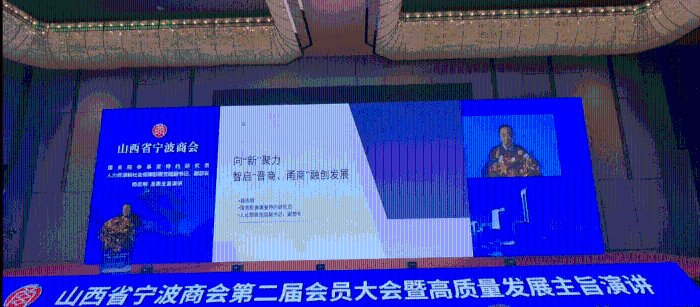
国务院参事室特约研究员杨志明:向“新”聚力 晋商甬商数智融合共创未来
Xin Lang Cai Jing· 2026-01-27 03:23
Core Viewpoint - The digital economy is recognized as a leading force in technological revolution and industrial transformation, presenting historical opportunities for the integration and development of Shanxi and Ningbo merchants [1] Group 1: Historical Context - Shanxi merchants historically excelled in land trade and financial services during the Ming and Qing dynasties, while Ningbo merchants were known for maritime trade and banking, embodying a spirit of innovation and entrepreneurship [1] - The complementary trade network between Shanxi and Ningbo merchants has deep historical roots, particularly in commodities like tea, silk, and cotton [1] Group 2: Current Trends in Human Resources - The digital economy is reshaping business ecosystems and industrial transformations, injecting strong momentum into trade cooperation and talent development between Shanxi and Ningbo [3] - There are three significant trends in human resource development: 1. The demand for skilled labor is shifting from quantity to quality, with a need for high-skilled talent to support economic transformation [3] 2. The supply of skilled labor is transitioning from unlimited to limited, with a decreasing number of new migrant workers, making talent cultivation crucial [3] 3. The new generation is actively engaging in modern service industries, with 70% of the 110 new occupations created by the digital economy related to digitalization and intelligence [3] Group 3: Innovation Directions - Five innovation directions are proposed to address the changing landscape of human resources: 1. Mechanism innovation to unleash the potential of data and activate intelligent labor [4] 2. Technological innovation to upgrade traditional industries towards transparency, digital factories, and intelligent mining [4] 3. Scenario innovation to integrate industrial internet, smart cities, and human resource services [4] 4. Talent innovation focusing on both high-tech and high-skilled talents, as well as returning overseas and local talents [4] 5. Environmental innovation to create a collaborative ecosystem between government and enterprises, integrating education and industry [4] Group 4: Future Outlook - Shanxi and Ningbo, both historically rich and vibrant regions, are encouraged to leverage digital technologies and traditional strengths to achieve mutual benefits through innovation and development [4] - The aim is to establish a deeply integrated development ecosystem encompassing innovation chains, industrial chains, supply chains, talent chains, and value chains, contributing to high-quality development [4] Group 5: Event Summary - The meeting held from January 24 to 25 in Taiyuan, Shanxi, resulted in the election of a new council for the Shanxi Ningbo Chamber of Commerce, with over 300 industry experts and representatives from both regions discussing new cooperation opportunities [5]