人口减少周期

Search documents
连平:“十五五”房地产市场怎么走
Di Yi Cai Jing· 2025-11-06 03:46
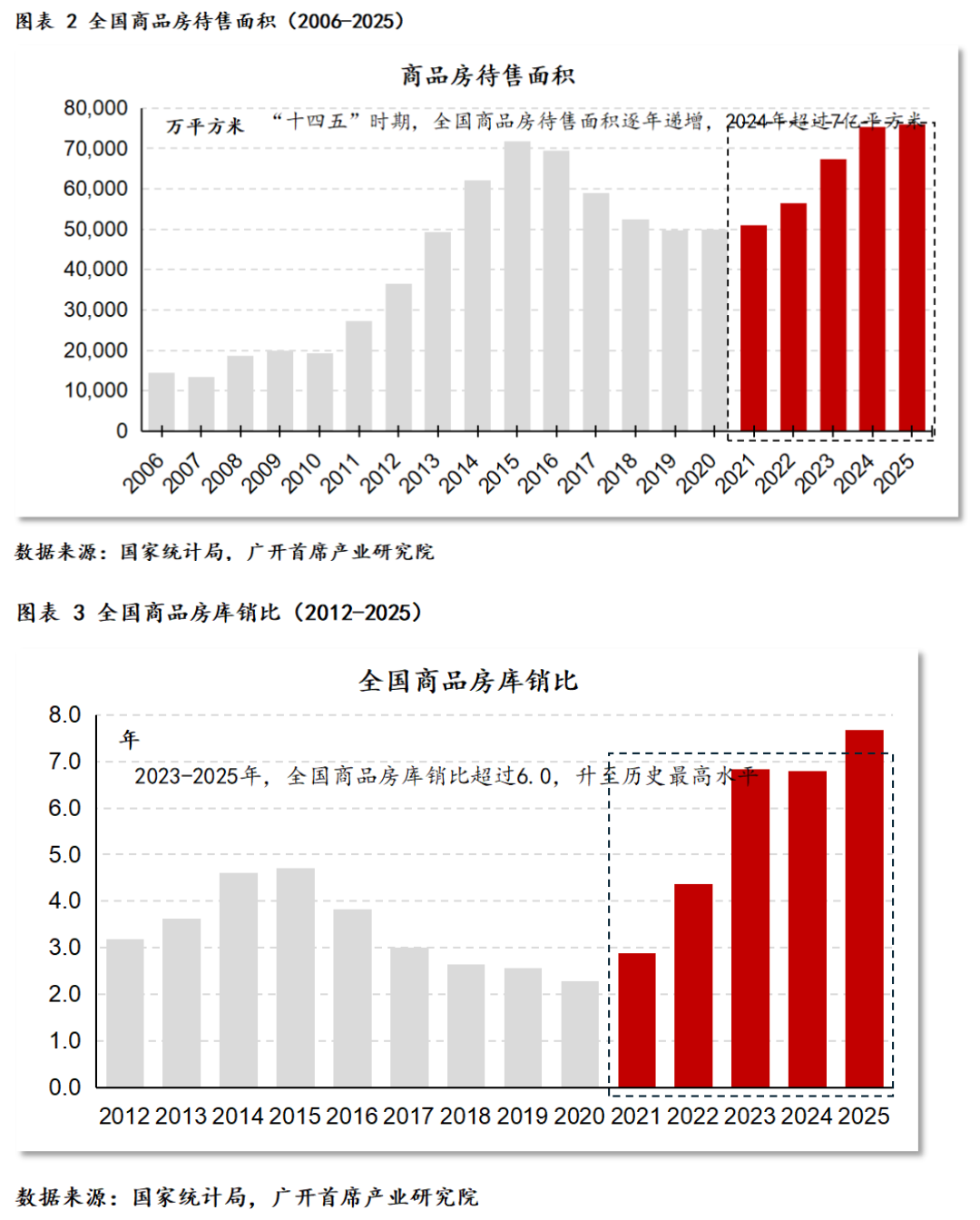
Core Insights - The real estate market is expected to enter a destocking phase during the "15th Five-Year Plan" period, with overall housing prices declining and investment demand significantly weakening [1][21]. Macro Factors Impacting Housing Demand and Market Structure - Both total housing demand and supply are likely to contract further, driven by long-term population decline and slower urbanization [2][3]. - The supply side may contract more than the demand side due to high risks for real estate companies and limited investment capacity, leading to a more balanced supply-demand relationship [1][2]. - Structural market characteristics will become more pronounced, with urbanization focusing on key city clusters, enhancing competitiveness in high-tier cities [1][4]. Changes in Population and Housing Demand - China is entering a population reduction cycle, with a projected decrease of approximately 4.8 million people by 2030 [2]. - The number of eligible homebuyers is expected to decline by 21 million, with the proportion of this group in the total population dropping from 39.2% to 38% [2]. - However, the structural change in the homebuyer population will support stable growth in improvement demand, particularly in coastal megacities [2][3]. Regional Differentiation in Demand - Demand will increasingly concentrate in key city clusters, with sales in these areas expected to account for 80% of the national total, up from 75% [4]. - Urbanization is projected to increase the urban population to 983 million by 2030, with per capita residential area rising to 44.6 square meters [3][4]. Real Estate Supply and Demand Dynamics - The housing inventory is at a historical high, indicating a serious oversupply situation that will take time to digest [5][10]. - The leverage ratio of households is expected to decline from around 61% to 54% by the end of the "15th Five-Year Plan" [5][10]. Policy Responses to Market Conditions - The overall housing policy will focus on releasing demand and guiding the market towards a balanced supply-demand relationship [13][16]. - Policies will include accelerating the destocking of commercial housing and maintaining a supportive environment for personal home purchases [14][15]. Market Outlook for the "15th Five-Year Plan" - The total demand for urban residential building area is projected to be around 3 billion square meters, with an average annual new housing demand of about 600 million square meters [16][21]. - Housing prices are expected to decline at a slower rate, with new home prices projected to drop by 1% annually and second-hand home prices by 2% [17][21]. - The inventory of unsold commercial housing is expected to decrease by about 40% by the end of the "15th Five-Year Plan" [17][21]. Recommendations for Targeted Policies - Suggestions include significantly lowering home purchase costs, implementing regional housing policies for major cities, and preventing housing financial risks [22][23][24]. - Establishing a real estate stability fund to effectively manage risks and improve market confidence is also recommended [24][25].