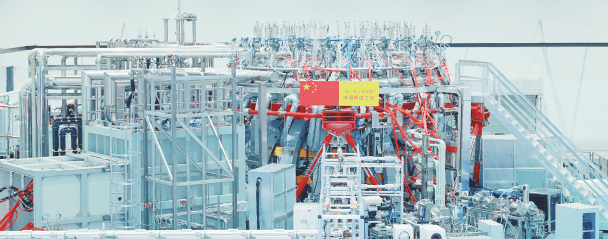
人工智能与聚变结合

Search documents
全球核聚变能产业进入“赛马”时间
Zhong Guo Neng Yuan Wang· 2026-02-06 06:25
Core Insights - The nuclear fusion energy industry is experiencing rapid growth due to national strategic planning, research breakthroughs, and capital investment, positioning it as a key solution to energy crises and climate change [2][3] - China has established a comprehensive development strategy for nuclear fusion energy since the 1980s, transitioning from scientific research to engineering and commercial applications [2][4] Industry Development - The global nuclear fusion development has entered a critical phase of engineering validation and commercialization, with over 160 fusion devices in operation, construction, or planning across 40 countries [4] - China has made significant advancements in fusion technology, with major facilities like EAST and HL-3 achieving world records in plasma stability and temperature [5][6] - The competitive landscape of fusion energy is characterized by multiple technological pathways, including magnetic confinement and inertial confinement, leading to a "race" among various approaches [6][7] Investment Trends - The fusion energy sector is attracting substantial investment, with private companies in China raising over 20 billion yuan since 2015, and a record 1 billion yuan raised by a single private fusion enterprise [7][8] - China ranks second globally in fusion energy investment, with 8 companies securing 4.4 billion euros, while the U.S. leads with 42 companies and 6.9 billion euros [8][9] Collaborative Ecosystem - A new model of collaboration involving state-owned enterprises, private capital, and social investment is emerging, enhancing the innovation ecosystem in the fusion energy sector [9][10] - Local governments and state-owned enterprises are actively participating in funding and supporting fusion energy initiatives, reflecting a shift towards a more integrated approach to development [10] Challenges and Future Outlook - Despite advancements, the commercial viability of nuclear fusion remains a significant challenge, with experts cautioning that achieving practical fusion energy by 2030 may be unrealistic [11][12] - Key technical challenges include plasma stability, material durability, and economic feasibility, which must be addressed to transition from experimental to commercial fusion energy [11][12] - Emerging technologies like artificial intelligence are expected to play a crucial role in accelerating the commercialization of fusion energy by enhancing material design and operational efficiency [13]