
核聚变能

Search documents
国泰海通|策略:聚焦能源转型与智能经济新增长
国泰海通证券研究· 2026-03-23 14:05
Core Viewpoint - The article emphasizes the continuous decline in trading heat of hot themes, with strong performance in electricity operation, new energy, banking, and optical communication, while metals and cyclical products are experiencing a pullback. The market's volatility and divergence present opportunities for investment, focusing on energy transition and the construction of a new intelligent economic form as the two main lines of development [1]. Group 1: Energy Transition - The construction of a clean, low-carbon, safe, and efficient new energy system is expected to accelerate, as outlined in the "14th Five-Year Plan" [2]. - The plan includes a ten-year action to double non-fossil energy and emphasizes the importance of energy resource supply security amid geopolitical conflicts [2]. - Investment opportunities are identified in new energy infrastructure, energy equipment, and future energy technologies, particularly in power grids, renewable energy, and new storage solutions [2]. Group 2: Collaborative Computing and Electricity - The synergy between green electricity and computing power is highlighted as a key area for new infrastructure investment, with significant government support for large-scale computing clusters and collaborative projects [3]. - By 2030, the proportion of green electricity generation is expected to increase significantly, with data centers projected to account for over 7% of total electricity consumption [3]. - Recommended investments include HVDC technology, liquid cooling systems, smart grids, and virtual power plants, as well as operators of green electricity and data centers [3]. Group 3: Tokenization and AI - The article discusses the integration of China's AI resources with global demand, establishing a systematic advantage in the power-computing-model-application framework [4]. - The government aims to enhance the efficient supply of computing algorithms and data, promoting innovation in model algorithms across various industries [4]. - Investment opportunities are suggested in domestic AI model companies and sectors related to power equipment, computing leasing, and domestic GPUs [4]. Group 4: Commercial Aerospace - The acceleration of low-orbit satellite internet deployment is anticipated, driven by technological breakthroughs and the need to address infrastructure gaps [5]. - In 2025, China is expected to complete 92 space launch missions, with 51 of these being commercial launches [5]. - Investment opportunities include reusable liquid rockets and low-orbit satellite manufacturing, as well as infrastructure for launch sites [5].


国泰海通 · 晨报260309|宏观、策略、社服、机械
国泰海通证券研究· 2026-03-08 14:30
Macro - The government work report for 2026 emphasizes a pragmatic approach, focusing on quality and efficiency in economic growth, with a target growth rate of 4.5-5% [4][5] - The inflation target is maintained at around 2%, with a fiscal deficit rate set at approximately 4%, indicating a nominal GDP growth rate of about 5.04% [5][7] - Employment goals include an urban unemployment rate of around 5.5% and the creation of over 12 million new urban jobs, highlighting ongoing employment pressures [6][7] Fiscal and Monetary Policy - Fiscal spending remains robust, with a proposed deficit rate of around 4% and new local special bonds of 4.4 trillion yuan, focusing on boosting consumption and investment in human resources [7] - Monetary policy is expected to be moderately loose, with an emphasis on coordinated and precise measures, prioritizing "expanding domestic demand" [7][8] Domestic Demand and Consumption - The report highlights the importance of domestic demand, with a focus on service consumption and effective investment potential [8][21] - Policies will optimize the implementation of "two new" policies, including 250 billion yuan for consumption upgrades, indicating a shift towards enhancing service consumption [8][24] Industry Development - The report stresses the construction of a modern industrial system, balancing the optimization of traditional industries with the cultivation of emerging industries, particularly in artificial intelligence [8][10] - Real estate and local government debt risks are expected to decrease, with new policies aimed at stimulating reasonable demand in the housing sector [8][10] Emerging Industries - The government work report identifies strategic emerging industries such as integrated circuits, aerospace, and biomedicine as key areas for development [30][32] - The commercial aerospace sector is anticipated to accelerate, with significant technological breakthroughs and increased investment in satellite and rocket manufacturing [32] Service Sector - The report emphasizes the importance of service consumption, with policies aimed at enhancing consumer experiences and leisure time, particularly in cultural tourism and sports [23][24] - The focus on inclusive social services aims to improve employment, income, and healthcare, with a particular emphasis on flexible employment and platform economy regulation [25]

政策专题:2026年政府工作报告怎么看?对A股有哪些指引?
CMS· 2026-03-05 06:31
Government Work Report Analysis - The main economic targets set in the government work report are generally in line with expectations, with a GDP growth target of 4.5%-5% and a consumer price increase of around 2% [11][12] - The broad debt scale is approximately 11.89 trillion yuan, with a slight decrease of 30 billion yuan from last year, and a broad debt ratio of about 8.07% [8][13] - The report emphasizes the importance of future energy, marking it as a new focus area, which includes nuclear energy, nuclear fusion, and hydrogen energy [3][28] Fiscal Policy - The fiscal deficit is set at 5.89 trillion yuan, an increase of 230 billion yuan from the previous year, with plans to issue 1.3 trillion yuan in long-term special bonds to support key projects [13][20] - The report includes a 1 trillion yuan special fund for fiscal-financial collaboration to stimulate domestic demand [26][27] Monetary Policy - The monetary policy continues to follow the central economic work conference's deployment, maintaining a stable overall tone [21][22] Key Tasks - The report indicates an adjustment in key tasks, with a higher priority on safeguarding people's livelihoods and a lower emphasis on dual carbon goals [24][25] Expansion of Domestic Demand - The report proposes a 2.5 trillion yuan support for consumer goods replacement, which is a reduction of 500 billion yuan from last year, and plans to issue 8 trillion yuan in policy financial instruments [26][27] Industry Policy - The concept of "future energy" is officially included in the report, suggesting a focus on new productive forces and future industries [28] Real Estate Policy - The real estate policy continues to follow previous guidelines, emphasizing city-specific measures to control increments, reduce inventory, and optimize supply [29][30] Dual Carbon Goals - The report reiterates the commitment to green and low-carbon development, establishing a national low-carbon transition fund to promote green transformation [30][31]
氢能与核聚变能将伴随资本市场共同成长
Zhong Guo Fa Zhan Wang· 2026-02-13 07:33
Core Insights - Hydrogen and nuclear fusion energy are identified as key economic growth points in China's 14th Five-Year Plan, emphasizing the importance of a mature capital market for supporting breakthroughs in these industries [1][2][3] - The global energy landscape is undergoing significant transformation towards decarbonization and smart restructuring, with hydrogen and nuclear fusion positioned as disruptive future energy solutions [2][3] Global Industry Landscape - The hydrogen industry is entering a phase of commercialization and rapid expansion, driven by strategic planning and policy incentives in developed economies, leading to high valuations for hydrogen technology companies [3] - Nuclear fusion is transitioning from government-led research to a public-private partnership model, attracting significant investment from venture capital and tech giants, reflecting strong market expectations for its long-term potential [3] China's Role in Global Capital Landscape - China is becoming an increasingly important player in the global renewable energy capital landscape, with its vast market potential and rapid development in hydrogen and nuclear fusion attracting international capital [3][4] - To enhance its competitive position, China must focus on original technology leadership, self-sufficiency in core supply chains, and building a more internationalized and market-oriented innovation capital ecosystem [3][4] Capital Market Empowerment - The development of hydrogen and nuclear fusion industries in China is characterized by a "national leadership, market participation, and capital promotion" model, with the capital market playing a crucial role in driving innovation [4][5] - In the hydrogen sector, China has established a complete industrial chain, with capital market support focusing on upstream hydrogen production, midstream storage and transportation, and downstream applications [4][5] Technological Challenges and Investment Dynamics - Both hydrogen and nuclear fusion face significant technological and economic challenges, requiring substantial long-term capital investment and a shift in investment logic towards patience and long-termism [6][7] - The hydrogen sector's challenges include reducing production costs and improving storage and transportation efficiency, while nuclear fusion faces fundamental scientific hurdles that require decades of research [7][8] Policy and Financial Collaboration - Policy and finance are essential drivers for the development of hydrogen and nuclear fusion industries, with the capital market's role evolving from a passive financing channel to an active enabler and value integrator [8][9] - For hydrogen, policies should create stable expectations and clear pathways, while for nuclear fusion, establishing specialized funds and supportive regulatory frameworks is crucial for attracting investment [9][10] Opportunities for Securities Firms - The success of hydrogen and nuclear fusion will reshape global capital dynamics and investment paradigms, creating new asset classes and investment opportunities [10][11] - Securities firms are tasked with broadening financing channels, innovating financial products, and enhancing research capabilities to support the growth of these industries [10][11] Future Implications - The capital influx into hydrogen and nuclear fusion signifies a broader investment in future energy solutions, which will fundamentally alter the logic of capital markets and global financial landscapes [12][13] - This shift will lead to the emergence of new asset valuation models and accelerate the transition of global capital towards sustainable technologies [12][13]
未来产业 乘风起势(新时代画卷)
Ren Min Wang· 2026-02-12 22:54
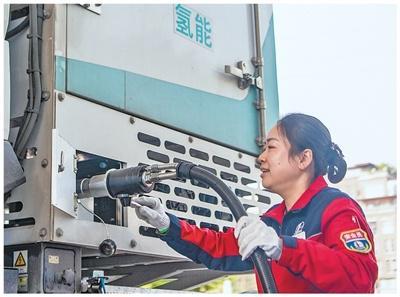
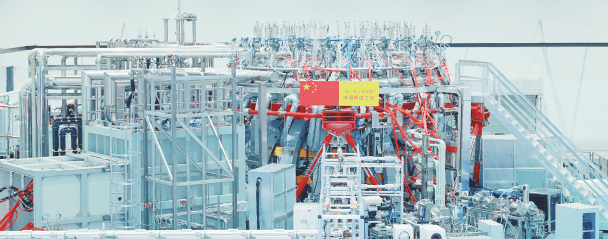
Hydrogen Energy and Nuclear Fusion - The Chongqing Jiulongpo District has staff refueling hydrogen fuel cell vehicles, indicating advancements in hydrogen energy infrastructure [2] - The "China Fusion Engineering Test Reactor" has achieved a breakthrough with a nuclear temperature of 117 million degrees Celsius and an electron temperature of 160 million degrees Celsius, marking a significant milestone in China's fusion research [4] Embodied Intelligence - The Guangdong Embodied Intelligence Robot Innovation Center showcases a pipeline inspection robot, highlighting developments in robotics technology [6] - In Sichuan's Bazhong Tongjiang County, students interact with robotic dogs, demonstrating the integration of robotics in educational settings [8] Biomanufacturing - The Hunan Biomanufacturing Pilot Base features a purification workshop where staff use flat-panel centrifuges for material dehydration, reflecting advancements in biomanufacturing processes [10] Quantum Technology - Researchers are experimenting with the "Zhuangzi 2.0" superconducting chip, discovering controllable patterns in the preheating phase of quantum systems, which is crucial for quantum technology development [12] - The Chinese Academy of Sciences' Quantum Information and Quantum Technology Innovation Research Institute in Hefei is a key player in advancing quantum research [14] Sixth Generation Mobile Communication - The Shanghai 6G Intelligent Communication Valley showcases a company's 6G smart terminal products, indicating progress in next-generation mobile communication technology [16] - In Nanjing, researchers at the Zijinshan Laboratory demonstrate a self-developed Bayesian learning baseband chip, contributing to the development of 6G technology [18] Brain-Computer Interfaces - In Wuhan, researchers utilize mixed reality technology to present the spatial relationship between brain-computer interface devices and rat brain structures, showcasing innovations in neuroscience [20] - At the Beijing Capital International Exhibition Center, visitors experience high-performance brain-computer interface devices, indicating growing interest and advancements in this field [22]
能量奇点完成A轮融资 “洪荒70”实现1337秒稳态长脉冲等离子体运行
Sou Hu Cai Jing· 2026-02-06 08:49
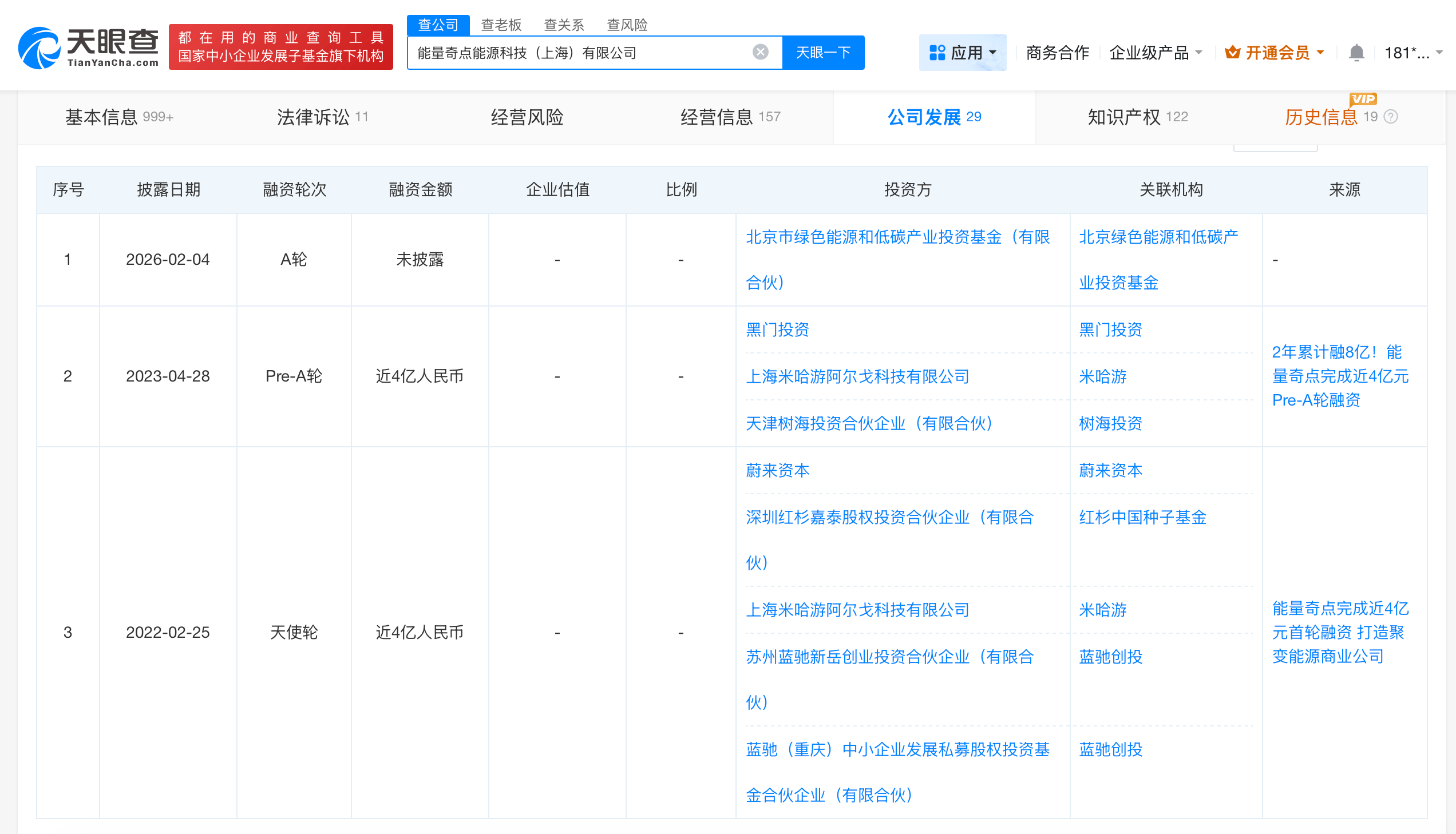
Core Viewpoint - Energy Singularity has successfully completed its Series A financing round, increasing its registered capital to 1.9681 million yuan, while achieving a significant breakthrough in its "Honghuang 70" high-temperature superconducting Tokamak, demonstrating 1337 seconds of steady-state long-pulse plasma operation in its 5755th experiment [1][2][4]. Financing and Company Background - Energy Singularity, established in 2021, is the first commercial private nuclear fusion energy device company in China [2]. - The Series A financing round involved investors such as the Beijing Government Guidance Fund and other local investment funds, following previous financing rounds that raised nearly 400 million yuan each in the angel and Pre-A rounds [2][4]. - The company aims to provide commercially viable Tokamak systems, subsystems, components, and operational control software for future nuclear power plant owners [5]. Technological Achievements - The recent experiment marked a significant milestone, exceeding the initial target of 600 seconds for steady-state plasma operation, which is a critical indicator of device maturity and control capability in controlled nuclear fusion research [4]. - The advancements are attributed to the optimization of AI-based plasma feedback control technology, which has significantly enhanced plasma operation control capabilities [4]. - The performance of high-temperature superconducting magnets and associated power systems has shown strong stability under long-duration complex operating conditions, meeting design expectations [4].
全球核聚变能产业进入“赛马”时间
Zhong Guo Neng Yuan Wang· 2026-02-06 06:25
Core Insights - The nuclear fusion energy industry is experiencing rapid growth due to national strategic planning, research breakthroughs, and capital investment, positioning it as a key solution to energy crises and climate change [2][3] - China has established a comprehensive development strategy for nuclear fusion energy since the 1980s, transitioning from scientific research to engineering and commercial applications [2][4] Industry Development - The global nuclear fusion development has entered a critical phase of engineering validation and commercialization, with over 160 fusion devices in operation, construction, or planning across 40 countries [4] - China has made significant advancements in fusion technology, with major facilities like EAST and HL-3 achieving world records in plasma stability and temperature [5][6] - The competitive landscape of fusion energy is characterized by multiple technological pathways, including magnetic confinement and inertial confinement, leading to a "race" among various approaches [6][7] Investment Trends - The fusion energy sector is attracting substantial investment, with private companies in China raising over 20 billion yuan since 2015, and a record 1 billion yuan raised by a single private fusion enterprise [7][8] - China ranks second globally in fusion energy investment, with 8 companies securing 4.4 billion euros, while the U.S. leads with 42 companies and 6.9 billion euros [8][9] Collaborative Ecosystem - A new model of collaboration involving state-owned enterprises, private capital, and social investment is emerging, enhancing the innovation ecosystem in the fusion energy sector [9][10] - Local governments and state-owned enterprises are actively participating in funding and supporting fusion energy initiatives, reflecting a shift towards a more integrated approach to development [10] Challenges and Future Outlook - Despite advancements, the commercial viability of nuclear fusion remains a significant challenge, with experts cautioning that achieving practical fusion energy by 2030 may be unrealistic [11][12] - Key technical challenges include plasma stability, material durability, and economic feasibility, which must be addressed to transition from experimental to commercial fusion energy [11][12] - Emerging technologies like artificial intelligence are expected to play a crucial role in accelerating the commercialization of fusion energy by enhancing material design and operational efficiency [13]
全球核聚变能产业进入“赛马”时间
中国能源报· 2026-02-01 23:33
Core Viewpoint - The nuclear fusion energy industry is experiencing rapid growth driven by national strategic planning, research breakthroughs, and capital investment, positioning it as a key pathway for addressing energy crises and climate change [2][6]. Group 1: Industry Development and Strategic Importance - Nuclear fusion is recognized for its high energy density, abundant raw materials, low radioactive pollution, and inherent safety, making it a crucial avenue for reshaping global energy supply and ensuring national energy security [2]. - China has established a "three-step" development strategy for nuclear energy since the 1980s, transitioning from scientific research to engineering and commercial applications [2][5]. - The "14th Five-Year Plan" emphasizes future energy technologies, while the "15th Five-Year Plan" aims to strategically position nuclear fusion as a key industry, fostering a collaborative ecosystem among state-owned enterprises and private companies [3][5]. Group 2: Research and Technological Advancements - The global nuclear fusion development has entered a critical phase of engineering validation and commercialization, with over 160 fusion devices in operation, construction, or planning across 40 countries [5]. - China has made significant advancements with facilities like the "Chinese Circulation 1" (HL-1), "EAST," and the new "Chinese Circulation 3" (HL-3), achieving world records in plasma stability and temperature [7][9]. - The development landscape is characterized by a "race" among various technological approaches, including magnetic confinement and inertial confinement, indicating a shift from a single-path to a multi-route exploration [7][9]. Group 3: Investment Trends and Ecosystem - The nuclear fusion sector is attracting substantial investment, with private companies raising significant funds, such as XH Fusion's record A-round financing of 1 billion yuan [9][10]. - Since 2015, nearly 20 fusion energy innovation companies have been established in China, with 80% being private enterprises, collectively raising over 20 billion yuan [9]. - The investment landscape is marked by a collaboration between state-owned enterprises and private capital, creating a new model for funding and innovation in the nuclear fusion sector [10][11]. Group 4: Challenges and Future Outlook - Despite the enthusiasm, experts caution that the commercial viability of nuclear fusion is still in its infancy, with significant scientific and engineering challenges remaining before practical applications can be realized [12][13]. - Key challenges include achieving stable plasma combustion, developing high-temperature materials, and ensuring the economic feasibility of fusion reactors [12][13]. - The integration of emerging technologies like artificial intelligence is seen as a potential catalyst for accelerating the commercialization of fusion energy [14][15].

【展望二〇二六】构筑能源强国新格局
Jing Ji Ri Bao· 2026-01-31 23:03
Core Viewpoint - The development of a strong energy nation is crucial for China's economic and social progress, emphasizing the need for comprehensive enhancement of energy technology, industrial chains, and system capabilities to boost international competitiveness and support sustainable development [1]. Group 1: New Energy System Construction - The new energy system is the main focus in building a strong energy nation, with a shift from top-level design to comprehensive construction during the "14th Five-Year Plan" and "15th Five-Year Plan" periods [2]. - The goal is to significantly increase the share of non-fossil energy, with plans to add over 20 million kilowatts of wind and solar power capacity annually by 2026 [2]. - The development of clean energy sources such as wind, solar, hydro, and nuclear power will be prioritized, while also promoting biomass, geothermal, and marine energy as supplementary sources [2]. Group 2: Clean Utilization of Fossil Energy - The transition to cleaner and more efficient use of fossil energy is essential during the transitional period, with coal power being upgraded to serve as a flexible and stable backup for renewable energy [3]. - By 2026, initiatives will be implemented to enhance coal power's low-carbon development through technology upgrades and innovative mechanisms [3]. - A new electric power system will be established to ensure efficient distribution and utilization of clean energy, including the construction of high-voltage lines and smart grids [3]. Group 3: Challenges in New Energy Development - The rapid growth of new energy capacity has led to challenges in the power system, including difficulties in transmitting green electricity from western regions to eastern cities and the volatility of renewable energy generation [6]. - The National Energy Administration aims to promote integrated development of new energy by 2030, enhancing reliability and market competitiveness [6][7]. - The optimization of power system regulation capabilities is crucial, with a goal to significantly improve these capabilities by 2027 to support the integration of over 20 million kilowatts of new energy annually [8]. Group 4: Coal Consumption Trends - Coal consumption in China has shown signs of decline, with a negative growth rate for the first time since 2017, but short-term demand is expected to remain resilient due to the need for coal in power generation and chemical industries [10]. - The long-term trend indicates a gradual reduction in coal consumption as part of the carbon peak strategy, with coal's role shifting from a primary energy source to a backup energy source [11]. - The integration of coal and new energy is emphasized, with initiatives to develop renewable energy in coal-producing regions and promote clean energy alternatives [11][12]. Group 5: Future Energy Technologies - The "15th Five-Year Plan" highlights the importance of future industries such as hydrogen energy and nuclear fusion, which are seen as key components for ensuring energy security and sustainable development [14]. - Hydrogen energy is recognized for its potential but faces challenges in achieving market competitiveness due to a lack of sufficient application scenarios [15]. - The development of nuclear fusion is positioned as a long-term goal, with significant investments and research needed to overcome technical and commercial hurdles [16]. Group 6: Overall Energy Strategy - Building a strong energy nation is a strategic task for the "15th Five-Year Plan" and is essential for China's modernization efforts, requiring collaboration among government, enterprises, and society [17].
构筑能源强国新格局
Jing Ji Ri Bao· 2026-01-31 22:09
Core Viewpoint - The development of a strong energy nation is crucial for China's economic and social progress, emphasizing the need for comprehensive enhancement of energy technology, industrial chains, and system capabilities to boost international competitiveness and support sustainable development [1]. Group 1: New Energy System Construction - The new energy system is the main focus in building a strong energy nation, with a shift from top-level design to comprehensive construction during the "15th Five-Year Plan" period [2]. - The goal is to significantly increase the share of non-fossil energy, with plans to add over 200 million kilowatts of wind and solar power capacity annually by 2026 [2]. - The integration of various energy sources, including biomass, geothermal, and marine energy, will complement the new energy system [2]. Group 2: Clean and Efficient Use of Fossil Energy - The transition to cleaner and more flexible coal power is essential during the transition period, with coal power expected to act as a stabilizer for energy supply [3]. - By 2026, efforts will focus on upgrading coal power technology and promoting carbon capture and utilization in the oil and gas sector [3]. - The construction of a new power system will require the establishment of high-voltage lines and smart grids to ensure efficient energy distribution [3]. Group 3: Overcoming Bottlenecks in New Energy Development - China aims to lead global energy transformation, with a target of achieving six times the wind and solar power capacity by 2035 compared to 2020 levels [5]. - Challenges such as the inability to transmit green electricity from western regions to eastern cities and the volatility of renewable energy generation need to be addressed [6]. - The focus will shift from simple capacity expansion to system collaboration and value creation in new energy development [6]. Group 4: Coal Consumption Trends - Coal consumption in China has shown signs of decline, with a negative growth rate for the first time since 2017, but short-term demand is expected to remain resilient [9]. - The long-term trend indicates a gradual reduction in coal consumption, with a peak expected around 2027, after which a more significant decline is anticipated [10]. - The integration of coal and new energy is essential for the sustainable development of the coal industry, with initiatives to develop renewable energy in coal mining areas [11]. Group 5: Future Industry Development - The "15th Five-Year Plan" emphasizes the need to cultivate future industries such as hydrogen energy and nuclear fusion, which are critical for energy security and sustainable development [14]. - Hydrogen energy is seen as a key component of the future energy system, with efforts to support pilot projects and promote large-scale applications [15]. - Nuclear fusion is positioned as a long-term solution for energy challenges, with significant investments and research needed to overcome commercialization hurdles [16][17].