
核聚变能商业化

Search documents
全国政协委员段旭如:核聚变能商业化能否提前取决于技术发展
中国能源报· 2026-03-05 07:09
Core Viewpoint - The commercialization of nuclear fusion energy is accelerating globally, but it still faces multiple challenges that require time to overcome [2] Group 1: Current Status and Challenges - Nearly 40 countries are advancing fusion plans, as reported by the International Atomic Energy Agency in its 2025 World Fusion Outlook [2] - Key challenges include breakthroughs in scientific and technical aspects such as stable plasma operation, high-energy neutron resistance, and high-heat-load materials [2] - The industrial ecosystem must address supply chain maturity, economic viability, sustainable investment, and regulatory adaptability [2] Group 2: Development Timeline - The process of commercializing fusion energy involves six stages: principle exploration, large-scale experiments, burning experiments, experimental reactors, demonstration reactors, and commercial reactors [2] - Currently, China is in the burning experiment stage and is expected to enhance its fusion triple product by 2-3 times by the end of 2027 [2] - By 2030, China is projected to have the capability to design and construct its first engineering experimental reactor, with the first reactor expected to be completed around 2035, and the first commercial demonstration reactor by 2045 [2] Group 3: Role of Technology - The potential for earlier commercialization depends on technological advancements, with artificial intelligence showing promise in plasma monitoring and control [3] - High-temperature superconducting magnets are critical for commercial fusion, as advancements could significantly improve plasma performance, reduce construction time, and lower costs [3]


全球核聚变能产业进入“赛马”时间
Zhong Guo Neng Yuan Wang· 2026-02-06 06:25
Core Insights - The nuclear fusion energy industry is experiencing rapid growth due to national strategic planning, research breakthroughs, and capital investment, positioning it as a key solution to energy crises and climate change [2][3] - China has established a comprehensive development strategy for nuclear fusion energy since the 1980s, transitioning from scientific research to engineering and commercial applications [2][4] Industry Development - The global nuclear fusion development has entered a critical phase of engineering validation and commercialization, with over 160 fusion devices in operation, construction, or planning across 40 countries [4] - China has made significant advancements in fusion technology, with major facilities like EAST and HL-3 achieving world records in plasma stability and temperature [5][6] - The competitive landscape of fusion energy is characterized by multiple technological pathways, including magnetic confinement and inertial confinement, leading to a "race" among various approaches [6][7] Investment Trends - The fusion energy sector is attracting substantial investment, with private companies in China raising over 20 billion yuan since 2015, and a record 1 billion yuan raised by a single private fusion enterprise [7][8] - China ranks second globally in fusion energy investment, with 8 companies securing 4.4 billion euros, while the U.S. leads with 42 companies and 6.9 billion euros [8][9] Collaborative Ecosystem - A new model of collaboration involving state-owned enterprises, private capital, and social investment is emerging, enhancing the innovation ecosystem in the fusion energy sector [9][10] - Local governments and state-owned enterprises are actively participating in funding and supporting fusion energy initiatives, reflecting a shift towards a more integrated approach to development [10] Challenges and Future Outlook - Despite advancements, the commercial viability of nuclear fusion remains a significant challenge, with experts cautioning that achieving practical fusion energy by 2030 may be unrealistic [11][12] - Key technical challenges include plasma stability, material durability, and economic feasibility, which must be addressed to transition from experimental to commercial fusion energy [11][12] - Emerging technologies like artificial intelligence are expected to play a crucial role in accelerating the commercialization of fusion energy by enhancing material design and operational efficiency [13]
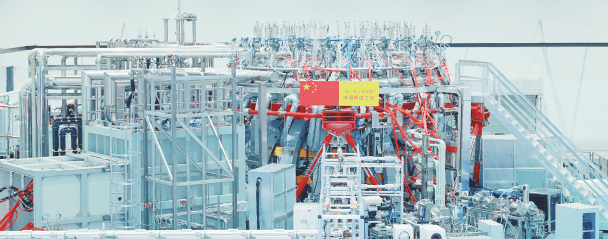
聚变金融机构联盟成立 破局核聚变商业化资本瓶颈
Jin Rong Jie· 2026-01-16 14:53
Core Insights - The Fusion Financial Institutions Alliance was officially established at the 2026 Nuclear Fusion Energy Technology and Industry Conference in Hefei, Anhui, marking a critical transition from laboratory research to engineering and commercialization in the controllable nuclear fusion industry [1] - The alliance, initiated by Keda Silicon Valley Company along with 15 other organizations, aims to integrate various financial and technological service institutions, including banks, securities, insurance, trusts, and funds, totaling 130 entities [1] - The alliance's mission is to foster "symbiosis between industry and finance, and to empower innovation," with plans for regular activities such as salons, seminars, project roadshows, and corporate research to enhance information sharing and precise matching [1] Industry Context - The 14th Five-Year Plan suggests promoting quantum technology, biomanufacturing, hydrogen energy, nuclear fusion energy, brain-computer interfaces, embodied intelligence, and sixth-generation mobile communications as new economic growth points [1] - Nuclear fusion is positioned not only as a long-term guarantee for energy security but also as a crucial driver for high-quality development and the creation of new productive forces [1] - The implementation of the Atomic Energy Law of the People's Republic of China on January 15, 2026, legally supports the development of fusion energy [1] Challenges and Solutions - The nuclear fusion industry faces high technical barriers and long commercialization cycles, making it difficult to rely solely on research funding and initial investments for commercial application [1] - The core issue that the Fusion Financial Institutions Alliance aims to address is the financial support necessary for the transition to commercial applications in the nuclear fusion sector [1]
电新行业周报:锂电材料价格持续上涨,马斯克万亿美元薪酬激励通过-20251109
Western Securities· 2025-11-09 10:22
Investment Rating - The report does not explicitly state an investment rating for the industry Core Insights - Lithium battery material prices continue to rise, with the average price of domestic lithium hexafluorophosphate reaching 121,500 CNY per ton, a 13.02% increase month-on-month [1] - Tinci Materials has signed long-term electrolyte supply agreements with two major battery manufacturers, with an expected total supply of nearly 1.6 million tons of electrolyte products from 2026 to 2028 [1] - The report recommends several companies in the electric vehicle sector, including Zhuhai Guanyu, Shangtai Technology, and others, while suggesting to pay attention to companies in the PCB and solid-state battery sectors [1][2] Summary by Sections Electric Power Equipment - The National Energy Administration has released guidelines for the integration of coal and new energy, with the fifth batch of State Grid bidding for transmission and transformation equipment amounting to 10.559 billion CNY, with over 67% of the bids for combination electrical appliances, transformers, and power cables [2] - Recommended companies in the electric power equipment sector include Dongfang Electric, Siyi Electric, and others, with a focus on controllable nuclear fusion technologies [2] Energy Storage - The average price of 4-hour energy storage systems rose to 0.52 CNY/Wh in October, with a total of 10GW/29.4GWh of energy storage systems and equipment completed in the domestic market [2] - Recommended companies in the energy storage sector include Yiwei Lithium Energy, Sungrow Power, and others [2] Wind Power - The government of Yancheng plans to develop 35.83GW of wind power, with a focus on deep-sea wind projects [3][61] - Recommended companies in the wind power sector include Goldwind Technology, Zhongtian Technology, and others [3] Photovoltaic Industry - November saw a decrease in photovoltaic module production, which may lead to a rebound in prices as companies look to restore profit levels [3][52] - Recommended companies in the photovoltaic sector include GCL-Poly, Tongwei, and others [3] AI and Industry Applications - iFlytek has launched the "Spark Industry Analyst," shifting its AI strategy from general models to industry-specific applications, enhancing decision-making capabilities in various sectors [3][65] - The State Council has issued opinions on accelerating scene cultivation and promoting large-scale applications of new scenarios, with AI being a core driver [3][67]

国防军工:军工本周观点:关注四中新方向-20251027
Huafu Securities· 2025-10-27 05:11
Investment Rating - The industry rating is "Outperform the Market" indicating that the overall return of the industry is expected to exceed the market benchmark index by more than 5% in the next 6 months [57]. Core Insights - The report emphasizes the importance of national security and the goals set for the military by the 20th Central Committee, highlighting the need for modernization in defense and military capabilities [41][42]. - The report identifies significant growth opportunities in emerging industries such as aerospace, new energy, and low-altitude economy, which are expected to drive economic growth over the next decade [41][42]. - The military industry is anticipated to experience strong demand recovery from 2025 to 2026, supported by various catalysts including the "14th Five-Year Plan" and the "100-Year Military Goal" [42]. Summary by Sections 1. Industry Performance Review - The military industry index (801740) increased by 2.81% from October 20 to October 24, while the CSI 300 index rose by 3.24%, resulting in an underperformance of 0.43 percentage points [15][17]. - Since the beginning of 2025, the military index has risen by 16.47%, compared to an 18.44% increase in the CSI 300 index, indicating a relative underperformance of 1.98 percentage points [17]. 2. Market and Valuation - As of October 24, the military industry index has a TTM price-to-earnings ratio of 74.63, placing it in the 96.86 percentile, suggesting a high valuation relative to historical levels [42][27]. - The report notes a slight net outflow of passive funds, with expectations of a recovery in demand leading to a positive outlook for future fund inflows [42][27]. 3. Key Investment Opportunities - The report suggests focusing on specific companies within various segments of the military industry, including land equipment, stealth materials, deep-sea technology, engines, unmanned systems, AI, and nuclear fusion [44]. - Notable companies to watch include Tianqin Equipment, Gaode Infrared, and Aerospace Technology among others [44]. 4. Important News and Announcements - The report highlights recent successful launches in the aerospace sector, including the successful deployment of satellites by the Li Jian No. 1 rocket [45]. - It also discusses advancements in nuclear fusion technology and the establishment of new policies to support the low-altitude economy [46][49].