
人类世

Search documents
从立场中撤退:全行星尺度与通往本体共生的迁徙之路
Xin Lang Cai Jing· 2026-02-15 04:14
Core Perspective - The article discusses the limitations of viewing environmental and social issues through a narrow political lens, suggesting that such perspectives often lead to division and moral judgment rather than constructive dialogue [1][2][3] Group 1: Planetary Scale Perspective - The concept of "Planetary Scale" challenges the anthropocentric view of globalization, emphasizing the interconnectedness of human actions and geological processes [2][4] - It argues for a shift from seeing Earth as a mere backdrop for human activity to recognizing it as a complex system where humans are just one part of a larger ecological network [5][6] - The article highlights the need for a practical approach to coexistence with non-human entities, moving away from the illusion of human dominance [6][10] Group 2: Evolution of Human Understanding - The transition from the Gaia Hypothesis, which views Earth as a self-regulating entity, to a more fragmented understanding of ecological relationships reflects a critical evolution in human thought [8][9] - The critique of the Gaia perspective points out its tendency to reinforce human-centered narratives while neglecting the chaotic and heterogeneous nature of the material world [8][9] - The emergence of Object-Oriented Ontology (OOO) promotes the idea that all entities, human or non-human, possess intrinsic value independent of human utility [9][10] Group 3: Implications for Human Existence - The article suggests that recognizing the interconnectedness of all life forms can lead to a de-moralization of ecological issues, fostering a sense of shared existence rather than hierarchical superiority [11][12] - It emphasizes the importance of humility and cooperation in addressing environmental challenges, advocating for a mindset that acknowledges the shared fate of all beings [12][13] - The notion of "common ignorance" encourages a collaborative approach to ecological crises, moving away from guilt and towards mutual support among all life forms [13][14]
张若愚读《人类世的宇宙论》|你为何对山川的低语置若罔闻?
Xin Lang Cai Jing· 2025-11-21 02:56
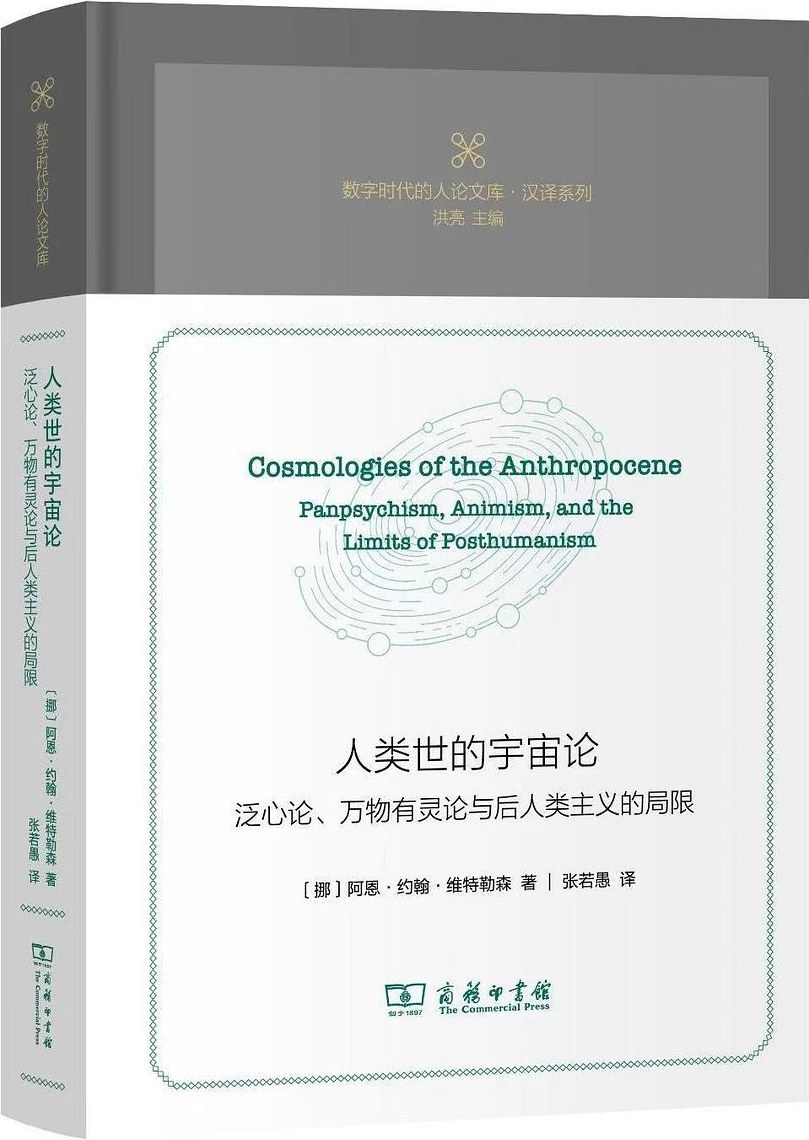
Core Argument - The book "Cosmologies of the Anthropocene" by Arne Johan Vetlesen challenges the traditional human-centered view of the universe, advocating for a reconsideration of animism and panpsychism as valid philosophical perspectives that can address contemporary ecological and cultural crises [2][4][6]. Group 1: Anthropocene and Cosmology - The term "Anthropocene" is not clearly defined and is intertwined with concepts like anthropocentrism and animism, reflecting the impact of human activities on geological history [3][4]. - The book explores how modern Western civilization's view of the Anthropocene is causally linked to anthropocentrism, critiquing the Cartesian worldview and its implications for understanding nature and value [6][11]. Group 2: Philosophical Perspectives - Vetlesen examines various philosophical traditions, from German to French philosophy, and integrates anthropological insights to enrich the discussion on cosmology [2][6]. - The book emphasizes the importance of a pluralistic approach to cosmology, arguing that understanding the Anthropocene requires a broader perspective that includes diverse cosmological views [7][12]. Group 3: Critique of Modernity - The author critiques the modern understanding of matter as passive and devoid of value, suggesting that this view emerged with specific scientific developments and has significant ecological consequences [6][11]. - Vetlesen does not seek to revive ancient philosophies but aims to extract valuable insights from alternative cosmologies, particularly those centered on animism [6][12]. Group 4: Interdisciplinary Approach - The book highlights the interplay between philosophy and anthropology, suggesting that a robust anthropological perspective can illuminate philosophical inquiries about existence and agency [4][15]. - Vetlesen's work reflects a critical engagement with contemporary anthropological debates, particularly regarding the ontology of non-human entities and their agency [15][21]. Group 5: Implications for Ecology and Culture - The author argues that ecological and cultural crises are interconnected, advocating for a relational understanding that respects both biodiversity and cultural diversity [27][28]. - Vetlesen emphasizes the need for a philosophical approach that goes beyond abstract theorizing, focusing on practical implications for addressing the crises of the Anthropocene [28][30].

以地球系统科学研究应对气候变化挑战
Ke Ji Ri Bao· 2025-05-09 01:10
Core Viewpoint - The article emphasizes the growing importance of Earth System Science in understanding and addressing climate change challenges, highlighted by the signing of the "Tianjin Declaration" by leaders from 25 top universities in China, marking a new phase of collaborative innovation in the field [1][7]. Group 1: Background and Key Issues - Earth System Science emerged from the deepening understanding of global change issues, such as climate change and biodiversity loss, which are characterized by systemic features [2]. - The concept of the Anthropocene was introduced, recognizing human activity as a primary driver of global change, necessitating a systems science approach to study the relationship between humans and nature [2][3]. Group 2: Key Research Areas - The field focuses on five key areas: 1. Coupling and feedback mechanisms among Earth system spheres [3]. 2. Drivers and critical points of global change [3]. 3. Simulation and prediction of Earth systems [3]. 4. Scientific and ethical challenges of the Anthropocene [3]. 5. Supporting sustainable development paths through quantifying scientific thresholds [3]. Group 3: Understanding Extreme Weather Events - Earth System Science reveals global mechanisms behind extreme weather events, such as the Arctic amplification effect, which increases the likelihood of heatwaves and heavy rainfall due to human activities [4]. - The integration of satellite remote sensing and paleoclimate data helps distinguish natural variability from human impacts, providing insights into the causes of current extreme events [4]. Group 4: Role of Chinese Scientists - Chinese scientists play a crucial role in global scientific governance, leading research in carbon cycling and climate modeling, and participating in international climate initiatives [6]. - They contribute to significant projects like the "Global Monsoon Project" and engage in climate negotiations, enhancing China's influence in Earth System Science [6][10]. Group 5: The Tianjin Declaration - The Tianjin Declaration aims to transform geographic research paradigms by promoting an integrated approach to studying natural and human geography [7]. - It seeks to foster academic consensus, establish collaborative mechanisms, and create platforms for innovative exchanges [7][8]. Group 6: Challenges and Innovations in Research - The interdisciplinary nature of Earth System Science presents challenges in research organization, prompting the establishment of problem-oriented research centers at Tianjin University [11]. - This innovative structure encourages collaboration across various scientific disciplines, enhancing the ability to address complex environmental issues [11]. Group 7: Application of Research Outcomes - The translation of research findings into practical applications involves integrating technology, policy, and societal engagement [12]. - Tianjin University focuses on developing smart monitoring systems and low-carbon solutions, demonstrating the practical impact of Earth System Science [12][13]. Group 8: Talent Development - The interdisciplinary nature of Earth System Science necessitates innovative talent cultivation strategies, emphasizing foundational knowledge in mathematics and science [15][18]. - The curriculum is designed to foster problem-oriented learning and practical experience, preparing students for careers in climate change and environmental management [17][18]. Group 9: Future Directions - Future research in Earth System Science should focus on multi-scale coupling mechanisms, critical point warnings, and the integration of AI in research methodologies [20]. - The goal is to design sustainable development pathways that support the harmonious development of humans and nature [20].