
地球系统科学

Search documents
方小敏:“了解青藏高原的过去,才能预判地球的未来”
Ke Ji Ri Bao· 2025-12-25 07:05
Core Insights - The article discusses the "Three Polar Interaction" theory proposed by Fang Xiaomin, which emphasizes the interconnectedness of the Tibetan Plateau, North Pole, and South Pole in influencing global climate change [3][4][12]. Group 1: Three Polar Interaction Theory - The "Three Polar Interaction" theory posits that the Tibetan Plateau, North Pole, and South Pole form a dynamic system through atmospheric-oceanic circulation and carbon cycling, impacting the formation of mineral resources and landforms in Asia [3][4]. - The theory suggests that the continuous uplift of the Tibetan Plateau acts as a "super engine" for global climate regulation, affecting the ice caps in the polar regions [3][4]. Group 2: Mechanisms of Influence - The Tibetan Plateau influences the polar regions through two key pathways: the "Dust-Carbon Effect" and the "Chemical Weathering-Carbon Cycle" effect [4][5]. - The "Dust-Carbon Effect" involves the uplift of the Tibetan Plateau leading to increased aridity in Asia, which generates dust that promotes phytoplankton growth in the North Pacific, resulting in a decrease in atmospheric CO2 and global cooling [4]. - The "Chemical Weathering-Carbon Cycle" effect describes how increased rainfall due to the uplift enhances chemical weathering processes, converting CO2 into bicarbonate ions and facilitating long-term carbon storage in the ocean [5]. Group 3: Biodiversity and Evolution - The uplift of the Tibetan Plateau has not only reshaped the natural environment but also driven evolutionary processes, with evidence suggesting that some modern African savanna animals originated from adaptations in the Tibetan Plateau [7][8]. - The Tibetan Plateau serves as a "training camp" for species that later migrated to polar regions, equipping them with survival skills for extreme environments [8]. Group 4: Scientific Research and Applications - The second comprehensive scientific expedition to the Tibetan Plateau has shifted its focus from basic data collection to understanding changes, mechanisms, and strategies for sustainable development [9][10]. - Significant achievements include the publication of 245 high-level papers and the submission of over 110 advisory reports to government bodies, contributing to ecological protection laws and disaster risk management [10][11]. Group 5: Climate Change and Global Impact - The Tibetan Plateau is currently experiencing profound changes characterized by warming and increased humidity, leading to glacier retreat and permafrost degradation, which pose long-term challenges for water resource security [12][13]. - Addressing climate change requires a holistic approach, emphasizing the importance of protecting the Tibetan Plateau as a critical component of global climate stability [13][14].

傅伯杰院士:立足黄土高原 服务国家战略
Ke Ji Ri Bao· 2025-12-12 02:26
Core Viewpoint - The development of Earth system science should integrate geographical thinking, atmospheric science, and systematic scientific methods to construct a coupling mechanism between ecology and economics, effectively serving national strategic needs and providing solid support for sustainable development strategies [1]. Group 1: Earth System Science Development - Earth system science should combine various disciplinary knowledge and research methods to address complex issues and provide scientific evidence for ecological restoration [1][4]. - The integration of geography with other disciplines, such as mathematics, physics, and information technology, has transformed geography from a descriptive discipline to a predictive modern science [7][8]. Group 2: Research Focus and Findings - Significant findings from research on the Loess Plateau include the main reasons for the reduction of sediment in the Yellow River, the trade-offs in ecosystem services, and the universality of small watershed governance [12][13]. - Recent research has focused on optimizing and balancing carbon sequestration, soil and water conservation, and water source conservation in the Loess Plateau [13][14]. Group 3: Global Drought Ecosystem Initiative - A global scientific initiative on drought ecosystems was launched based on research experiences from the Loess Plateau, aiming to address land degradation and water resource shortages in arid regions worldwide [17]. - The initiative covers priority research areas such as dynamic changes in arid ecosystems, structural and functional changes, and ecosystem management for sustainable livelihoods [17]. Group 4: Geographic Education and Talent Development - Geographic education should be continuous and focused, starting from early education to cultivate interest and understanding of geography [21][22]. - The qualities needed for geographic research include interdisciplinary skills and systematic thinking to address complex human-environment systems [23].

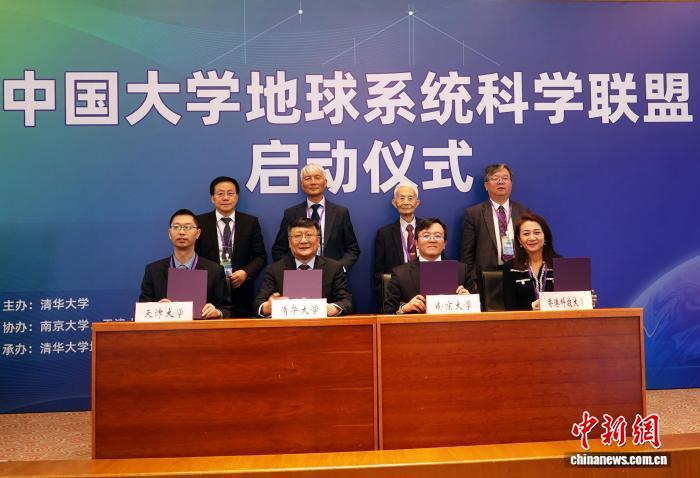
中国大学地球系统科学联盟在北京启动 院士专家共商发展大计
Zhong Guo Xin Wen Wang· 2025-12-09 03:19
Core Viewpoint - The China University Earth System Science Alliance was officially launched in Beijing, aiming to promote interdisciplinary collaboration and resource sharing in the field of Earth system science [1][3]. Group 1: Alliance Formation and Objectives - The alliance was founded by Tsinghua University, Nanjing University, Tianjin University, and the Hong Kong University of Science and Technology, with the goal of serving national strategies and fostering high-end talent [1][3]. - The first president of the alliance is Chen Deliang, a foreign academician of the Chinese Academy of Sciences, who emphasized the importance of the alliance in advancing Earth system science towards "human-earth harmony" [3]. - The alliance aims to establish a collaborative platform that breaks down disciplinary barriers and promotes deep integration and dynamic responses in scientific research [3][4]. Group 2: Expert Insights and Expectations - Experts highlighted the need for interdisciplinary integration and advanced observational technologies to deepen understanding of Earth system dynamics, which is crucial for sustainable development [3][7]. - The role of artificial intelligence in enhancing Earth system science was emphasized, with calls to leverage its potential for creating intelligent systems to protect the Earth [4][8]. - The alliance is expected to attract young talents and push Earth system science towards higher levels of comprehensiveness and innovation [8][10]. Group 3: Challenges and Future Directions - Key scientific challenges identified include addressing non-linear temporal and spatial variations and the coupling of biogeochemical processes with hydrological and human processes [7][8]. - The need for improved simulation accuracy in semi-arid regions was noted as a critical bottleneck for the development of Earth system science, necessitating innovations in observational technology and interdisciplinary collaboration [8][10]. - International experts expressed their support for the alliance and the potential for practical cooperation in addressing global climate challenges [10].
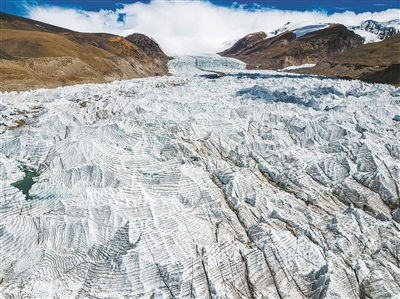
第二次青藏高原综合科学考察研究发布“十大应用成果”
Ren Min Ri Bao· 2025-12-03 03:32
Core Viewpoint - The second comprehensive scientific investigation of the Qinghai-Tibet Plateau has released "ten application results," which are crucial for ecological protection legislation, the establishment of a comprehensive observation and early warning platform, and the optimization of the national park system, thereby significantly contributing to the sustainable development of the region [1][2][3]. Group 1: Application Results - The "ten application results" include scientific support for ecological protection legislation, providing legal safeguards for the ecological barrier of the Qinghai-Tibet Plateau [3]. - A comprehensive Earth system observation and early warning platform has been established to support major projects and cross-border disaster prevention [3]. - An optimization plan for the national park system and natural protection areas has been proposed to scientifically support the establishment of related national parks [3]. - The assessment of major ecological projects in the Qinghai-Tibet Plateau has been conducted to strengthen the ecological safety barrier [3]. - An ecological protection and disaster avoidance plan for the Sichuan-Tibet Railway has been proposed to ensure the safety of major transportation projects [3]. - Innovative disaster prevention technologies for permafrost areas have been developed to support the construction of the Qinghai-Tibet Railway [3]. - The assessment of disaster risks in the Yarlung Tsangpo River basin has been conducted to support major hydropower projects [3]. - New breakthroughs in the status and prospects of mineral resources such as lithium, potassium, and oil and gas have been achieved to support the strategic resource base construction of the Qinghai-Tibet Plateau [3]. - A greenhouse gas monitoring network and the "Gongga" system have been established to continuously provide data for carbon accounting, aiding in the achievement of carbon neutrality goals [3]. - A new model for strengthening border security and development has been proposed, with scientific support for national land security [3]. Group 2: Scientific Contributions - The second comprehensive scientific investigation has published over 190 excellent scientific reports and 245 articles in top international academic journals, contributing significantly to scientific knowledge [4]. - The investigation has attracted participation from over 7,000 individuals across 222 organizations, focusing on ecological environment protection and sustainable development in the Qinghai-Tibet Plateau [5]. - The investigation has identified three environmental transformations that the Qinghai-Tibet Plateau has undergone, revealing its unique position as a biodiversity reservoir and its role in global climate change [7].
第二次青藏高原综合科学考察研究发布“十大应用成果” 为科学保护地球第三极提供参考(美丽中国)
Ren Min Ri Bao· 2025-12-02 23:02
Core Viewpoint - The second comprehensive scientific investigation of the Qinghai-Tibet Plateau has released "ten major application achievements," which are crucial for ecological protection legislation, the establishment of a comprehensive observation and early warning platform, and the optimization of the national park system, thereby revealing the mechanisms of environmental change in the region and promoting sustainable development [1][2]. Group 1: Major Achievements - The ten major application achievements include: - Comprehensive scientific support for ecological protection legislation on the Qinghai-Tibet Plateau [2] - Establishment of a comprehensive Earth system observation and early warning platform for major projects and cross-border disaster prevention [2] - Proposal for optimizing the national park system and natural protection areas [2] - Assessment of the positive effects of major ecological projects on the plateau [2] - Development of ecological protection and disaster avoidance plans for the Sichuan-Tibet Railway [2] - Innovation in disaster prevention technologies for permafrost areas [2] - Evaluation of disaster risks in the Yarlung Tsangpo River basin [2] - New breakthroughs in the status and prospects of mineral resources like lithium and potassium [2] - Continuous monitoring of greenhouse gases to support carbon accounting and climate change response [2] - Proposal for a new model for border security and development [2] Group 2: Scientific Contributions - The second comprehensive scientific investigation has published over 190 scientific reports and 245 articles in top international journals, contributing to public understanding through popular science books and videos [3]. - The investigation has involved over 3,000 scientific teams and more than 30,000 participants, focusing on ecological protection and sustainable development in the Qinghai-Tibet Plateau [4]. Group 3: Environmental Changes - The investigation has identified three environmental transitions in the Qinghai-Tibet Plateau, indicating that the region is currently undergoing its third transition, which enhances its water supply capacity and carbon sink potential [6]. - New discoveries of species and biodiversity highlight the plateau's unique status as a "biodiversity museum" and a "species cradle" in the Northern Hemisphere, providing critical evidence for understanding global biodiversity patterns [6].
为科学保护地球第三极提供参考(美丽中国)
Ren Min Ri Bao· 2025-12-02 22:33
Core Viewpoint - The second comprehensive scientific investigation of the Tibetan Plateau has released "ten major application results," which are crucial for ecological protection legislation, the establishment of a comprehensive observation and early warning platform, and the optimization of the national park system, thereby revealing the mechanisms of environmental change on the Tibetan Plateau and significantly contributing to its sustainable development [1][2]. Group 1: Major Application Results - The ten major application results include scientific support for ecological protection legislation, providing legal guarantees for the ecological barrier of the Tibetan Plateau [2] - Establishment of a comprehensive observation and early warning platform for the Earth system, aiding major projects and cross-border disaster prevention [2] - Proposal for the construction of a national park group and optimization of the natural protection area system, scientifically supporting the establishment of relevant national parks [2] - Assessment of the positive effects of major ecological projects on the Tibetan Plateau, reinforcing its ecological safety barrier [2] - Development of ecological protection and disaster avoidance plans for the Sichuan-Tibet Railway, ensuring the safety of major transportation projects [2] - Innovation in disaster prevention technology for permafrost areas, supporting the construction of the Qinghai-Tibet Railway [2] - Evaluation of disaster risks in the Yarlung Tsangpo River basin, serving major hydropower project construction [2] - Achievements in the assessment of mineral resources like lithium, potassium, and oil and gas, supporting the strategic resource reserve construction of the Tibetan Plateau [2] - Continuous monitoring of greenhouse gases through the Tibetan Plateau monitoring network, providing data for carbon accounting and climate change response [2] - Proposal of new models for border security and development, supporting the construction of national security barriers [2] Group 2: Scientific Contributions and Findings - The second comprehensive scientific investigation has published over 190 excellent scientific reports and 245 articles in top international academic journals, contributing to scientific communication and public understanding [3] - The investigation has involved over 3,000 scientific teams and more than 30,000 participants, covering the entire Tibetan Plateau and addressing various scientific tasks and topics [4] - New findings indicate that the Tibetan Plateau has undergone three environmental transformations, enhancing its role as Asia's water tower and increasing its carbon sink capacity, which supports national water resource security and carbon neutrality goals [6] - The investigation has revealed the unique status of the Tibetan Plateau as a "biodiversity museum" and "species cradle," providing critical evidence for understanding global biodiversity patterns [6]
1.24亿元!双一流成都理工大学采购色、质、光谱等大批仪器设备(含设备更新)
仪器信息网· 2025-10-10 03:58
Core Insights - Chengdu University of Technology has announced procurement intentions for 20 items of scientific instruments, with a total budget of 124 million yuan, scheduled for procurement between June and October 2025 [2][3]. Instrument Procurement Overview - The procurement includes various advanced instruments such as handheld X-ray fluorescence spectrometers, panoramic X-ray imaging analyzers, and triple quadrupole inductively coupled plasma mass spectrometers [3][4]. - The total budget for the procurement is 124 million yuan, indicating significant investment in enhancing research capabilities [3]. Detailed Instrument Descriptions - **Handheld X-ray Fluorescence Spectrometer**: A portable, rapid, and non-destructive elemental analysis tool that allows for immediate detection and quantitative analysis of solid, liquid, or powder samples on-site, widely used in industrial, environmental, geological, archaeological, and safety fields [4]. - **Triple Quadrupole Inductively Coupled Plasma Mass Spectrometry (ICP-MS/MS)**: An advanced form of ICP-MS that enhances sensitivity, selectivity, and interference resistance for trace and ultra-trace element analysis in complex matrices, recognized as a gold standard in environmental, food, biomedical, and materials science [5]. Procurement Details - The procurement plan includes a variety of teaching instruments aimed at improving educational and research capabilities, with specific requirements outlined for each instrument [6][7]. - The instruments are intended to support high-precision analysis of geological samples, enhance teaching quality, and improve the overall research infrastructure of the university [9][10]. Research and Development Focus - Chengdu University of Technology emphasizes interdisciplinary research, particularly in geosciences, environmental science, and materials science, contributing to national energy resource security and ecological protection [12][13]. - The university has established several national and provincial research platforms, facilitating a comprehensive approach from basic research to technology transfer [13][14]. Future Prospects - With ongoing investments in advanced scientific instruments and a strong focus on interdisciplinary research, Chengdu University of Technology is poised to enhance its academic and research capabilities significantly, aligning with national strategic needs [17].

全球极端海洋热浪驱动机制揭示
Ke Ji Ri Bao· 2025-07-28 01:01
Core Insights - The research conducted by Ningbo Oriental University and Southern University of Science and Technology reveals the driving mechanisms behind the extreme ocean heatwaves of 2023, providing crucial scientific evidence for understanding and predicting future extreme ocean events [1][2] Group 1: Research Findings - The study constructed the world's first mixed-layer heat budget diagnostic framework based on high-resolution ocean reanalysis data, which quantitatively characterizes the unprecedented features of global ocean heatwaves in terms of intensity, duration, and spatial coverage in 2023 [1] - The research identified different driving mechanisms for ocean heatwaves in four key global ocean regions, including enhanced shortwave flux and shallower mixed layers in the North Atlantic and North Pacific, reduced cloud cover and increased advection in the Southwest Pacific, and increased oceanic advection in the tropical East Pacific [1] Group 2: Importance of Earth System Science - Developing Earth system science is crucial for revealing the intrinsic mechanisms of complex climate phenomena, enhancing global climate prediction capabilities, and formulating scientific response strategies [2] - Establishing a physics-based forecasting system, strengthening real-time monitoring of multiple ocean factors, and conducting in-depth research on early warning of extreme climate events are of significant practical importance for addressing future climate risks [2]
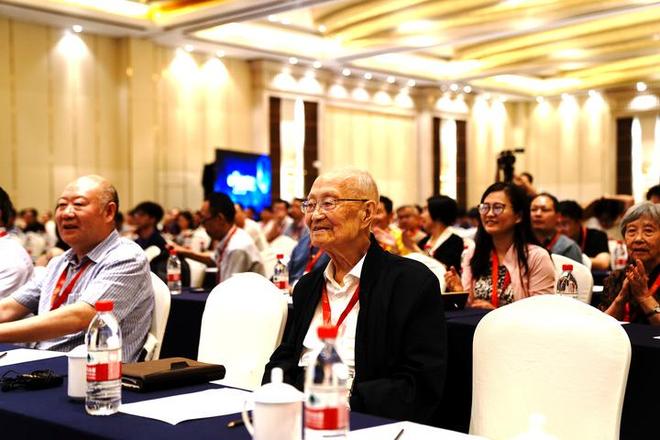
汪品先院士:为地球谱写春秋
Xin Hua She· 2025-07-08 13:26
Core Viewpoint - The article highlights the insights of Wang Pinxian, a prominent Chinese academician, on the future of Earth system science, emphasizing the need for a paradigm shift towards a more integrated and comprehensive understanding of Earth's processes and the relationship between natural and human systems [1][4][9]. Group 1: Conference Overview - The 8th Earth System Science Conference, held in Shanghai, gathered over 2,000 participants to discuss cutting-edge research and promote interdisciplinary collaboration in Earth sciences [3][4]. - The conference featured 10 major themes and 84 sub-topics, showcasing the latest advancements in geoscience [3]. Group 2: Wang Pinxian's Insights - Wang Pinxian expressed the importance of moving beyond mere observation ("stamp collecting") to a deeper exploration of mechanisms in Earth sciences, urging young scholars to take on this challenge [1][4]. - He proposed that China has the potential to establish its own school of thought in Earth sciences, emphasizing the need for independent exploration rather than merely following international trends [6][7]. Group 3: Future Directions in Earth System Science - Wang highlighted two divergent approaches in Earth system science: one centered on human-scale processes and another focused on natural processes at the Earth's scale, advocating for a balanced perspective [4][6]. - He called for a strategic focus on three key areas: the ocean carbon pump, water cycles, and the land-sea connection in East Asia, which could lead to significant breakthroughs in the field [6]. Group 4: Cultural and Economic Implications - The article discusses the evolving relationship between land and sea civilizations, suggesting that advancements in technology are blurring the lines between these two realms [9][10]. - Wang emphasized the historical opportunity for China to lead in creating a new civilization that integrates both land and sea perspectives, aligning with the nation's broader goals of rejuvenation [9][10].
以地球系统科学研究应对气候变化挑战
Ke Ji Ri Bao· 2025-05-09 01:10
Core Viewpoint - The article emphasizes the growing importance of Earth System Science in understanding and addressing climate change challenges, highlighted by the signing of the "Tianjin Declaration" by leaders from 25 top universities in China, marking a new phase of collaborative innovation in the field [1][7]. Group 1: Background and Key Issues - Earth System Science emerged from the deepening understanding of global change issues, such as climate change and biodiversity loss, which are characterized by systemic features [2]. - The concept of the Anthropocene was introduced, recognizing human activity as a primary driver of global change, necessitating a systems science approach to study the relationship between humans and nature [2][3]. Group 2: Key Research Areas - The field focuses on five key areas: 1. Coupling and feedback mechanisms among Earth system spheres [3]. 2. Drivers and critical points of global change [3]. 3. Simulation and prediction of Earth systems [3]. 4. Scientific and ethical challenges of the Anthropocene [3]. 5. Supporting sustainable development paths through quantifying scientific thresholds [3]. Group 3: Understanding Extreme Weather Events - Earth System Science reveals global mechanisms behind extreme weather events, such as the Arctic amplification effect, which increases the likelihood of heatwaves and heavy rainfall due to human activities [4]. - The integration of satellite remote sensing and paleoclimate data helps distinguish natural variability from human impacts, providing insights into the causes of current extreme events [4]. Group 4: Role of Chinese Scientists - Chinese scientists play a crucial role in global scientific governance, leading research in carbon cycling and climate modeling, and participating in international climate initiatives [6]. - They contribute to significant projects like the "Global Monsoon Project" and engage in climate negotiations, enhancing China's influence in Earth System Science [6][10]. Group 5: The Tianjin Declaration - The Tianjin Declaration aims to transform geographic research paradigms by promoting an integrated approach to studying natural and human geography [7]. - It seeks to foster academic consensus, establish collaborative mechanisms, and create platforms for innovative exchanges [7][8]. Group 6: Challenges and Innovations in Research - The interdisciplinary nature of Earth System Science presents challenges in research organization, prompting the establishment of problem-oriented research centers at Tianjin University [11]. - This innovative structure encourages collaboration across various scientific disciplines, enhancing the ability to address complex environmental issues [11]. Group 7: Application of Research Outcomes - The translation of research findings into practical applications involves integrating technology, policy, and societal engagement [12]. - Tianjin University focuses on developing smart monitoring systems and low-carbon solutions, demonstrating the practical impact of Earth System Science [12][13]. Group 8: Talent Development - The interdisciplinary nature of Earth System Science necessitates innovative talent cultivation strategies, emphasizing foundational knowledge in mathematics and science [15][18]. - The curriculum is designed to foster problem-oriented learning and practical experience, preparing students for careers in climate change and environmental management [17][18]. Group 9: Future Directions - Future research in Earth System Science should focus on multi-scale coupling mechanisms, critical point warnings, and the integration of AI in research methodologies [20]. - The goal is to design sustainable development pathways that support the harmonious development of humans and nature [20].