盖亚假说

Search documents
从立场中撤退:全行星尺度与通往本体共生的迁徙之路
Xin Lang Cai Jing· 2026-02-15 04:14
Core Perspective - The article discusses the limitations of viewing environmental and social issues through a narrow political lens, suggesting that such perspectives often lead to division and moral judgment rather than constructive dialogue [1][2][3] Group 1: Planetary Scale Perspective - The concept of "Planetary Scale" challenges the anthropocentric view of globalization, emphasizing the interconnectedness of human actions and geological processes [2][4] - It argues for a shift from seeing Earth as a mere backdrop for human activity to recognizing it as a complex system where humans are just one part of a larger ecological network [5][6] - The article highlights the need for a practical approach to coexistence with non-human entities, moving away from the illusion of human dominance [6][10] Group 2: Evolution of Human Understanding - The transition from the Gaia Hypothesis, which views Earth as a self-regulating entity, to a more fragmented understanding of ecological relationships reflects a critical evolution in human thought [8][9] - The critique of the Gaia perspective points out its tendency to reinforce human-centered narratives while neglecting the chaotic and heterogeneous nature of the material world [8][9] - The emergence of Object-Oriented Ontology (OOO) promotes the idea that all entities, human or non-human, possess intrinsic value independent of human utility [9][10] Group 3: Implications for Human Existence - The article suggests that recognizing the interconnectedness of all life forms can lead to a de-moralization of ecological issues, fostering a sense of shared existence rather than hierarchical superiority [11][12] - It emphasizes the importance of humility and cooperation in addressing environmental challenges, advocating for a mindset that acknowledges the shared fate of all beings [12][13] - The notion of "common ignorance" encourages a collaborative approach to ecological crises, moving away from guilt and towards mutual support among all life forms [13][14]
将人文与科创融为一体的“跨界者”——读《谁是斯图尔特·布兰德》
Shang Hai Zheng Quan Bao· 2025-03-30 19:21
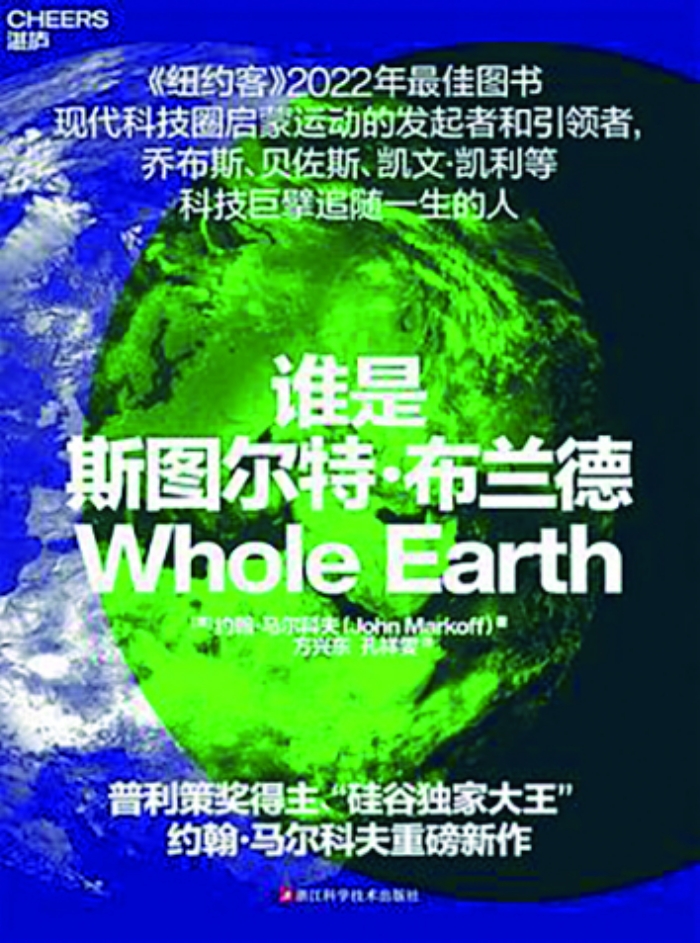
Core Perspective - The book "Who is Stewart Brand" by John Markoff explores the multifaceted identity of Stewart Brand, a pivotal figure in the intersection of technology and nature, and his influence on digital civilization [4][5][6]. Group 1: Stewart Brand's Contributions - Stewart Brand founded "Whole Earth Catalog," which provided a platform for decentralized knowledge sharing, influencing the open-source movement and the digital culture [5][6][7]. - He played a significant role in promoting the idea of a global perspective through the publication of the first Earth image by NASA, which sparked concepts like "Earth Day" and "World Citizen" [5][6]. - Brand's belief in the democratizing power of tools has shaped the views of technology enthusiasts, asserting that human progress is tied to technological advancement [6][7]. Group 2: Philosophical Insights - The book addresses the tension between technological rationality and humanism, highlighting how Brand's ideas have shaped contemporary digital culture [4][8]. - Brand's approach integrates ecological awareness with technological innovation, advocating for a symbiotic relationship with nature rather than a purely exploitative one [10][12]. - His work emphasizes the importance of long-term thinking in technology and civilization, as seen in projects like the 10,000-Year Clock, which aims to foster a sense of responsibility towards future generations [8][10]. Group 3: Legacy and Relevance - Brand's insights remain relevant in the context of current technological advancements, such as artificial intelligence and brain-computer interfaces, prompting a reevaluation of human creativity in the face of automation [11][12]. - The book serves as a reminder of the need for a holistic view that combines technical precision with humanistic values, especially in an era dominated by algorithms and digital distractions [11][12]. - Markoff's narrative not only chronicles Brand's life but also provides a framework for understanding the complex relationship between technological innovation and cultural development [12].