代持型家族信托

Search documents
宗庆后遗产暗战:三份文件交锋17.99亿美元家族信托,香港裁决保资产,内斗待杭州断局
Hua Xia Shi Bao· 2025-08-02 15:11
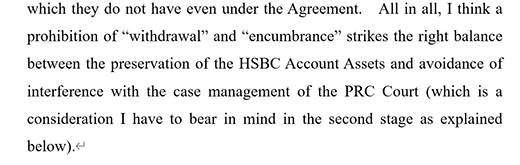
Core Viewpoint - The dispute surrounding the offshore trust of the Zong family has brought to light the asset distribution issues of Wahaha Group's founder, Zong Qinghou, following his death. The Hong Kong High Court has issued a ruling on this matter, highlighting significant legal and financial implications for the involved parties [1][15]. Group 1: Legal Proceedings and Court Rulings - The Hong Kong High Court has issued a preservation order prohibiting the withdrawal or encumbrance of assets in a HSBC account valued at approximately $1.8 billion, balancing asset preservation with the management of related mainland court cases [1][15]. - The court has also mandated a disclosure order requiring the defendants to provide detailed accounts of the HSBC account's balance and transactions since February 2, 2024, to ensure transparency and prevent asset transfer that could undermine the preservation order [16][19]. Group 2: Trust Agreements and Asset Management - Zong Qinghou had established three offshore trusts (Trust A, B, and C) for his children, each with an initial value of $700 million, structured as irrevocable non-principal trusts, meaning only interest income could be distributed [3][9]. - The trust agreements specify that the beneficiaries are limited to Zong's children and their descendants, excluding spouses, and the principal is to remain intact for long-term investment [8][10]. Group 3: Disputes and Allegations - The plaintiffs allege unauthorized withdrawals from the HSBC account totaling approximately $5.2 million between January and April 2024, claiming these actions were taken without their consent and are unrelated to the offshore trust [11][12]. - Zong Fuli, the defendant, contends that the asset fluctuations were due to currency exchange rates and investment adjustments, asserting that the withdrawals were legitimate and consistent with prior investment practices [11][12]. Group 4: Future Implications and Ongoing Litigation - The case has broader implications for the management of family trusts in China, particularly regarding the legal recognition of trust arrangements and the responsibilities of trustees [14][15]. - The ongoing litigation in Hangzhou will determine the final asset distribution and the validity of the trust agreements, with the Hong Kong court's rulings serving as a preliminary framework for asset management during the legal proceedings [20].

追踪宗庆后百亿争产案:宗馥莉“首战”缘何告负
Bei Jing Shang Bao· 2025-08-01 14:28
Core Points - The Hong Kong High Court has approved the asset preservation application filed by the plaintiffs, prohibiting the defendants from withdrawing or mortgaging assets in their HSBC Hong Kong accounts [1][11] - The case revolves around the inheritance dispute following the death of Zong Qinghou, the founder of Wahaha Group, and the complex family asset relationships that have emerged [3][4] - The plaintiffs claim that Zong Qinghou had established a trust to protect their interests, with specific instructions for setting up three offshore trusts, each valued at $700 million [4][5][6] Group 1: Legal Proceedings - The court's decision is part of a broader legal battle involving the establishment and execution of trusts intended to secure the financial interests of Zong Qinghou's children [9][10] - The plaintiffs allege that the defendant, Zong Fuli, has failed to fulfill her obligations regarding the trust setup and has improperly withdrawn funds from the HSBC account [8][12] - The court's ruling is primarily procedural, aimed at preserving assets while the substantive issues are resolved in mainland China's courts [11][12] Group 2: Trust Structure and Disputes - Zong Qinghou's estate planning involved a two-layer trust structure, with Zong Fuli holding assets on behalf of her siblings and their children [10] - The initial trust setup was intended to be irrevocable and non-distributive, focusing solely on interest income rather than principal distribution [5][6] - Disputes have arisen over the interpretation and execution of the trust agreements, particularly regarding the legitimacy of the initial instructions and the financial commitments involved [9][10]