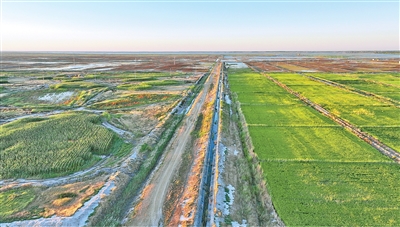
以茭治碱

Search documents
让盐碱地变成金银滩
Ren Min Ri Bao· 2025-12-01 03:29
Core Insights - The article highlights the successful cultivation of water bamboo (茭白) in saline-alkali land in Jilin Province, which was previously considered unproductive, showcasing the potential for agricultural innovation and soil improvement [2][3][8] Group 1: Agricultural Innovation - The cultivation of water bamboo has transformed previously barren saline-alkali land into productive fields, yielding over one million pounds of water bamboo [2] - Farmers have reported improved soil conditions, with pH levels decreasing from an average of 9.32 to 9.0 after cultivation, and organic matter content increasing by 10% [8] - The introduction of southern seedlings and scientific soil management practices has significantly increased the survival rate of water bamboo seedlings from 40% to over 90% [5][6] Group 2: Economic Impact - The successful harvest of water bamboo has led to high demand, with prices exceeding local varieties by over 30%, allowing farmers to recover costs despite lower initial yields [5] - The cultivation has created job opportunities for nearly 200 villagers, with average income increases exceeding 10,000 yuan per person [7] - The development of a complete industrial chain around water bamboo, including processing and logistics, is planned to further enhance economic benefits for local communities [8] Group 3: Environmental Benefits - The cultivation of water bamboo not only improves soil quality but also contributes to water purification and wetland conservation, creating a positive feedback loop with local water management projects [8] - The research and practical applications in saline-alkali land management are being promoted in other regions, indicating a broader potential for agricultural practices that enhance both productivity and environmental health [8]

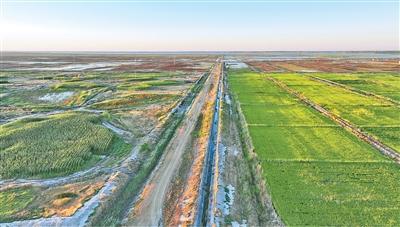
吉林省镇赉县探索“以茭治碱” 让盐碱地变成金银滩(深阅读)
Ren Min Ri Bao· 2025-11-29 22:18
Core Viewpoint - The successful cultivation of water bamboo in saline-alkali land in Jilin Province has transformed previously unproductive land into a profitable agricultural venture, improving soil conditions and providing economic benefits to local farmers [1][8]. Group 1: Agricultural Innovation - The introduction of water bamboo cultivation has significantly improved soil quality in previously barren saline-alkali areas, with reports of over one million pounds of water bamboo produced [1][2]. - Farmers have observed that planting water bamboo enhances soil conditions, allowing for better growth of subsequent crops, leading to increased yields and reduced fertilizer costs [3][4]. - The survival rate of water bamboo seedlings improved from 40% to over 90% through scientific methods and collaboration with research institutions [6][7]. Group 2: Economic Impact - The cultivation of water bamboo has created job opportunities for nearly 200 villagers, with an average income increase of over 10,000 yuan per person [7][8]. - The market demand for water bamboo has surged, with prices exceeding local varieties by over 30%, indicating a strong economic potential for farmers [4][8]. - The development of over ten processed products from water bamboo has increased its market value by more than 30%, further enhancing economic returns for local farmers [8]. Group 3: Environmental Benefits - The cultivation of water bamboo has contributed to soil remediation, with pH levels decreasing from an average of 9.32 to 9.0, and organic matter content increasing by 10% [7][8]. - The integration of aquaculture with water bamboo farming has shown promising results in maintaining soil health and preventing salinization [7]. - The initiative aligns with broader ecological restoration efforts, promoting sustainable agricultural practices and enhancing local ecosystems [8].
让盐碱地变成金银滩(深阅读)
Ren Min Ri Bao· 2025-11-29 22:11
Core Insights - The article highlights the successful cultivation of water bamboo (茭白) in previously barren saline-alkali land in Jilin Province, leading to improved soil conditions and significant agricultural output [2][3][4]. Group 1: Agricultural Innovation - The transformation of saline-alkali land into productive fields for water bamboo cultivation has resulted in over one million pounds of harvest, showcasing the potential for agricultural development in challenging environments [2]. - Farmers have reported improved soil quality and reduced fertilizer costs after planting water bamboo, which has unique properties that allow it to thrive in saline-alkali conditions [3][4]. - The introduction of scientific methods and collaboration with research institutions has led to increased seedling survival rates and higher yields, with some farmers achieving over 2,500 pounds per acre [6]. Group 2: Economic Impact - The successful cultivation of water bamboo has created job opportunities for nearly 200 villagers, with average income increases exceeding 10,000 yuan per person [7]. - The market demand for water bamboo has surged, with prices being 30% higher than local varieties, indicating a profitable venture for farmers [5]. - The development of a complete industrial chain around water bamboo, including processing and logistics, is planned to further enhance economic benefits for the local community [8]. Group 3: Environmental Benefits - The cultivation of water bamboo has contributed to soil improvement, with pH levels decreasing from an average of 9.32 to 9.0, and organic matter content increasing by 10% [8]. - The project has demonstrated the ability to purify water and restore wetlands, creating a positive feedback loop with local water management initiatives [8]. - The integration of aquaculture with water bamboo farming has shown promising results in maintaining soil health and reducing salinity levels [7].