价格加权指数

Search documents
What happens when a stock splits in the Dow Jones Industrial Average?
Yahoo Finance· 2026-02-12 23:32
Core Insights - The Dow Jones Industrial Average (DJIA) is a price-weighted index consisting of 30 American blue-chip stocks, where higher-priced stocks have more influence on the index's value [1] Group 1: Stock Splits - Stock splits increase the number of outstanding shares while lowering the stock price, which can theoretically impact the DJIA's value [2] - Unlike price-weighted indexes like the DJIA, capitalization-weighted indexes do not require adjustments for stock splits since the market capitalization remains unchanged [3] - Companies conduct stock splits to make shares more affordable, such as a 5-for-1 split turning a $500 share into five $100 shares [5] - Stock splits do not affect the underlying company's market capitalization; they merely increase the number of lower-priced shares [6] - The frequency of stock splits has decreased due to fractional share trading, which allows investors to buy portions of shares [7] - Despite this, stock splits are still common as they signal strength and indicate a long-term rise in stock price [8] Group 2: Dow's Handling of Stock Splits - The DJIA's price-weighted nature means that stock price changes in higher-priced stocks have a greater impact on the index [9] - Stock splits can significantly reduce a stock's price, potentially causing volatility in the DJIA if not properly accounted for [9]
How One Just Stock Shaved More Than 400 Points Off the Dow on Tuesday
Yahoo Finance· 2026-01-27 19:07
Group 1 - The Dow Jones Industrial Average fell 0.8% due to a significant drop in UnitedHealth Group's stock, while the S&P 500 and Nasdaq gained 0.4% and 0.9% respectively, driven by rising chip stocks and AI infrastructure providers [2][8] - UnitedHealth Group's shares tumbled nearly 20%, losing $69 each, after Medicare administrators announced minimal payment increases for private Medicare Advantage plans and the company forecasted a decline in total revenue for the year [3][8] - The price-weighted nature of the Dow means that stocks with higher nominal prices, like UnitedHealth, have a greater impact on the index's performance, leading to a loss of approximately 422 points from the index due to UnitedHealth's decline [5][6][8] Group 2 - Other influential stocks in the Dow, such as Goldman Sachs, Home Depot, and American Express, also experienced declines, with Goldman Sachs slipping 0.2% and both Home Depot and American Express falling more than 1% [7][8] - The performance of the Dow is notably affected by large single-stock moves, as evidenced by UnitedHealth's significant impact on the index compared to the capitalization-weighted S&P 500 and Nasdaq [4][5]

“股神”巴菲特加持联合健康(UNH.US)暴涨 带动道指触及历史新高
Zhi Tong Cai Jing· 2025-08-15 23:19
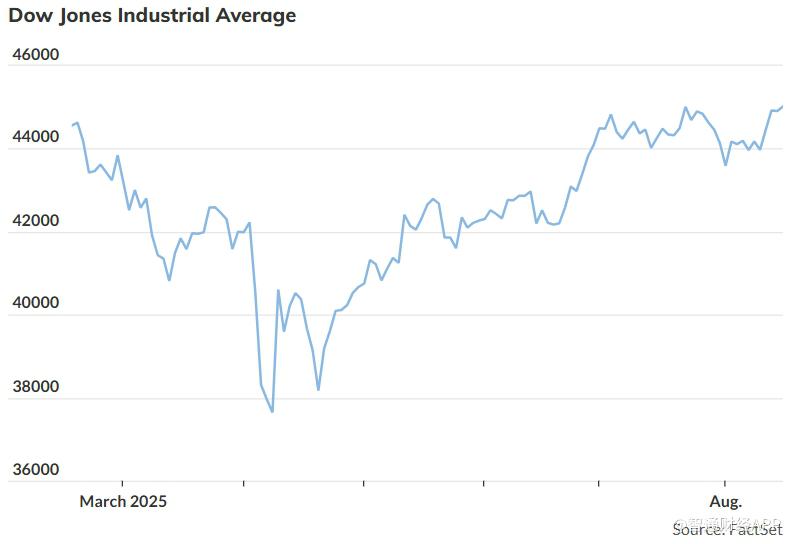
Group 1 - The Dow Jones Industrial Average (DJIA) reached an intraday all-time high of 45,203.52 points before closing nearly flat at 44,946.12 points, up only 34.86 points, indicating a less than 0.1% increase [2] - UnitedHealth (UNH.US) saw its stock price surge nearly 12%, marking its largest single-day gain since November 2020, largely due to Berkshire Hathaway's disclosed holdings in the latest quarterly filing [2] - Despite a year-to-date decline of over 40%, UnitedHealth's stock price fluctuations significantly impacted the DJIA, contributing over 167 points to the index's performance [2] Group 2 - The S&P 500 and Nasdaq Composite indices experienced declines of 0.29% and 0.40%, respectively, indicating a divergence in performance among the three major U.S. stock indices for the first time in 2025 [2] - Analysts noted that the DJIA, being a price-weighted index, is more susceptible to individual stock price movements compared to the market capitalization-weighted S&P 500 [3] - The limited number of components in the DJIA and its price-weighted nature mean it does not fully reflect the overall market value, leading to a cautious approach in its investment significance [3]