企业危机

Search documents
万科董事长辛杰被带走后,原总裁祝九胜又被强制刑事措施!
Sou Hu Cai Jing· 2025-10-16 13:14
Core Viewpoint - The recent criminal measures taken against Vanke's former president and CEO, Zhu Jiusheng, alongside the resignation of another key figure, Xin Jie, have plunged Vanke Group into a critical crisis, raising concerns about its future amidst a challenging real estate market [1][10]. Group 1: Leadership Changes - Zhu Jiusheng, who resigned from all positions at Vanke Group in January 2025, has been taken under criminal measures, suggesting potential underlying issues during his tenure [4][6]. - Xin Jie, the chairman of both Shenzhen Metro Group and Vanke Group, also resigned shortly before Zhu's situation became public, citing "work adjustment" as the reason [8]. Group 2: Financial Performance - Vanke Group reported a revenue of 105.32 billion yuan for the first half of 2025, a decline of 26.2% compared to the same period last year [10]. - The company experienced a net loss attributable to shareholders of 11.95 billion yuan, a decrease of 21.3% year-on-year, with a loss per share of 1.01 yuan, also down 21.3% [10]. Group 3: Debt Situation - As of June 30, 2025, Vanke Group's short-term borrowings amounted to 23.15 billion yuan, with non-current liabilities due within one year reaching 134.71 billion yuan, leading to a total interest-bearing debt of 157.86 billion yuan, indicating significant liquidity pressure [12]. Group 4: Market Reaction - Following these leadership changes, Vanke's A-share price fell over 5%, hitting a new low for the year, while prices of its dollar bonds also experienced significant fluctuations [14]. - Moody's has downgraded Vanke's credit rating outlook from "stable" to "negative," reflecting market concerns regarding the company's future [14].


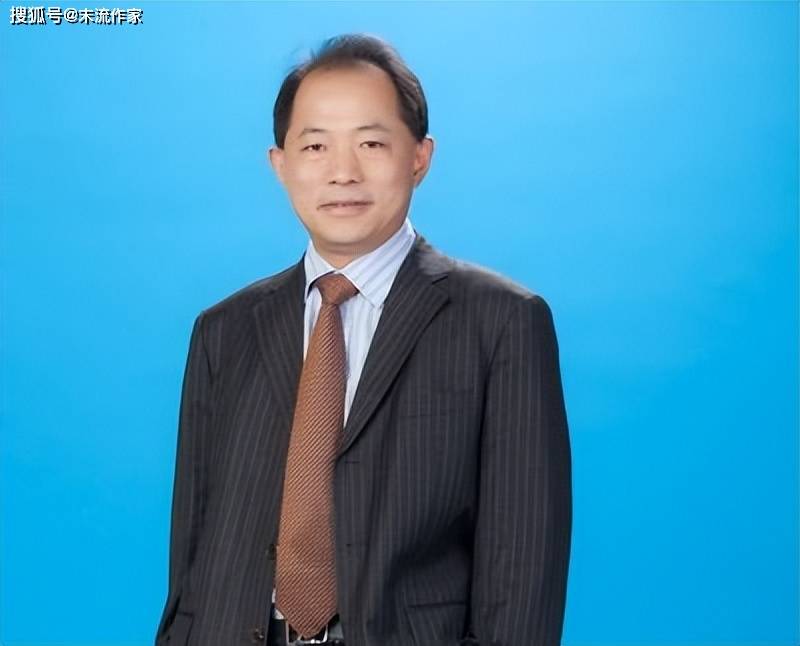
万科董事长辛杰,失联23天后,被曝落马!
Sou Hu Cai Jing· 2025-10-13 03:37
Core Viewpoint - The recent disappearance of Mr. Xin Jie, the chairman of both Shenzhen Metro Group and Vanke Group, raises concerns about the future of Vanke, which is already facing severe financial difficulties due to significant losses and debt issues [1][17]. Group 1: Company Background and Leadership Changes - Mr. Xin Jie took over as chairman of Vanke in January 2025, during a time when the company was experiencing a massive loss of 450 billion yuan [7]. - Under Xin's leadership, Vanke's management underwent significant changes, with many long-term employees being marginalized as personnel from Shenzhen Metro Group were brought in [13]. - The restructuring included three rounds of management adjustments in the first half of 2025, aimed at consolidating power and streamlining operations [13]. Group 2: Financial Situation - Vanke's financial health has deteriorated sharply, with a reported loss of nearly 500 billion yuan in 2024 and a further loss of 119.5 billion yuan in the first half of 2025 [9][15]. - As of June 2025, Vanke's short-term borrowings reached 231.46 billion yuan, with total interest-bearing liabilities amounting to 1,578.59 billion yuan [15]. - Shenzhen Metro Group has provided Vanke with a total of 259.41 billion yuan in loans, often at below-market interest rates, to alleviate liquidity pressures [11]. Group 3: Impact of Leadership on Operations - Xin Jie’s strategy involved continuous financial support from Shenzhen Metro Group, which has significantly drained the latter's resources [3][9]. - Despite the management changes and financial injections, Vanke's revenue fell by 26.23% year-on-year in the first half of 2025, indicating that the crisis remains unresolved [15].
关于中美的现代化之争,一定会发生的3件事|吴晓波激荡讲堂
吴晓波频道· 2025-06-12 16:50
Core Viewpoint - The article emphasizes the importance of learning from history to navigate current and future challenges, particularly in the context of China's modernization over the past 180 years [1][6]. Group 1: Historical Context and Lessons - The "Self-Strengthening Movement" is highlighted as a significant reform that transformed China from an agrarian society to an industrial one, but it lacked comprehensive changes in finance, currency, and land, which limited its effectiveness [9][10]. - In contrast, Japan's "Meiji Restoration" implemented a holistic transformation, including constitutional reforms and public education, leading to a more robust modernization process [11][12]. - The article discusses the distinction between modernization (economic growth) and modernity (awakening of individual consciousness), indicating that while China has achieved modernization, the challenge of modernity remains [13][14]. Group 2: Economic Development Phases - The article outlines the phases of China's reform and opening-up, starting with a bottom-up approach that allowed certain regions to prosper first, leading to uneven development [27][28]. - The transition from incremental reforms to comprehensive systemic reforms is noted, particularly from 1992 to 2012, marking a shift in governance from local to central control [30][31]. - The current phase of reform is characterized by the need for continuous adaptation to global economic changes and challenges, particularly in the context of U.S.-China relations [32][33]. Group 3: U.S.-China Relations and Global Dynamics - The article discusses the historical context of U.S. responses to rising powers, drawing parallels between past and present challenges faced by China in the global arena [35][36]. - It highlights the potential for trade wars, technology conflicts, and currency battles as China seeks to assert its position as a leading global economy [38][39]. - The future of China's modernization is framed as a process of restructuring global supply chains and enhancing national production capabilities, with an emphasis on proactive reforms [40][41].