
传播淫秽信息

Search documents
新治安管理处罚法今起正式施行 遛狗不拴绳伤人可拘留
Xin Lang Cai Jing· 2026-01-01 01:18
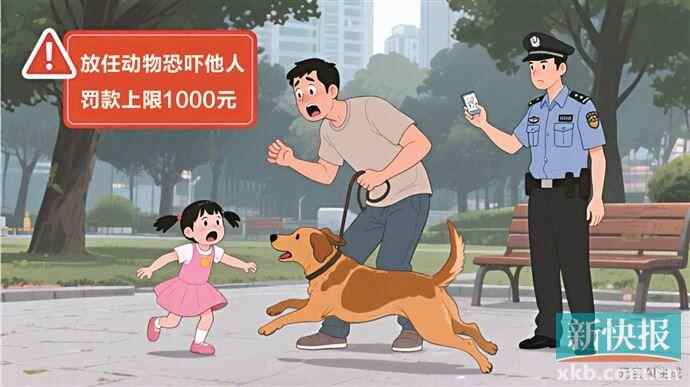
Core Viewpoint - The newly revised Public Security Administration Punishment Law in China introduces significant changes aimed at enhancing public safety and clarifying legal responsibilities related to pet ownership, self-defense, and the treatment of minors in legal contexts [2][3][6]. Group 1: Pet Ownership Regulations - The revised law imposes stricter penalties for pet owners, increasing the maximum fine for allowing pets to disturb others from 500 yuan to 1,000 yuan. New provisions also introduce administrative detention for serious violations, such as the sale of dangerous animals or failure to secure pets, which were not previously punishable by detention [3][4]. - The law aims to reduce public risk from pet-related incidents by holding pet owners more accountable for their animals' behavior [3][4]. Group 2: Self-Defense Clarifications - The law clarifies the definition of legitimate self-defense, stating that actions taken to prevent ongoing unlawful harm are not considered violations of public security management. This change encourages individuals to defend themselves without fear of punishment [4][5]. - Key criteria for applying this self-defense clause include the sequence of actions and the intent behind the defensive behavior, ensuring that excessive force is still subject to penalties [5]. Group 3: Treatment of Minors and Seniors - The law removes the blanket exemption from detention for minors over 14 and seniors over 70, allowing for detention in cases of serious offenses or repeated violations. This change addresses concerns about individuals exploiting their age to evade consequences for harmful behavior [6][7]. - The revised law aims to balance protection and punishment, ensuring that those who pose a significant social risk are held accountable while still providing educational opportunities for first-time or minor offenders [7]. Group 4: Regulations on Sharing Inappropriate Content - The law clarifies that sharing inappropriate content among friends is not inherently illegal; the legality depends on whether the content is deemed obscene and whether its distribution poses a threat to social order [8][9]. - The revised law maintains existing penalties for the dissemination of obscene materials, with increased fines and specific provisions for cases involving minors, reflecting a commitment to protecting vulnerable populations [9][10]. Group 5: Distinction Between "Inappropriate" and "Obscene" - The law emphasizes that "inappropriate" content does not equate to "obscene," with the latter being subject to strict legal definitions and enforcement. This distinction aims to prevent unnecessary legal repercussions for private expressions of affection [10][11]. - The focus remains on targeting the distribution of obscene materials for profit rather than interfering with private relationships, ensuring that consensual exchanges between individuals do not fall under legal scrutiny unless they pose a broader social risk [11].

情侣私聊发送不雅照到底罚不罚?法学博士有话说
Xin Lang Cai Jing· 2025-12-24 14:46
Core Viewpoint - The new Public Security Administration Punishment Law, effective from January 1, 2026, will criminalize private dissemination of inappropriate photos, which was previously not punishable under the law. However, the law does not change the existing regulations regarding private sharing, and penalties have been increased for violations [1][2]. Group 1 - The new law categorizes both public and private dissemination of inappropriate content under the same legal framework, meaning that both have always been illegal, but the penalties have been adjusted [1]. - The law does not specify all possible punishment scenarios, but it is indicated that private sharing of a small number of inappropriate photos typically does not lead to penalties, especially when it occurs within intimate relationships [2][3]. - Only severe cases involving widespread, repeated, or public dissemination of inappropriate content will likely result in punishment [3]. Group 2 - The definition of obscene materials under the law includes explicit depictions of sexual acts or overtly sexual content, while scientific works related to human physiology and medicine are not classified as obscene [4][5]. - Artistic works with sexual content that possess artistic value are also exempt from being classified as obscene [6]. - Not all private or inappropriate photos are considered obscene; only those that explicitly promote sexual content and have an educational intent can be classified as such [7]. Group 3 - The determination of whether an action is illegal involves both the existence of legal provisions and whether the action infringes on legal interests. Factors such as the audience, scope, frequency, context, and intent of the dissemination are considered [9]. - Private exchanges of inappropriate photos between couples typically do not affect others' lives and are generally not subject to penalties, as they are seen as private matters [9]. - However, if inappropriate content is shared widely, affecting the normal lives of others, it may lead to legal consequences [9].
“男子向女友发淫秽视频被行拘”,冲上热搜
Xin Lang Cai Jing· 2025-12-24 11:38
Core Viewpoint - The new amendments to the "Public Security Administration Punishment Law" will take effect on January 1, 2024, increasing penalties for the dissemination of obscene materials, which has sparked widespread discussion online [3][9]. Group 1: Legal Changes - The revised law stipulates that using information networks to disseminate obscene materials can result in detention for 10 to 15 days and fines up to 5,000 yuan, with lighter offenses facing detention of up to 5 days or fines between 1,000 and 3,000 yuan [5][6]. - The new law broadens the scope of punishment by removing the term "computer," thus including all forms of communication tools in the regulation of obscene material dissemination [6][7]. - The maximum fine has been increased from 3,000 yuan to 5,000 yuan, and the minimum fine for lighter offenses has been adjusted from below 500 yuan to between 1,000 and 3,000 yuan, raising the cost of violations and enhancing legal deterrence [6][7]. Group 2: Interpretation and Misconceptions - The new law eliminates the concept of "scene" in the dissemination of obscene materials, correcting the public misconception that private sharing of such content is merely a moral issue [6][10]. - There is a distinction between "obscene" and "indecent" content; the law specifically prohibits the dissemination of "obscene" materials, which are clearly defined, as opposed to the vaguer term "indecent" [10][11]. - Concerns have been raised regarding the allocation of law enforcement resources to handle private exchanges of intimate photos between couples, with some questioning the practicality of such regulations [8].

哪些情况下“发送私密信息”可能违法,律师详解
第一财经· 2025-12-24 00:53
Core Viewpoint - The new regulations regarding the transmission of obscene information, effective from January 1, are not entirely new but rather an update to existing laws to better address modern communication methods and fill legal gaps [3][5]. Summary by Sections Legal Changes - The revised Public Security Administration Punishment Law, Article 80, stipulates that producing, transporting, copying, selling, renting obscene materials, or disseminating obscene information via information networks or other communication tools can result in detention of 10 to 15 days and fines up to 5,000 yuan; lighter offenses may incur detention of up to 5 days or fines between 1,000 and 3,000 yuan [3][4]. - Compared to the previous law, the new version broadens the scope from "computer information networks" to "information networks," reflecting advancements in technology and the need for updated legal language [3][4]. Enforcement and Penalties - The new law increases penalties for violations, raising the maximum fine for general offenses from 3,000 yuan to 5,000 yuan, and for lighter offenses from 500 yuan to between 1,000 and 3,000 yuan, enhancing legal deterrence [5]. - There is a specific emphasis on harsher penalties for offenses involving minors, aligning with the principles established in the revised Minor Protection Law [5]. Public Concerns and Clarifications - Concerns have arisen regarding the potential criminalization of private exchanges of intimate content between partners. However, legal experts clarify that the law distinguishes between "obscene information" and "private information," indicating that consensual sharing of non-obscene content is generally not subject to legal penalties [6]. - The law adheres to a principle of restraint, suggesting that private behaviors that do not disrupt social order are not overly regulated, although unauthorized sharing of private content could lead to privacy violations or criminal charges [6].

清朗网络不容“隐秘角落”
Xin Lang Cai Jing· 2025-12-23 23:14
Core Viewpoint - The new regulations under the Public Security Administration Punishment Law, effective January 1, 2026, impose strict penalties for the dissemination of obscene information via communication tools, emphasizing the protection of public interest over unrestricted online freedom [1] Group 1: Legal Regulations - The law stipulates that spreading obscene information through information networks or telecommunication tools can result in up to 15 days of detention and fines of up to 5,000 yuan [1] - The regulation aims to clarify the boundary between privacy protection and illegal exemption, ensuring that illegal acts disguised as privacy are subject to severe penalties [1] Group 2: Implementation and Enforcement - The implementation of the law marks the beginning of a new phase in building a clearer online environment, necessitating the eradication of the misconception that private chats are exempt from legal scrutiny [1] - Authorities are encouraged to refine the definition of "obscene information" to distinguish between illegal content and normal social or artistic communication, preventing excessive enforcement [1] Group 3: Responsibilities of Social Platforms - Social platforms are urged to take on primary responsibilities by enhancing content recognition technologies for immediate alerts and rapid handling of obscene information [1] - A management responsibility checklist for group chats should be established, promoting accountability where "whoever creates the group is responsible, and whoever manages is accountable" becomes standard practice in the industry [1]
夫妻之间发私密照也算违法是误读
Xin Lang Cai Jing· 2025-12-23 15:59
Core Viewpoint - The recent media reports suggesting that sharing intimate photos between couples constitutes a violation of the law are a misunderstanding. The new regulations set to take effect on January 1, 2026, are a revision of existing laws rather than a new rule [1] Summary by Relevant Sections Legal Framework - The revised Public Security Administration Punishment Law includes provisions against the dissemination of obscene materials via information networks, with penalties ranging from detention of 10 to 15 days and fines up to 5,000 yuan [1] - The law emphasizes that any individual who produces or disseminates obscene content, without constituting a crime, will face administrative penalties [1] Changes in Regulations - The new law modifies the terminology from "computer information network" to "information network," which some interpret as broadening the scope to include private messages and group shares. However, similar cases have already been penalized under existing laws [1] - The revised law increases the fines and stresses stricter penalties for violations involving minors [1] Misinterpretations and Clarifications - Claims that sharing inappropriate photos between friends or spouses is illegal are deemed inaccurate. Legal repercussions arise primarily when such content is shared with others or leads to widespread dissemination [1] - Distinctions are made between "inappropriate" and "obscene" content, with legal standards in place to determine what constitutes obscenity [1] Enforcement and Privacy Concerns - There are concerns about police monitoring of private conversations; however, law enforcement does not actively surveil private chats. Legal action is typically initiated based on reports and must rely on legally obtained evidence [1] - The essence of the law is to prohibit the creation, transportation, and dissemination of obscene content, targeting behaviors that disrupt social order without criminalizing private exchanges between individuals [1]