
传统阅读

Search documents
以法治护航全民阅读(人民时评)
Ren Min Ri Bao· 2025-12-31 01:16
在法治引领下,推动阅读服务从"有形覆盖"转向"有效覆盖",让图书馆、社区书屋、实体书店成为"让 人想走进去坐坐"的温暖角落 《人民日报》(2025年12月31日05版) "十五五"规划建议提出:"推进书香社会建设。"不久前,《全民阅读促进条例》正式公布,自明年2月1 日起守护我们的阅读生活。全民阅读从持续的政策引导全面迈向制度化、法治化的新阶段,为增强全民 族思想道德素质和科学文化素养、提高全社会文明程度树起新的里程碑。 责编:秦雅楠、卢思宇 阅读从来不只是个人的兴趣爱好,更牵系着一个国家的精神海拔,是人口数量优势转化为人才质量优势 的关键路径。将全民阅读纳入法治轨道,就是要以法治方式,为国家长远发展提供持久的精神动力。法 治建设提供制度保障,全民阅读注入精神动力,二者合力推动的正是人的全面进步、物质文明与精神文 明的协调发展。 今天,指尖划过屏幕,信息如瀑布流般冲刷,数字阅读变得越来越便利,而传统阅读则受到冲击。条例 明确支持数字阅读与传统阅读相结合,推动优质数字阅读内容供给,同时要求数字阅读服务提供者加强 内容管理,营造健康向上的数字阅读环境。让每一种阅读形态都能找到其价值,将滋养一个更完整、更 温暖的阅 ...
13年,地铁图书馆涵养城市书香(“十四五”的文化印记)
Ren Min Ri Bao· 2025-10-20 22:29
Core Viewpoint - The integration of reading services within Wuhan's subway system has created a unique cultural space for commuters, promoting both traditional and digital reading methods, thereby enhancing the overall reading experience in the city [4][8]. Group 1: Development of Subway Libraries - The first subway library in Wuhan was established in 2012 alongside the opening of Line 2, initially featuring 21 libraries with over 400 books each across various genres [4]. - As of the end of 2024, there are over 150 subway libraries across 312 stations in Wuhan's 12 operational subway lines, serving as a refuge for busy commuters who enjoy reading [4][8]. Group 2: Reading Trends and Adaptation - With the rise of smartphones, there has been a shift from physical to digital reading, leading to a decline in the usage of traditional libraries; however, Wuhan's subway has opted for transformation rather than closure by introducing digital reading resources [4][5]. - The introduction of reading stations with audio books and digital access has made reading more convenient for commuters, allowing them to engage with literature in various formats [5][6]. Group 3: Community Engagement and Cultural Impact - The subway reading festival, which has been held for 13 consecutive years, features interactive activities that promote reading culture throughout the city [6]. - The presence of themed libraries tailored to the demographics of specific subway stations reflects a thoughtful approach to enhancing the reading experience for passengers [4][8].

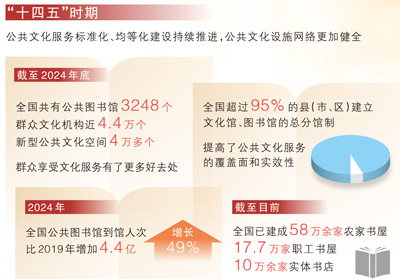
书香何以能致远(文化中国行·人文观察)
Ren Min Ri Bao· 2025-07-26 21:52
Core Viewpoint - The article emphasizes the importance of promoting nationwide reading as a cultural and strategic initiative in China, highlighting its role in enhancing national innovation, improving civic literacy, and fostering a reading culture that contributes to societal development [7][8][9][10]. Group 1: Importance of Reading - Reading is linked to the enhancement of national innovation capabilities, with the National Innovation Index Report 2024 ranking China 10th globally, indicating a correlation between high reading rates and innovation in leading countries like the US and Switzerland [8]. - The comprehensive reading rate among Chinese adults increased from 76.3% in 2012 to 82.1% in 2024, reflecting a steady improvement in national literacy [9]. - Reading is essential for the development of leadership qualities, as it enriches knowledge and wisdom, contributing to cultural prosperity and national strength [9]. Group 2: Government Initiatives - The promotion of nationwide reading has been included in the government work report for twelve consecutive years, with legislative measures being taken to support this initiative [10]. - Various laws and regulations have been established to enhance public cultural services, with over 20 provinces implementing local regulations to promote reading [10]. - Research indicates that policies aimed at promoting reading have effectively engaged previously non-reading adults, leading to increased participation in reading activities [10]. Group 3: Societal Impact of Reading - A society that embraces reading tends to exhibit more rational public discussions, a more inclusive cultural mindset, and sustained innovation capabilities [13]. - The establishment of community reading spaces, such as farmer's libraries and worker's reading rooms, has fostered local cultural development and community engagement [14]. - The "Horseback Library" project in Xinjiang aims to deliver books to remote areas, addressing accessibility issues and promoting reading among dispersed populations [14]. Group 4: Challenges and Future Directions - Despite progress, the adult reading rate in China is only 59.9% in 2024, with an average of 4.79 physical books read per person, indicating room for improvement [15]. - The rise of digital reading has transformed reading habits, with nearly 80% of people using mobile devices for reading, highlighting the need to balance digital and traditional reading methods [15][16]. - Different demographics face unique reading challenges, necessitating targeted support to ensure inclusive access to reading resources [16]. Group 5: Technological Advancements in Reading - Technological innovations are facilitating new reading methods, such as AI-assisted learning and audio libraries for visually impaired individuals, enhancing the reading experience for diverse groups [17]. - The integration of technology in reading practices is expected to broaden access and engagement, making reading more appealing and accessible to a wider audience [17]. Group 6: Cultural Significance of Reading - Reading is portrayed as a means of cultural transmission and personal growth, with historical references underscoring the long-standing value placed on reading in Chinese society [18]. - The article concludes that the essence of nationwide reading lies in enabling individuals to discover their better selves through literature, thereby empowering the nation as a whole [18].
辛识平:书香润人心,悦读向未来
Xin Hua She· 2025-04-23 08:30
Core Viewpoint - The importance of reading is emphasized, highlighting the integration of digital and traditional reading methods to foster a culture of knowledge and learning in China [1][2][4]. Group 1: National Reading Strategy - Since the beginning of the new era, national reading has become a development strategy, with the comprehensive reading rate among adults rising from 76.3% in 2012 to 81.9% in 2023 [2]. - The digital reading user base in China has reached 670 million, showcasing the shift from traditional to digital reading formats [2]. Group 2: Cultural Heritage and Technological Integration - Reading serves as a vital medium for cultural transmission, evolving from ancient texts to immersive experiences in the 5G era [3]. - The application of digital technology has made historical texts accessible to households, enhancing the reading experience through new audiovisual technologies [3]. Group 3: Future Aspirations through Reading - UNESCO's theme for World Book Day emphasizes reading as a bridge to the future, essential for personal dreams and national rejuvenation [4]. - A collective reading culture fosters a strong spirit and confidence in advancing towards modernization, with leaders and children alike encouraged to engage in reading [4].