低风险储蓄

Search documents
金价“过山车”,银行提示风险,积存金还适合大众投资者吗
第一财经· 2026-02-04 08:28
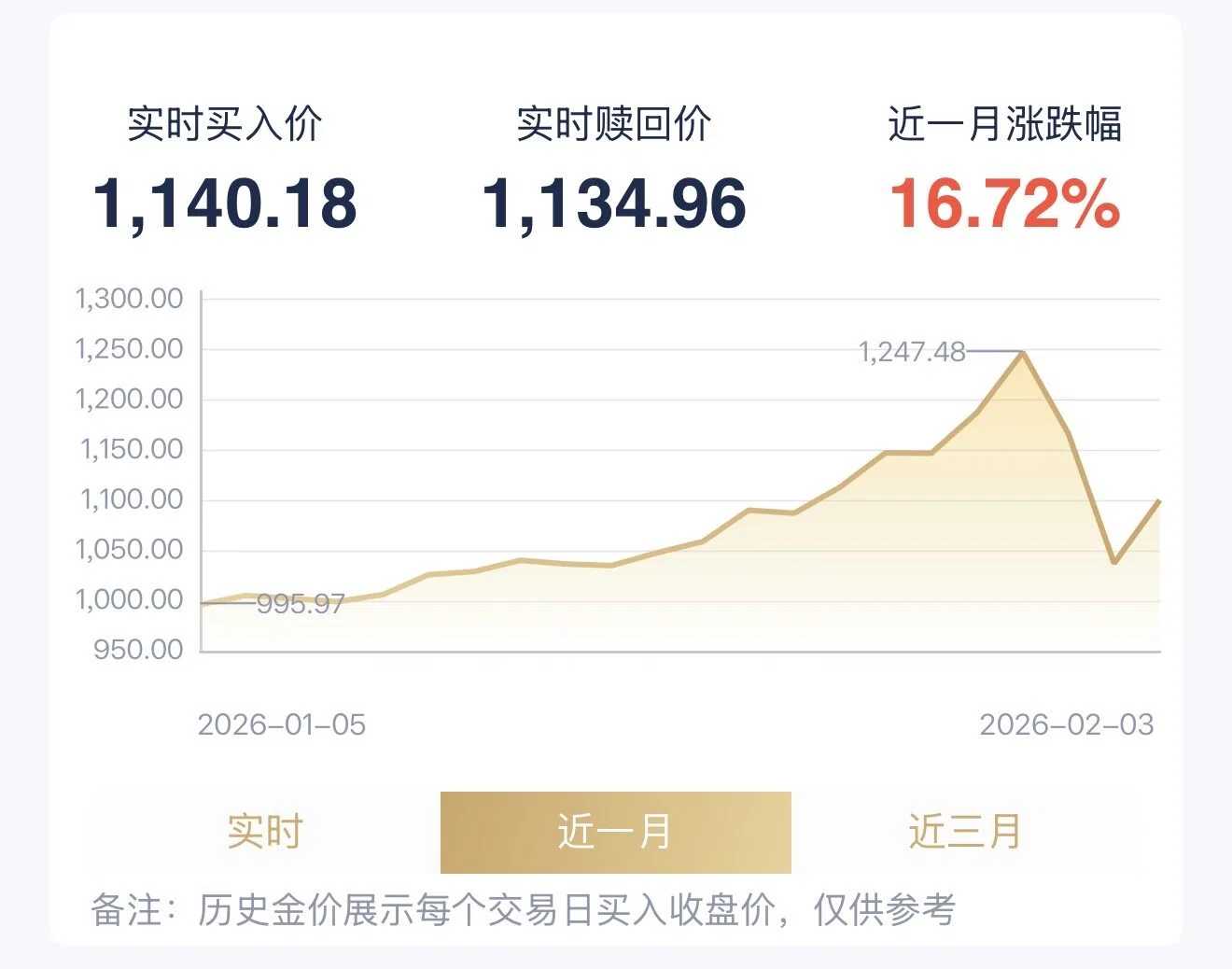
Core Viewpoint - The article discusses the recent fluctuations in gold prices and the implications for gold accumulation products, highlighting the risks associated with these investments as they are perceived as low-risk alternatives for inflation protection by some investors [3][6]. Group 1: Gold Accumulation Products - Gold accumulation is a service offered by banks that allows customers to open gold accounts and record the weight of gold deposited over time, gaining popularity during rising international gold prices [6]. - These products are characterized by low entry barriers, ease of operation, and the ability to redeem physical gold, making them attractive to risk-averse investors [6][7]. - Recent volatility in gold prices has led banks to adjust their gold accumulation services, including raising entry thresholds and enhancing risk warnings to clients [7]. Group 2: Market Volatility and Risk Management - The article notes significant daily fluctuations in international gold prices, prompting banks to take measures to mitigate liquidity risks and filter out investors with lower risk tolerance [7][10]. - Banks have raised the minimum investment amount for gold accumulation products, with some requiring specific risk assessment results for clients to engage in all services [7]. - The article emphasizes that gold accumulation is not a zero-risk investment, as the value of assets can decrease during price drops, and it is more suitable for long-term investors rather than short-term traders [10][11]. Group 3: Investor Awareness and Education - There is a need for better communication from banks regarding the nature of gold accumulation products, particularly the limitations on redeeming physical gold and the associated costs [11]. - Investors often misunderstand the terms related to redeeming physical gold, leading to potential dissatisfaction and financial loss [11]. - The article suggests that banks should provide clearer information on market volatility triggers and risk management conditions to help investors make informed decisions [10][11].


金价“过山车”,银行纷纷“提示风险”!积存金还适合大众投资者吗
Di Yi Cai Jing· 2026-02-04 07:40
Core Viewpoint - The article discusses the recent fluctuations in gold prices and the implications for gold accumulation products, highlighting the risks and adjustments made by banks in response to market volatility [1][3]. Group 1: Market Trends - In the past month, international gold prices experienced significant volatility, reaching over $5000 per ounce before retreating, while domestic gold jewelry prices fell from 1700 RMB per gram to around 1500 RMB [1]. - Some investors view gold accumulation as a low-risk alternative for inflation protection, but the increasing volatility in gold prices has revealed associated investment risks [1]. Group 2: Product Characteristics - Gold accumulation products are offered by banks, allowing customers to open gold accounts and record their gold deposits, characterized by low thresholds, convenience, and physical redeemability [3]. - Compared to other gold investment options like ETFs and physical gold, gold accumulation products are seen as suitable for low-risk investors due to their "small amount, high frequency, and average cost" strategy [3]. Group 3: Risk Management Adjustments - In light of increased market uncertainty, several banks have adjusted their gold accumulation services, raising entry thresholds and enhancing risk warnings for customers [3][4]. - For instance, the China Construction Bank raised the minimum amount for regular gold accumulation to 1500 RMB, while the Bank of Communications restricted services based on customers' risk tolerance assessments [4]. Group 4: Investor Behavior and Misconceptions - Some investors mistakenly perceive gold accumulation as a short-term product, while experts suggest it is more suitable for long-term wealth accumulation [5]. - There are concerns about the transparency of transaction costs associated with gold accumulation products, as banks may charge fees or set price spreads that can diminish investor returns [6].