
供应链ESG管理

Search documents
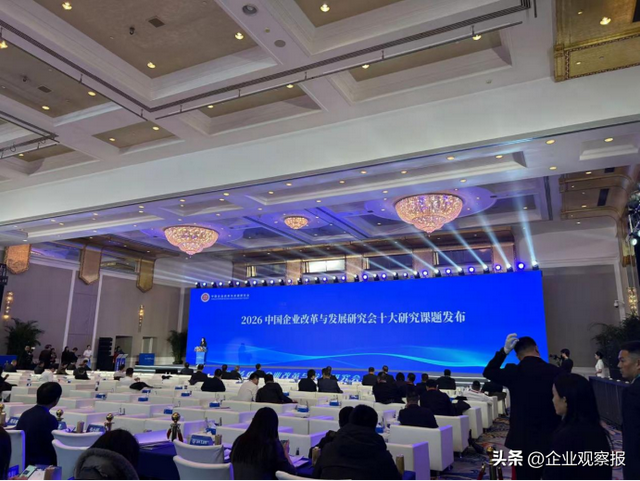
2026中国企业改革与发展研究会十大研究课题发布仪式在京举行
Xin Lang Cai Jing· 2026-02-03 00:13
Core Insights - The 2026 China Enterprise Reform and Development Research Association annual conference was held in Beijing, focusing on the theme "New Journey, New Mission, New Responsibility" [2] - The conference featured the release of ten key research topics aimed at guiding enterprises in navigating complex internal and external environments [4] Group 1 - The research topics were selected based on forward-looking, practical, and strategic principles, addressing key areas and core needs of Chinese enterprise reform and development [4] - The ten research topics include: 1. Research on the integration of party building and production operations in state-owned enterprises 2. Research on improving the modern enterprise system with Chinese characteristics 3. Research on cultivating the entrepreneur team and promoting entrepreneurial spirit 4. Research on the deep integration of industrial innovation and technological innovation 5. Research on the coordinated development of state-owned and private economies 6. Research on lean digitalization theory and practice 7. Research on AI-native enterprise development models 8. Research on supply chain ESG management 9. Research on the vitality and value contribution of talent in state-owned enterprises 10. Research on Chinese enterprises going global [4]

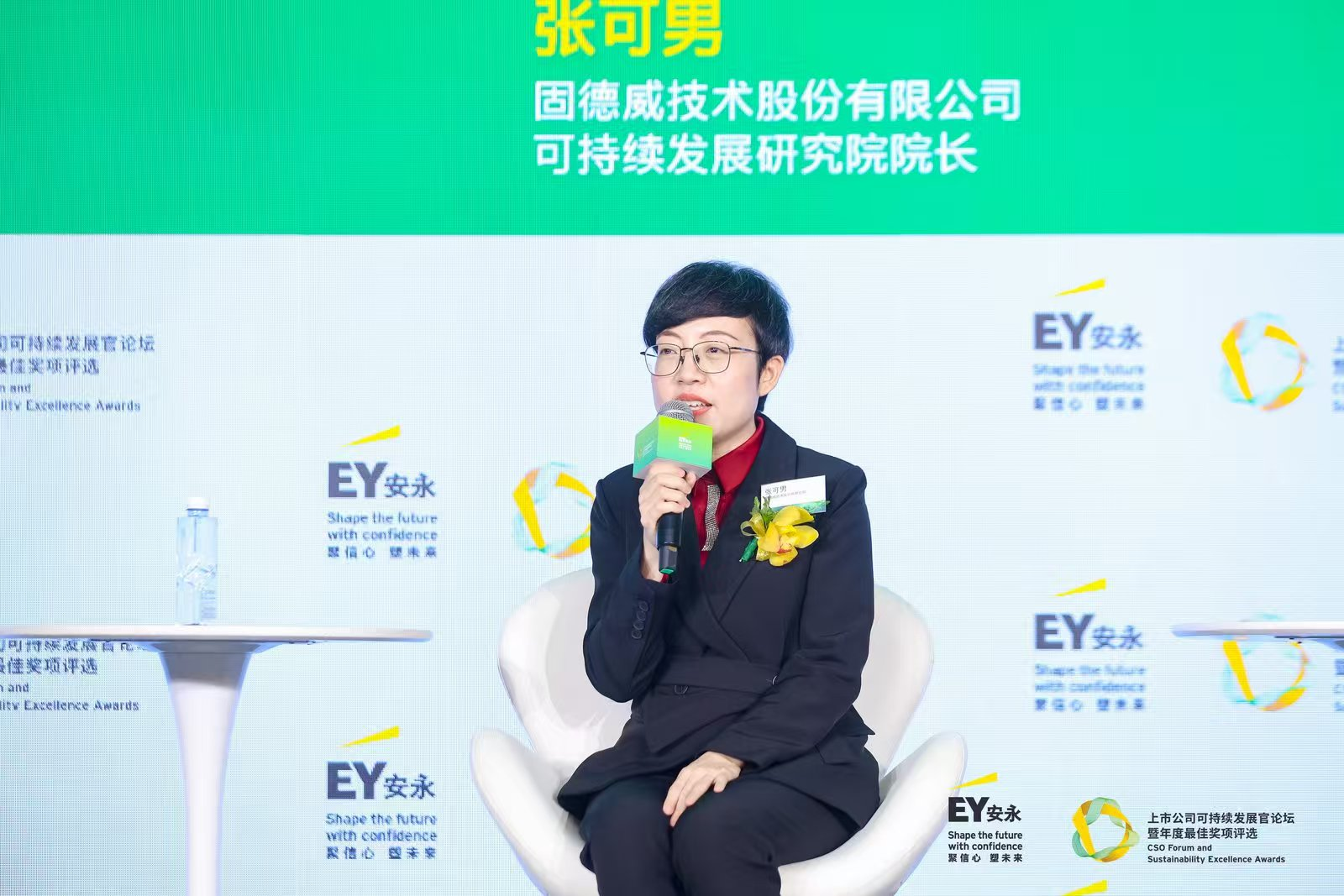
固德威技术股份有限公司可持续发展研究院院长张可男:中国企业应成为绿色创新者、方案提供者与标准共建者
Zhong Guo Jin Rong Xin Xi Wang· 2025-11-20 02:45
Core Viewpoint - The fourth Sustainable Development Officer Forum and Annual Best Awards Ceremony highlighted the importance of transforming Chinese enterprises from "green followers" to "green innovators" and "green standard co-builders" in the context of global green governance [1][8]. Group 1: Challenges in New Energy System - The main challenge in constructing a new power system based on renewable energy is the contradiction between the volatility of renewable resources and system coordination [3]. - Key obstacles include the increasing unpredictability of renewable energy output, lack of unified scheduling logic among multi-energy systems, and constraints in the distribution network for high proportions of renewable energy [3]. Group 2: Solutions Offered by the Company - The company's solution focuses on building a "cloud-edge-end" collaborative smart energy system, integrating efficient inverters, energy storage, and real-time power prediction to enhance system responsiveness and reduce management costs [3][4]. - The company aims to provide replicable and scalable "minimum units of new power systems" for zero-carbon parks and distributed power markets [4]. Group 3: Supply Chain ESG Management Initiative - As a co-initiator of the "Supply Chain ESG Management Initiative," the company seeks to reshape industry perceptions of sustainable supply chain development, emphasizing the shift from product competition to system and value competition [4][6]. - The initiative aims to elevate sustainability standards through supplier management, carbon footprint certification, and fostering long-term partnerships with suppliers [6]. Group 4: Global Leadership in Sustainable Standards - In response to global climate change and evolving green trade rules, the company emphasizes the need for Chinese tech enterprises to become co-creators of standards and providers of global sustainable solutions [7][8]. - The company plans to achieve this by enhancing technical credibility, developing replicable zero-carbon models, and collaborating with international organizations to shape global standards [8].

《企业供应链ESG管理要求》团体标准发布 助力构建ESG产业生态
Zhong Guo Xin Wen Wang· 2025-10-26 03:00
Core Viewpoint - The increasing focus on ESG (Environmental, Social, and Governance) compliance in supply chains is becoming essential for companies' survival and growth, driven by global regulations and the need for sustainable development [1][2]. Group 1: ESG Compliance and Regulations - Major economies, including the EU, have introduced regulations such as CSRD, CBAM, and CSDDD, making supply chain ESG compliance a regulatory requirement for leading companies [1]. - Non-compliance with ESG standards by suppliers can lead to significant risks for chain-leading companies, including market exclusion and substantial fines [1]. Group 2: Challenges in ESG Management - Many companies recognize the need to manage supply chain ESG but lack clear guidance, often leading to ineffective efforts [1]. - There is a common misconception that supply chain ESG management is solely about managing suppliers, neglecting the importance of internal management systems [2]. Group 3: New Standards for ESG Management - The newly released "Enterprise Supply Chain ESG Management Requirements" standard aims to provide a framework that aligns with international standards while being tailored to China's context [2]. - The standard establishes a dual mechanism for ESG management, integrating both internal and external supplier management to enhance overall effectiveness [2]. - It introduces a cost-effectiveness balance mechanism, directing resources to high-risk areas and transforming ESG requirements from a cost burden into shared value with suppliers [2].