
依法平等保护

Search documents
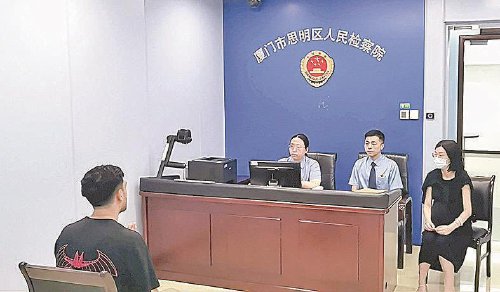
“有境外驾照可以吗?”
Xin Lang Cai Jing· 2026-02-24 23:26
Core Viewpoint - The Xiamen District Prosecutor's Office has established a foreign-related judicial translation cooperation mechanism to enhance legal support for foreign nationals, ensuring fair legal treatment and promoting the image of Xiamen as an open city [2][4]. Group 1: Legal Framework and Case Handling - The Xiamen District Prosecutor's Office is responsible for handling first-instance criminal cases involving foreign nationals, emphasizing equal legal protection and high-quality performance in their duties [2]. - In a specific case, a foreign student, identified as Sa, was initially charged with dangerous driving due to driving under the influence, but the prosecutor's office determined that he did not meet the criteria for criminal charges based on his foreign driving license [3][4]. - The prosecutor's office utilized a comprehensive approach, including legal aid and evidence verification, to ensure Sa's rights were protected and to clarify the legal applicability of his foreign driving license [3][4]. Group 2: Implementation of Legal Aid and Support - Since May 2024, the prosecutor's office has focused on foreign national criminal cases, applying leniency in 80% of cases through a guilty plea system and providing legal aid to 13 individuals, ensuring full coverage of legal defense for foreign suspects [4]. - The office has also pioneered a judicial translation cooperation mechanism in collaboration with local courts and translation associations, successfully translating 60 legal documents and providing interpretation services for 52 individuals [4].

最高人民法院:依法平等保护民营企业和企业家合法权益 促进民营经济健康发展
Zheng Quan Ri Bao Wang· 2025-07-31 06:58
Core Viewpoint - The Supreme People's Court of China has released 12 typical cases to demonstrate the equal protection of the legal rights of private enterprises and entrepreneurs, aiming to enhance confidence among the public and particularly among private economic stakeholders [1][2]. Group 1: Legal Protection of Private Enterprises - The cases emphasize the strict legal protection of private enterprises and entrepreneurs' legitimate rights, highlighting the distinction between criminal and non-criminal acts, as well as between illegal gains and legitimate property [1]. - Specific cases include the reaffirmation of a not guilty verdict in a land occupation case and the unsealing of assets in a fraud case, showcasing the court's commitment to fair legal processes [1]. Group 2: Equal Protection Principles - The principle of equal legal protection is reinforced through various contract dispute cases, where courts ruled against defenses based on funding sources and upheld the rights of small and medium-sized private enterprises [2]. - The invalidation of "back-to-back" clauses in contracts further illustrates the judiciary's role in safeguarding the interests of private companies [2]. Group 3: Encouragement of Innovation and International Expansion - The court has facilitated the resolution of disputes involving research personnel and private enterprises, creating a supportive environment for innovation and entrepreneurship [2]. - Judicial support for private enterprises venturing internationally is evident in cases that apply international rules to protect their interests abroad [2]. Group 4: Guiding Healthy Business Practices - The court's actions against corruption within private enterprises, particularly in the tech sector, serve as a deterrent and promote ethical conduct among employees [3]. - The restructuring of a private technology company's bankruptcy case reflects an innovative approach to resolving debts while revitalizing corporate governance and encouraging entrepreneurial potential [3]. Future Directions - The Supreme People's Court plans to continue its commitment to fair and just legal practices, ensuring the equal protection of private enterprises and promoting the healthy development of the private economy [3].