俄油出口

Search documents
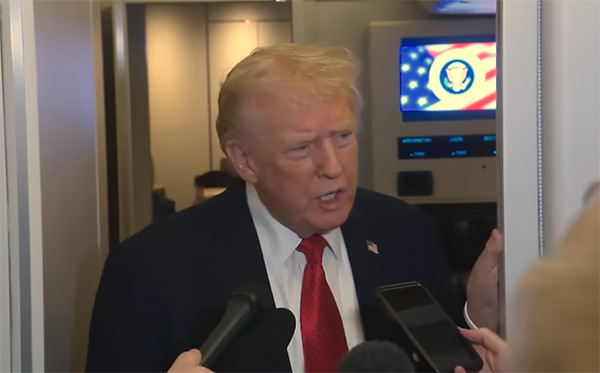
印度否认通话后,特朗普还嘴硬:莫迪向我保证过不再购买俄油
Guan Cha Zhe Wang· 2025-10-20 14:37
Group 1 - The core issue revolves around the conflicting statements between U.S. President Trump and the Indian government regarding India's commitment to stop purchasing Russian oil. Trump claims that Indian Prime Minister Modi made such a promise during a phone call, which India denies ever took place [1][3]. - Following the denial from the Indian government, Trump reiterated his stance, suggesting that if India does not reduce its Russian oil imports, it will face high tariffs from the U.S. [1][3]. - India has become a significant buyer of discounted Russian oil, with one-third of its total crude oil imports coming from Russia since the onset of the Russia-Ukraine conflict [3]. Group 2 - The U.S. government views Russian oil revenue as a funding source for military actions, making it a critical point in U.S.-India trade negotiations. The U.S. has imposed a 50% tariff on Indian goods, and reducing Russian oil imports is seen as a key condition for reaching a trade agreement [3][4]. - Reports indicate that India may have reduced its Russian oil imports by 50%, although Indian sources have not confirmed any significant decrease in actual imports [3][4]. - Kpler estimates that India's Russian oil imports are expected to increase by approximately 20% this month, reaching 1.9 million barrels per day, due to ongoing geopolitical tensions [4]. Group 3 - Indian refiners have been purchasing Russian oil at discounted prices, but they may face financial pressure due to U.S. and EU actions. A ten-year agreement was signed between Reliance Industries and a Russian oil company for a daily supply of 500,000 barrels [6]. - Even if India reduces its Russian oil imports under Western pressure, it is unlikely to significantly impact Russia's energy exports. Russian oil may enter a "shadow market," where it is resold without clear origin information [6]. - The Indian Ministry of External Affairs emphasizes that its oil import policy is guided by national interests and aims to protect consumer interests amid a volatile energy landscape [6][7].