
美印贸易

Search documents
印度Sensex指数开盘涨4.5% 此前特朗普宣布对印度降低关税
Jin Rong Jie· 2026-02-03 03:48
Core Viewpoint - The Indian Sensex index opened up by 4.5%, reaching 85,323.20 points, with all sectors experiencing gains. A trade agreement between the U.S. and India has been reached, which includes a reduction in tariffs and increased oil purchases from the U.S. and potentially Venezuela [1]. Group 1: Trade Agreement - The U.S. has agreed to lower tariffs on India from 25% to 18% as part of a new trade agreement [1]. - India is set to reduce its tariffs and non-tariff barriers on U.S. goods to zero [1]. - The agreement includes a commitment from India to significantly increase its purchases of U.S. goods, including energy, technology, agricultural products, and coal, with a total value exceeding $500 billion [1]. Group 2: Oil Purchases - Indian Prime Minister Modi has agreed to stop purchasing oil from Russia and to increase oil imports from the U.S. and possibly Venezuela [1]. - This shift in oil purchasing strategy is part of the broader trade discussions between the U.S. and India [1]. Group 3: Market Reaction - The positive news regarding the trade agreement and oil purchases has led to a significant increase in the Indian stock market, with the Sensex index reflecting a strong upward trend [1].
特朗普称莫迪同意停止购买俄罗斯石油
Sou Hu Cai Jing· 2026-02-02 20:07
Group 1 - The core point of the article is the announcement of a trade agreement between the United States and India, which includes significant tariff reductions and increased procurement of American products by India [4] Group 2 - The U.S. will reduce its "reciprocal tariffs" on India from 25% to 18%, while India will lower its tariffs and non-tariff barriers to potentially zero [4] - India is expected to significantly increase its purchases of U.S. products, including over $500 billion worth of energy, technology, agricultural products, coal, and more [4] - India has agreed to stop purchasing oil from Russia and will increase its oil imports from the U.S., with potential purchases from Venezuela as well [4]

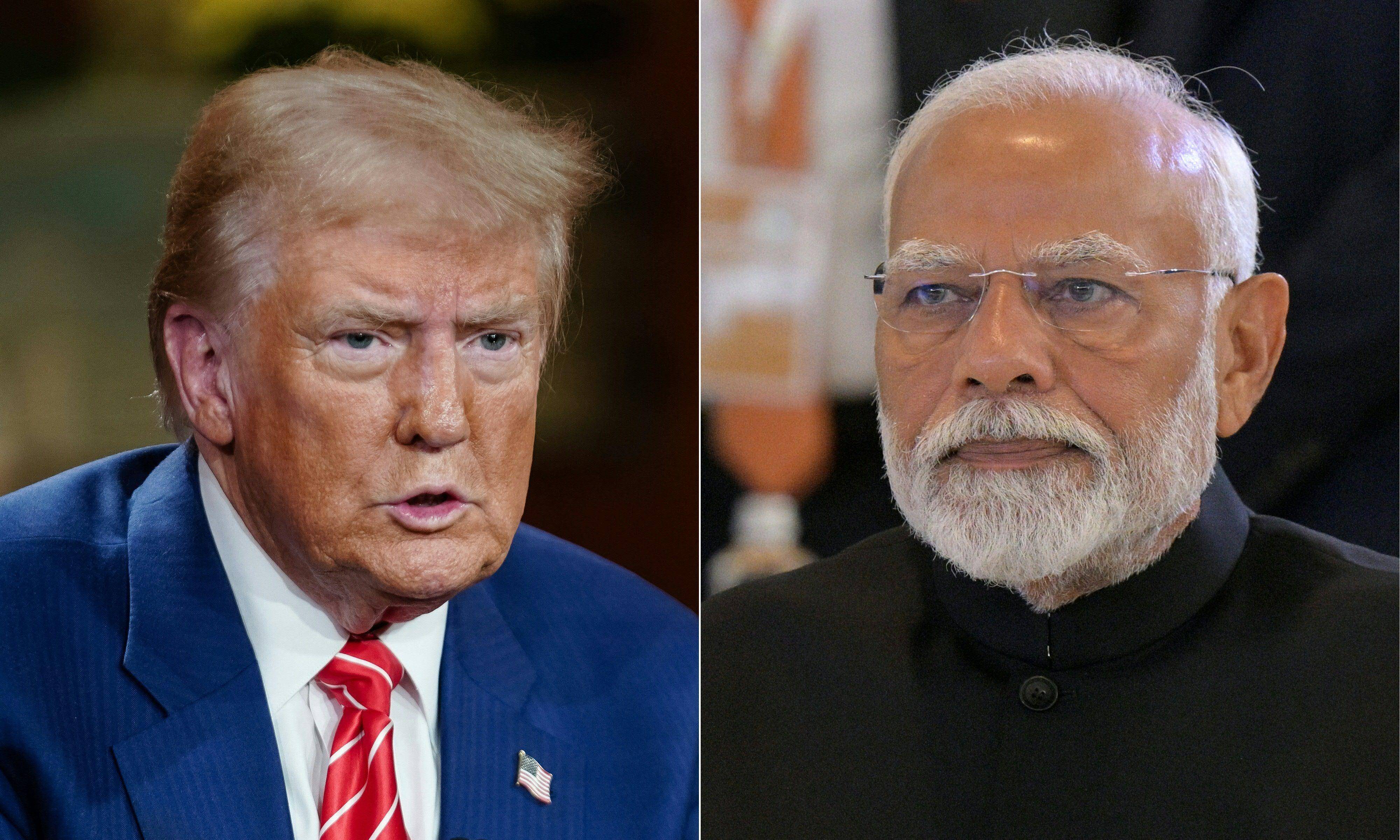
印度否认通话后,特朗普还嘴硬:莫迪向我保证过不再购买俄油
Guan Cha Zhe Wang· 2025-10-20 14:37
Group 1 - The core issue revolves around the conflicting statements between U.S. President Trump and the Indian government regarding India's commitment to stop purchasing Russian oil. Trump claims that Indian Prime Minister Modi made such a promise during a phone call, which India denies ever took place [1][3]. - Following the denial from the Indian government, Trump reiterated his stance, suggesting that if India does not reduce its Russian oil imports, it will face high tariffs from the U.S. [1][3]. - India has become a significant buyer of discounted Russian oil, with one-third of its total crude oil imports coming from Russia since the onset of the Russia-Ukraine conflict [3]. Group 2 - The U.S. government views Russian oil revenue as a funding source for military actions, making it a critical point in U.S.-India trade negotiations. The U.S. has imposed a 50% tariff on Indian goods, and reducing Russian oil imports is seen as a key condition for reaching a trade agreement [3][4]. - Reports indicate that India may have reduced its Russian oil imports by 50%, although Indian sources have not confirmed any significant decrease in actual imports [3][4]. - Kpler estimates that India's Russian oil imports are expected to increase by approximately 20% this month, reaching 1.9 million barrels per day, due to ongoing geopolitical tensions [4]. Group 3 - Indian refiners have been purchasing Russian oil at discounted prices, but they may face financial pressure due to U.S. and EU actions. A ten-year agreement was signed between Reliance Industries and a Russian oil company for a daily supply of 500,000 barrels [6]. - Even if India reduces its Russian oil imports under Western pressure, it is unlikely to significantly impact Russia's energy exports. Russian oil may enter a "shadow market," where it is resold without clear origin information [6]. - The Indian Ministry of External Affairs emphasizes that its oil import policy is guided by national interests and aims to protect consumer interests amid a volatile energy landscape [6][7].
花旗:印度卢比走弱的风险显著加大,未来几个月可能会逼近90!美国将对印度的关税提高到50%,又对H-1B签证申请征收10万美元的签证费
Sou Hu Cai Jing· 2025-09-22 06:01
Group 1 - The core viewpoint of the article is that the Indian Rupee is at risk of weakening against the US Dollar, potentially approaching an exchange rate of 90 in the coming months due to challenging external conditions [1] - The report highlights that the US has increased tariffs on India to 50% and imposed a $100,000 fee on H-1B visa applications, which could negatively impact trade volumes [1] - The total trade volume between the US and India is estimated to be around $250 billion, including goods, software services exports, and remittances, indicating significant economic interdependence [1] Group 2 - The challenging external environment may exert pressure on India's current account and the value of the Indian Rupee [1]

美国印度贸易谈判因失误而停滞不前,莫迪和特朗普没有接触
Ge Long Hui· 2025-08-06 06:59
Core Viewpoint - The trade negotiations between the US and India have stalled due to miscommunication, with no contact between Modi and Trump [1] Group 1 - The trade talks are currently at a standstill, indicating potential challenges in US-India relations [1] - There has been a lack of direct communication between the leaders of both countries, which may further complicate the negotiation process [1]
印度外交部发言人:贸易未在美印会谈中提及。
news flash· 2025-05-13 12:24
Group 1 - The core point of the article is that trade was not discussed during the recent US-India talks, as stated by the Indian Ministry of External Affairs spokesperson [1]